(EN) Art and biological sciences: Collaborations
Location: Academy of Fine Arts Nuremberg
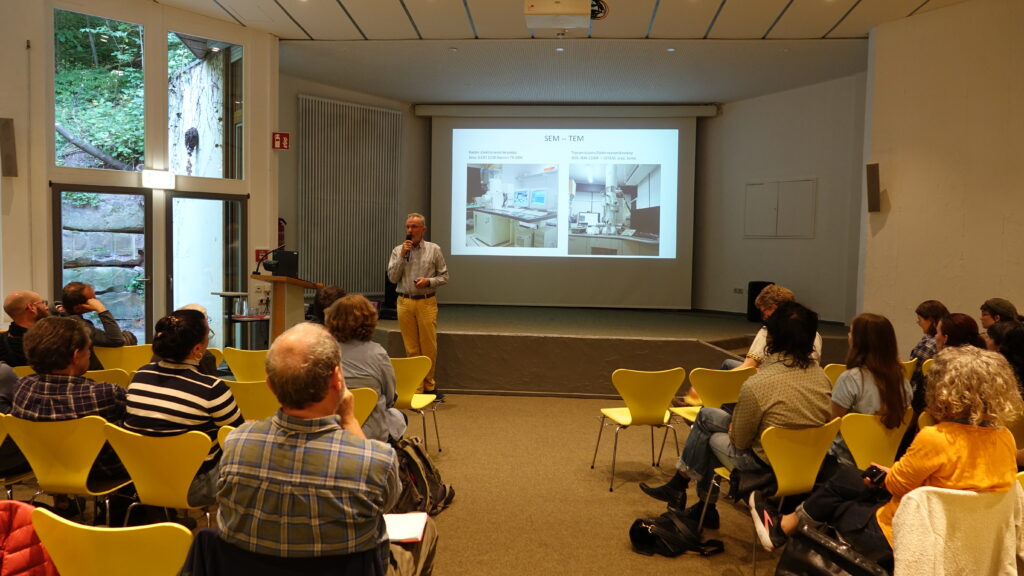
Archaeal Connections: Extremophile Microorganisms from the Lab to the Studio, from the Exhibition to Space
Robert Reichelt, Microbiology and Archaeology Centre, University of Regensburg
Sebastian Gfellner, Exobiology Group, Center for Molecular Biophysics, CNRS – Orléans, FR
Anna Steward, Artist, AdBK Nürnberg
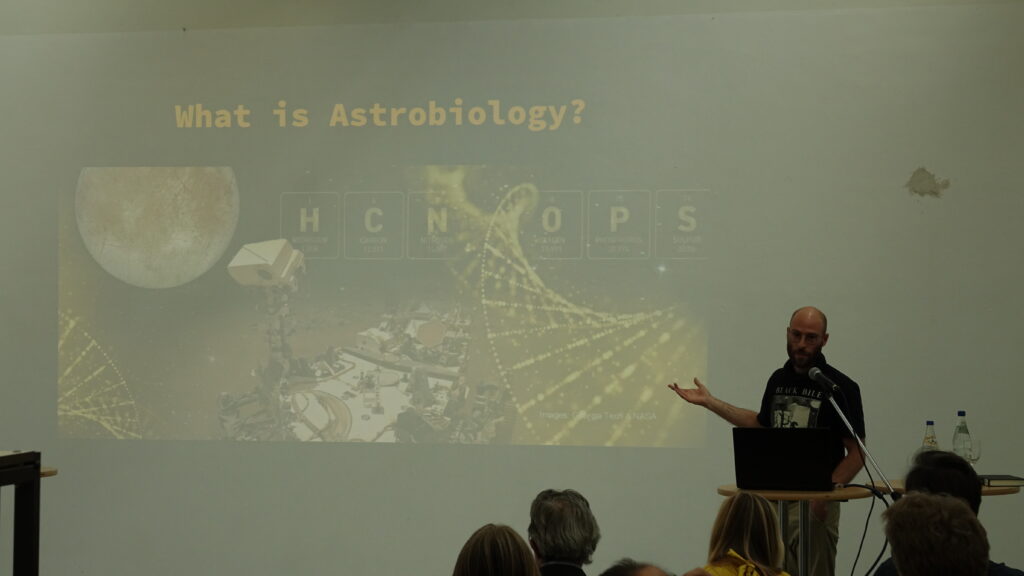
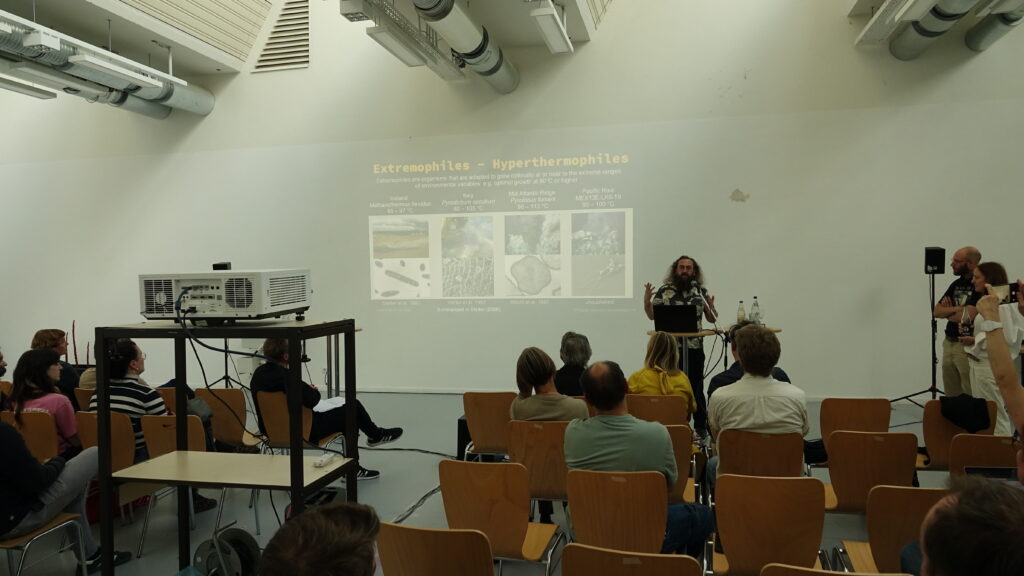
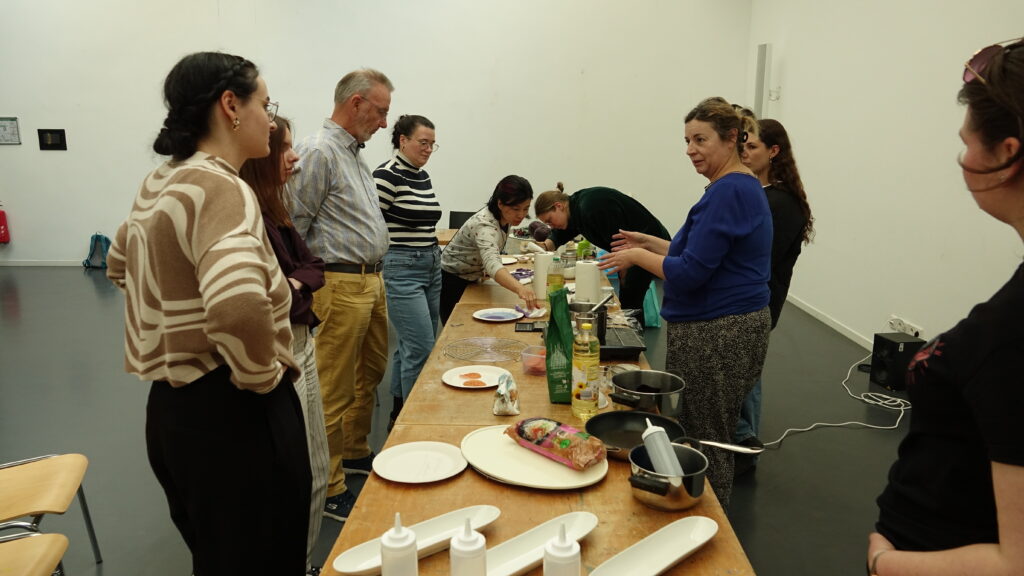
A passion for the third domain of life (archaea) brought together microbiologist Robert Reichelt, astrobiologist Sebastian Gfellner, and artist Anna Steward in their recent collaborations. Anna discovered her fascination with microorganisms while preparing for her diploma exhibition and was thrilled to be invited by the German Archaea Centre in Regensburg as a visiting artist, immersing herself in the world of archaea. Her collaboration with Robert and his students resulted in Performing Beyond the Human, an exploration of possible interactions between biological and artistic systems, where Anna works with microbial cultures across laboratory and studio settings, as well as in exhibitions and performances.
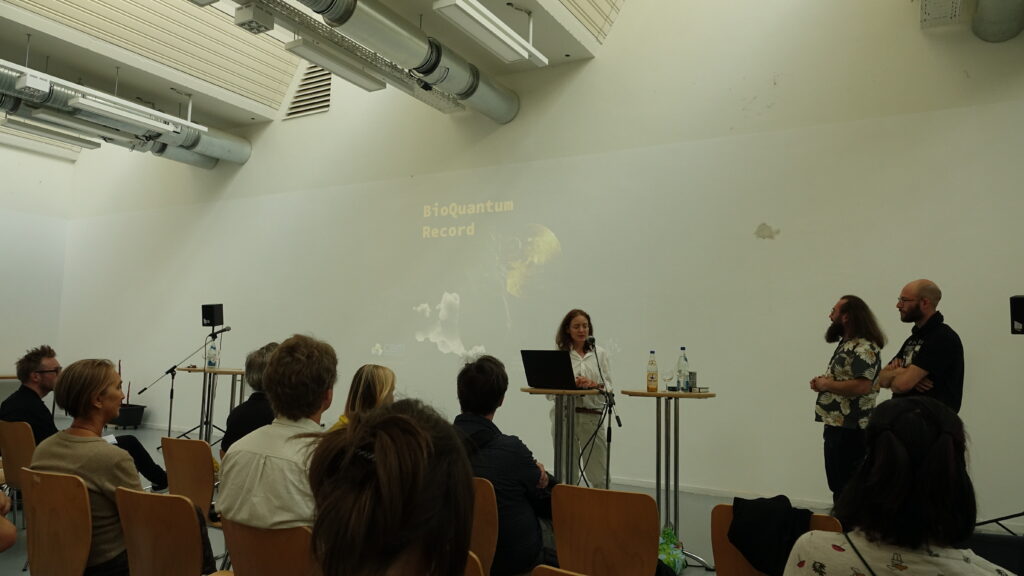
Archaea captivate us because they thrive where life seems almost impossible, clustered near hydrothermal vents, in the seasonal thaw of thick ice crusts, or within methane lakes. Wondering whether extremophiles could exist beyond Earth, Anna joined forces with Sebastian at the Center for Molecular Biophysics (CNRS-CBM) in Orléans, France, to develop BioQuantum Record, a project that imagines how microbial life might connect across different worlds in the universe.
One project led to another, forming archaeal connections across time and space, and linking scientists and artists across disciplines. Arts-science-collaborations are not only about realising artistic work but also about exploring the dynamics of exchange between different fields. Artists, viewed as ‘foreign bodies’ in scientific spaces, can provoke new perspectives. Transdisciplinary work is not about translating one discipline into another, but about forming a new terrain together — an arts-science assemblage held together by archaeal membranes.
Robert Reichelt (*1982) studied biology at the University of Regensburg and successfully completed his studies in 2009 with a thesis at the Chair of Microbiology at the University of Regensburg on the topic: ‘Investigations into the function of the TrmB family in Pyrococccus furiosus using chromatin immunoprecipitation experiments’. He continued this work during his doctoral studies (2009–2014) at the Department of Microbiology at the University of Regensburg with the topic: ‘Analysis of Gene Regulatory Networks of Pyrococcus furiosus by ChIP-seq’. From 2014 to 2022, he continued his research as a postdoctoral scientist at the Department of Microbiology at the University of Regensburg, and since 2022, he has been responsible for managing the biotechnology centre and cultivating extremophilic microorganisms at the Department of Microbiology at the University of Regensburg as an academic advisor. In his research, Robert Martin Reichelt combines classical molecular biology methods with special cultivation methods for growing extremophilic microorganisms in order to obtain a holistic picture of biological processes such as transcription, an important step within the central dogma of molecular biology. He is also committed to the microbiological education of students, both at undergraduate and advanced levels, and during the completion of their theses.
Archaeenzentrum – Uni Regensburg
Sebastian Gfellner My passion for extremophilic microorganisms that can withstand the hardest environmental conditions and the possibility of life elsewhere in the universe began as a geologist at the University of Vienna, Austria, where I investigated carbonate veins in minerals and wondered whether there could be life buried within? After becoming an organic geochemist at the University of Bremen, Germany, I was able to answer this question; now, as a PhD student in astrobiology at the University of Orléans, France, I have shifted this question to other planetary bodies, wondering about the possibility of microbial life in the universe.
Whether we are alone in the cosmos has fascinated humanity since we have looked at the stars. In science, we identified a tool that could potentially answer this question. However, the need to visually comprehend concepts that may otherwise be too abstract is deeply rooted in us. This is where art bridges our imaginations. While astrobiology thrives to understand life in the universe, art may provide visualization and narrative for us to continue on this journey. When collaborating with an artist, a common language must first be established. Of this, something wonderful can thrive by combining the worlds of facts and imagination.
Exobiology
Anna Steward Anna’s artistic practice combines performance, installation, and scientific collaboration, with a focus on microbiology, neurology, and a growing passion for astrobiology.
She trained at Arts Educational Schools London in 2000 and initially worked as an actor before shifting to Live Art in 2007. Her 2014 performance GELD-Pilgerreise inspired the Swiss film Church of Money, which was featured in the German Federal Agency for Civic Education’s media library.
Anna graduated with honours from the Academy of Fine Arts Nuremberg in 2023, where she now lectures. Supported by a scholarship from the Bavarian State Ministry of Science and the Arts, she collaborated with the German Archaea Centre at the University of Regensburg, where she remains a visiting artist.
Her 2024/2025 Arts-Science Residency at CNRS-CBM (Centre Biophysique Moléculaire) and ESAD Orléans (École Supérieure d’Art et de Design), hosted by LE STUDIUM Loire Valley Institute for Advanced Studies, sparked an ongoing partnership with CBM’s Exobiology and Synthetic Protein and Bioorthogonal Chemistry teams. Together, they explore microbes, meteorites, and molecules through a speculative artistic project.
Anna Steward
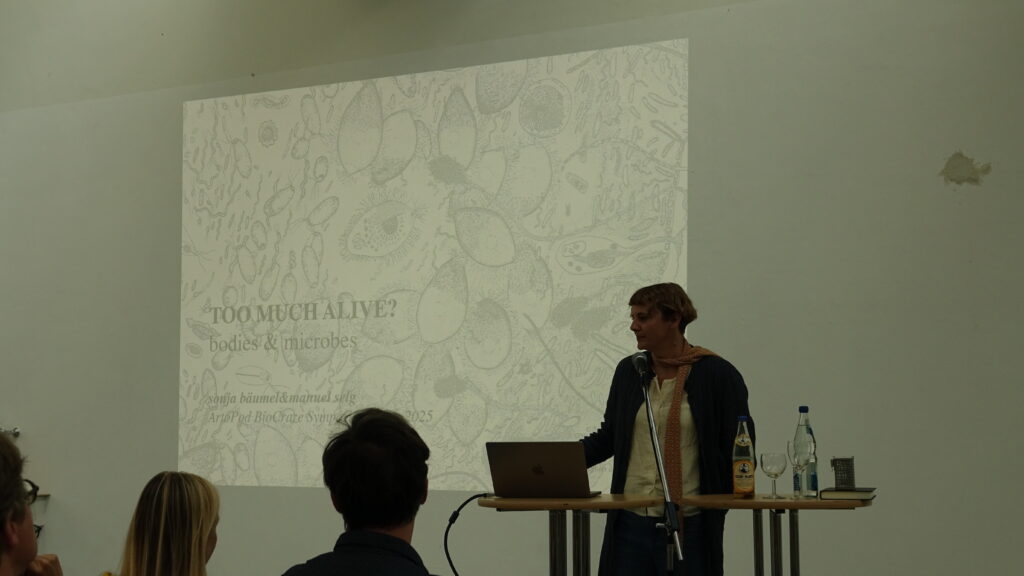
Too Much Alive?
Manuel Selg, Bio- und Umwelttechnik, Fachhochschule Oberösterreich, AT
Sonja Bäumel, Gerrit Rietveld Adademie, NL, Künstlerin, AT
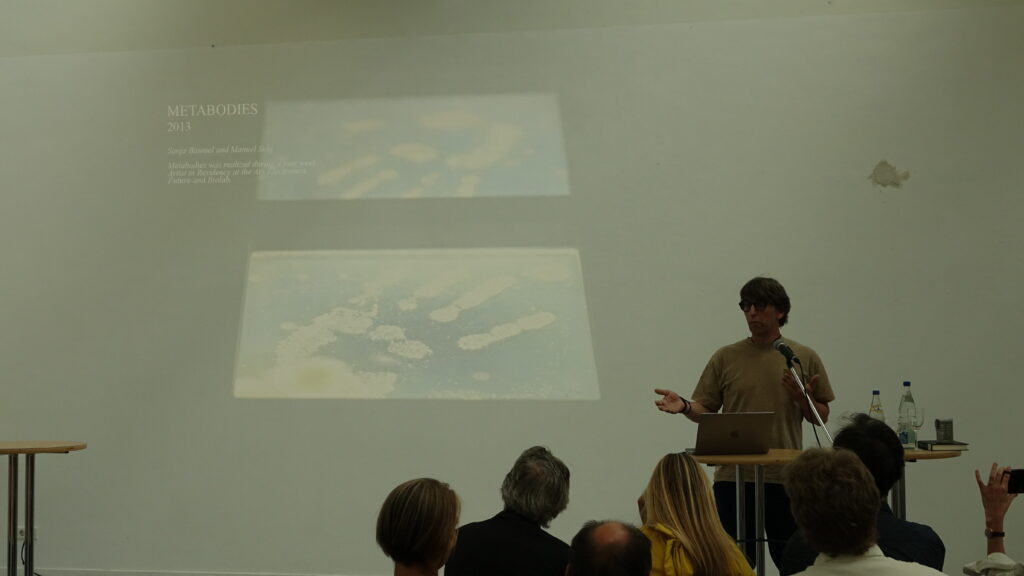
Sonja Bäumel and Manuel Selg will introduce their artistic and scientific practice and perspective on bodies & microbes. Departing from their research on human-microbe relations, their presentation will focus on their projects Metabodies, Mehrwesen, (Un)sichtbare Begegnungen, Microbial Entanglement and their joyful struggle with exhibiting living artworks.
Most of our projects involve long-term collaborations, extensive fieldwork and a process full of wonder. Following a trans-disciplinary, process-driven and imaginary yet tangible approach, they are exploring the social network of microbes on our body, probing rituals for microbes to encourage human bodies to a more-than-human sociality, sensing through embodied practices how a cell body might feel or testing the limits of their nerves with the production of living artworks. Combining field-research, material experimentation and performative activations, our transdisciplinary process intends to reveal the inter-relatedness of microbes, humans, politics and ecology.
Our work explores possible ways of encountering invisible and intangible beings while questioning the perception of skin as the ultimate border for human and more-than-human bodies, embracing risk while directly engaging with living microbial entities, and venturing through landscapes, on a macro- and microscopic level, to seek clarity as to where the environment starts and where it ends.
Manuel Selg is a molecular biologist and chemist. After completing his bachelor’s degree at Western Kentucky University in Bowling Green, Kentucky, he earned his doctorate in molecular biology at Loyola University Chicago. This was followed by several years of basic research in the fields of medicine and developmental biology before he took up the professorship in molecular biology at the University of Applied Sciences Upper Austria, Faculty of Technology and Applied Sciences, on the Wels campus in 2004.
Today, he is the programme director for the bachelor’s and master’s degree programmes in bioengineering and environmental engineering. He is also vice-dean for internationalisation and research and heads a research group focusing on the use of biosensors in medical diagnostics.
Manuel Selg has been involved in bio art for around 15 years. He has worked on a wide range of projects with various artists and curated exhibitions. Through bio art, Manuel Selg aims to highlight relevant issues of human coexistence and thus initiate and promote social dialogue.
Sonja Bäumel is an Austrian artist and professor living in Amsterdam, Netherlands, and Vienna, Austria. She explores “the living” and the evolving perception of what bodies are made of.
Bäumel studied fashion design at the Hetzendorf Fashion School in Vienna and holds a Bachelor of Fine Arts from the University of Art and Design Linz and a Master’s degree in Conceptual Design in Context from the Design Academy in Eindhoven. In 2022, she represented Austria at the 23rd International Triennale Milano with the performative and multisensory installation ENTANGLED RELATIONS-ANIMATED BODIES.
Her work has been exhibited internationally, including at the MAK – Museum of Applied Arts Vienna, the Museum of Contemporary Art in Taipei, the Frankfurter Kunstverein, and the Centre Pompidou in Paris. Bäumel co-founded the collective Dunbar’s Number, was a member of the Vienna-based collective Pavillion35, and a member of the Amsterdam-based collective WNDRLUST.
She currently works as a lecturer and professor in the Jewellery – Linking Bodies department at the Gerrit Rietveld Academie in Amsterdam and gives lectures and workshops at various national and international academies and universities.
Sonja Bäumel
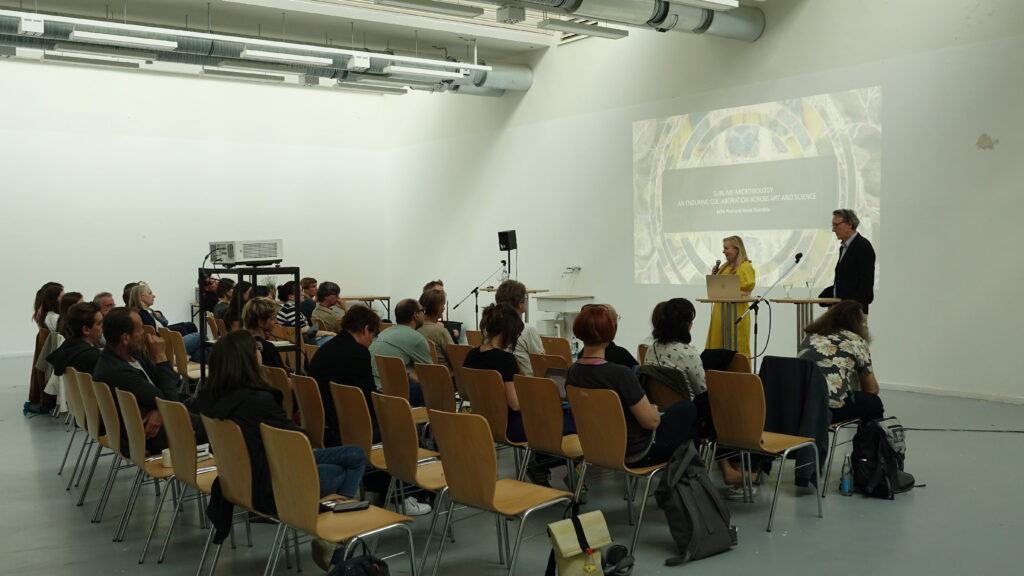
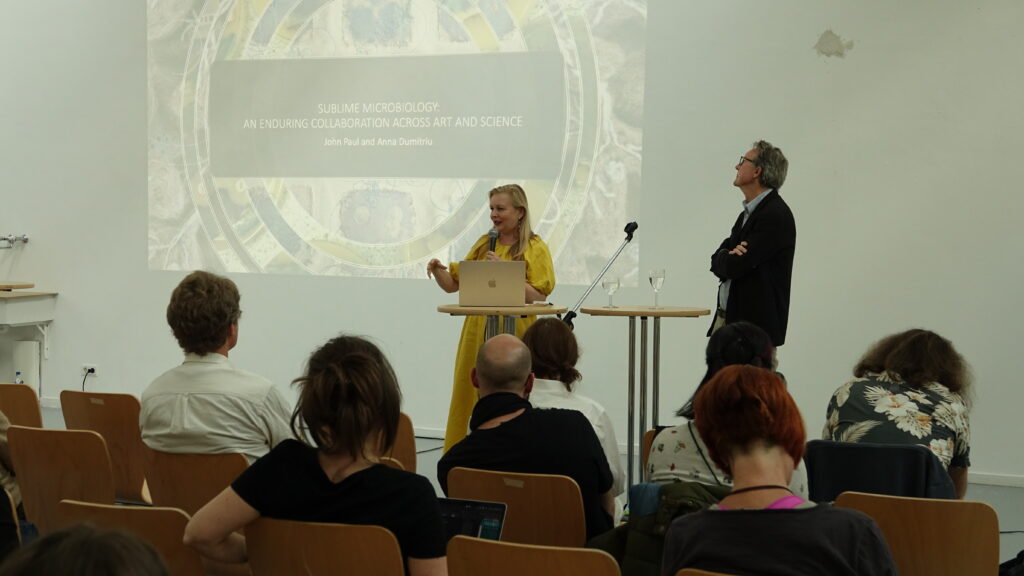
Sublime Microbiology: An Enduring Collaboration Across Art and Science
John Paul, Modernising Medical Microbiology Consortium, UK
Anna Dumitriu, Artist, UK
BioArtist Anna Dumitriu and microbiologist Dr John Paul will discuss their art/science collaboration which has grown in many directions through numerous projects and has lasted over 20 years. They will reflect on how the collaboration started, how it developed and forged many new collaborations, with a focus on the Oxford University led Modernising Medical Microbiology project. They will explore how the philosophical concept of the sublime came to inspire them, especially when working hands-on with plague bacteria in a high security lab, and how they recently ended up reconstructing a pioneering artwork involving maggots and flies by the Late Hamad Butt for the Irish Museum of Modern Art.
Dr John Paul is a medical microbiologist who has been collaborating with Anna Dumitriu for almost twenty years. After attending medical school, JP trained in medical microbiology and then later during the early 1990s he was entrusted with the responsibility of a research laboratory in Nairobi, Kenya which supported studies on bacterial infections in AIDS patients. After returning to the UK, he occupied various posts in clinical and public health microbiology. In 2008 he became a member of Modernising Medical Microbiology, a new research consortium that aimed to utilise whole genome sequencing as a technology to characterise bacteria and to track outbreaks of bacterial infection. He led projects on the transmission of Staphylococcus aureus, a cause of hospital-acquired infection and Neisseria gonorrhoeae, a sexually transmitted bacterium which causes gonorrhoea. He was awarded the title of honorary professor by Brighton and Sussex Medical School. With Anna, he has supplied microbiological expertise for many of her projects, including the Normal Flora, the Bacterial Sublime, the MRSA quilt, and a plethora of artworks related to Modernising Medical Microbiology. JP is an enthusiastic bacteria tourist and has travelled widely in order to admire and investigate bacteria. He is also an avid amateur entomologist.
Round table
Moderation: Peter Wendl, AdBK Nuremberg