Haha, burdock and devil’s claw get stuck to my giant shoes. Why?
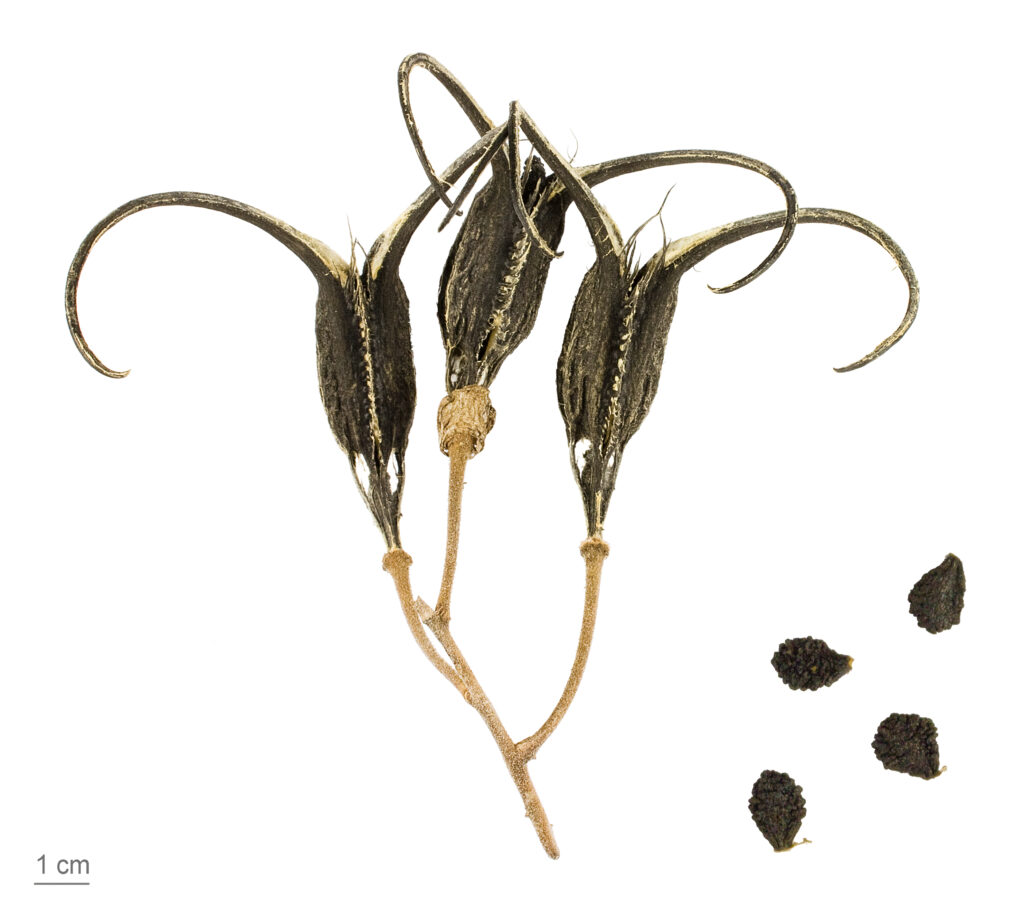
The conspicuous capsules of Proboscidea louisianica travel in animal cabs to disperse their seeds over long distances. The flowers of the plant are extremely tasty for bees and bumblebees, the fruits are initially edible and later lignify into the distinctive devil’s claw shape. They stick to the hooves or paws of larger mammals to be carried further way. The involuntary dispersers trample the capsule fruits and thus release the individual seeds. Shepherds are sceptical about the plant though: sheep love to eat the shrub, but thanks to small barbs the fruits become so entagled in the sheep’s fur that the wool might loose its value.
Bild Credits: Roger Culos – CC BY-SA 3.0
GentlemanDino
Enjoy the moment, sip by sip.
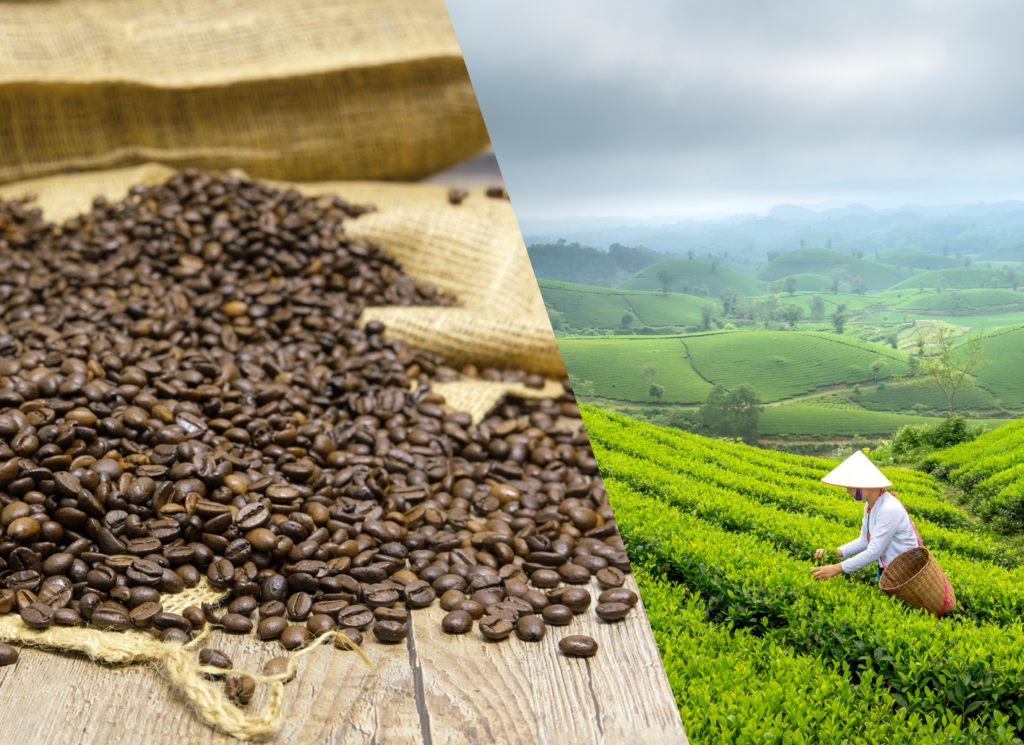
About 150 years ago, coffee cultivation in Sri Lanka came to an end – a rust fungus was to blame. At that time, coffee was the national drink of the British. And the then British crown colony of Ceylon – today’s Sri Lanka – was one of the most important coffee exporters. Then a fungus appeared that caused a devastating leaf disease: the coffee rust Hemileia vastatrix. But the tea plants flourished all the more splendidly. The coffee farmers switched to tea. The English did the same and became enthusiastic tea drinkers.
The most widely consumed coffee in the world is Coffea arabica. However, its low genetic diversity has its downsides. Meanwhile, remedies have long been available to combat the destructive coffee rust, so that coffee is always available as a morning awakener. However, coffee growers have to be prepared for new diseases and constantly adapt their cultivation methods to protect their harvests.
BunnyDino
Oh, so many colorful eggs, I’ve got my paws full.
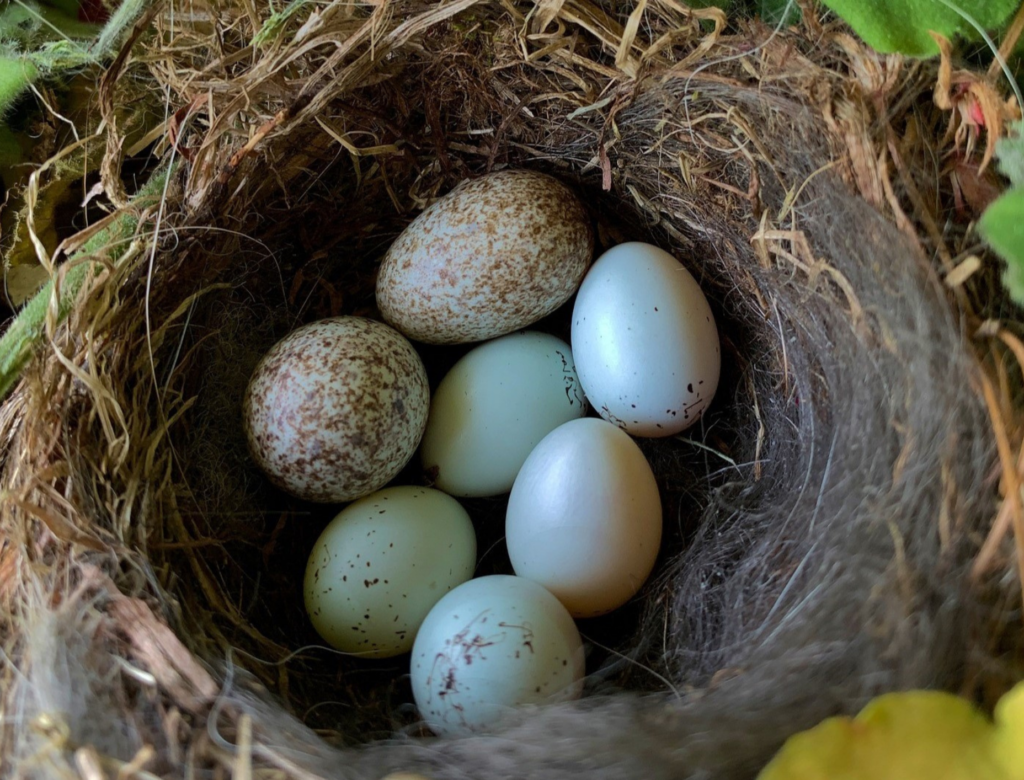
So many different birds, so many different eggs. Galliformes probably lay the most eggs. The largest, however, comes from the ostrich. The emu’s egg is also quite large and sturdy. After all, the shell has to withstand the rather heavy male that incubates the dark green eggs. With the martineta tinamou and tataupa tinamou the males also take care of the offspring. The shell of the eggs looks almost lacquer-ish and does reflect light in a special way. In contrast, the bluish guira cuckoo eggs look rather rough and cracked. In this species, the females breed together in a common nest. The willow grouse lays light brown eggs with dark brown spots – the perfect camouflage on moorland or in the tundra. The raven eggs also match the nest environment, green with irregular brown spots. The cream-colored eggs of the pearl-spotted owlet look very simple. In their natural hiding place – surrounded by wood and shade – they are almost invisible.
Specimens in the Bionicum: Bavarian State Collections of Natural History (SNSB)
DragDino
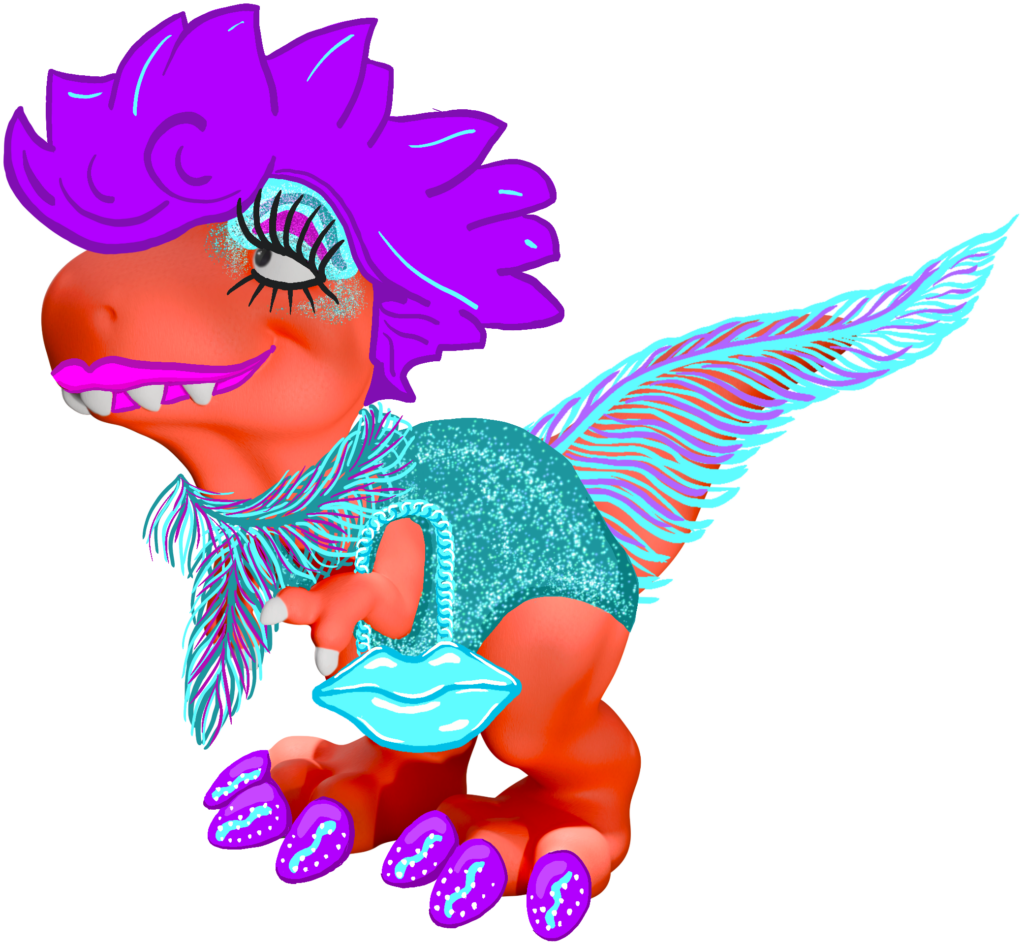
Oh là là, which feathers shall I wear today? There’s so much choice.
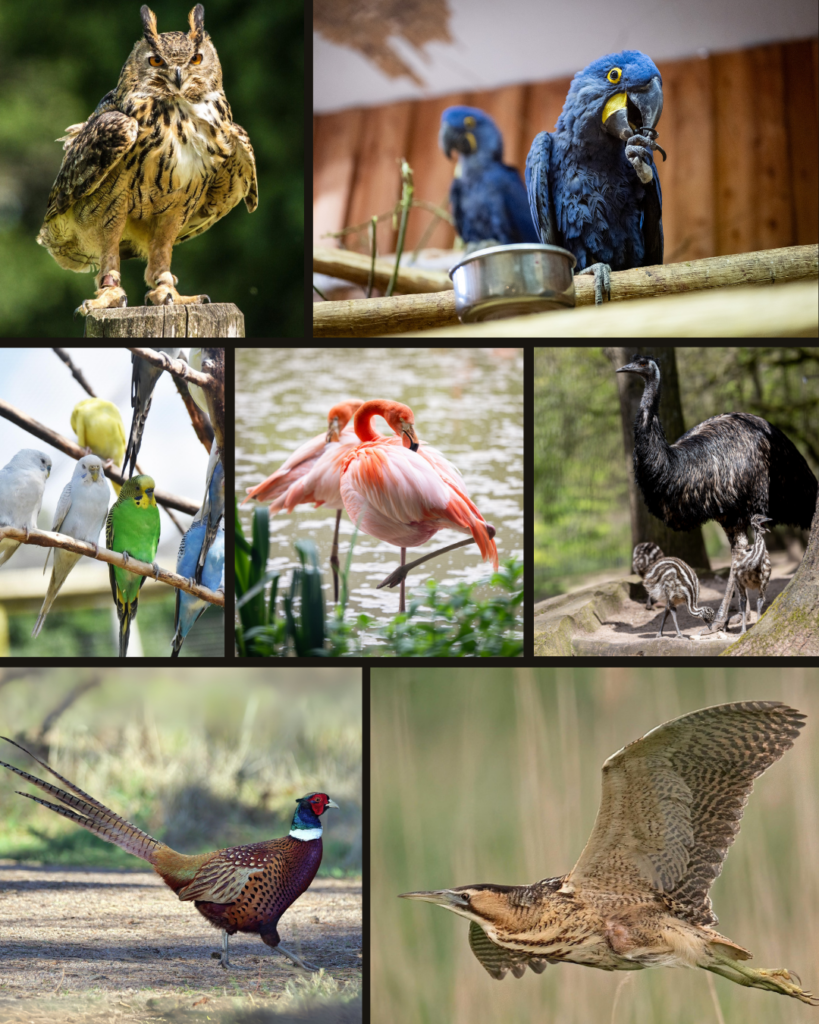
Bird feathers are fascinating structures that fulfill numerous functions: They protect, insulate and enable flight by directing the flow of air. Each feather is made of keratin and grows out of the feather sac. There are different types: Contour feathers for body covering, down for insulation and flight feathers for flight. In flightless birds such as ostriches and emus, feathers are mainly used to regulate heat and protect against environmental influences.
Feathers in display: Nuremberg Zoo
Bild Credits: Thomas Hahn
ZaubererDino
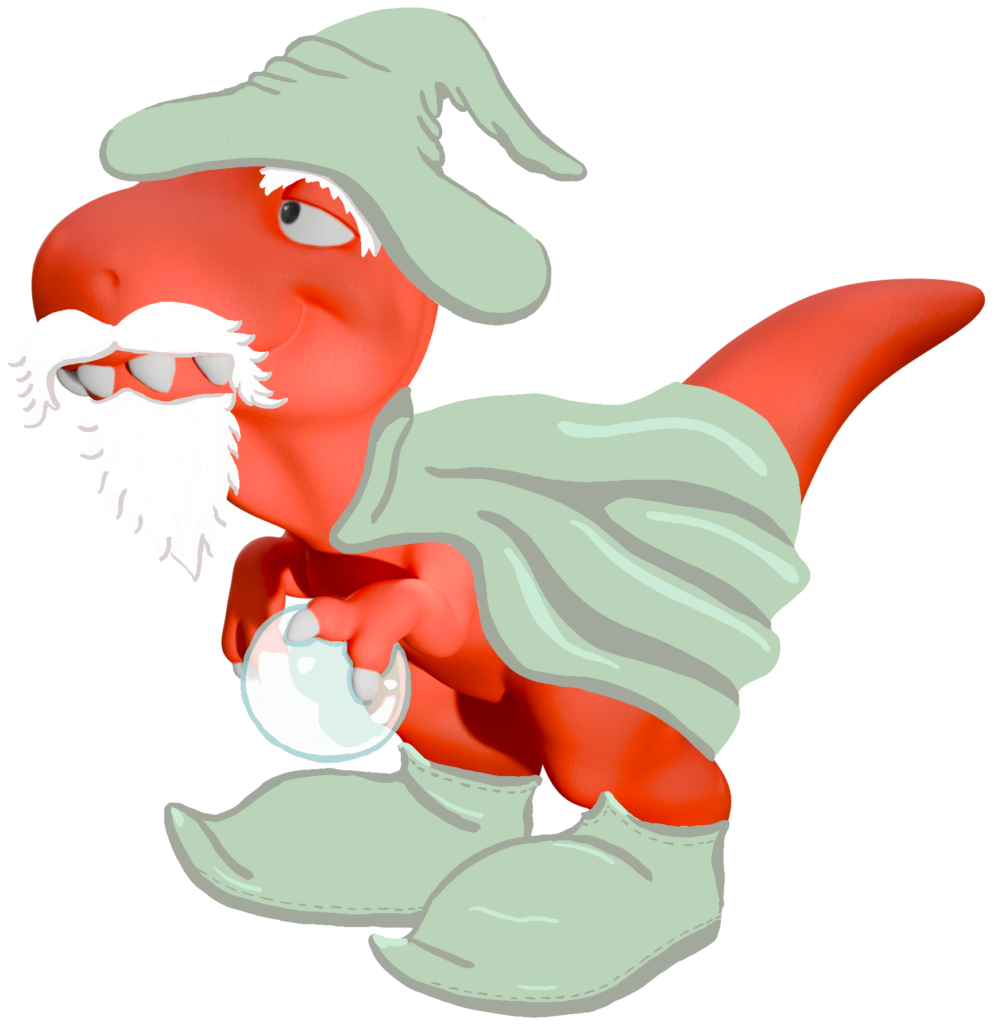
Hocus pocus, by my witch’s bolete! What on earth is that?
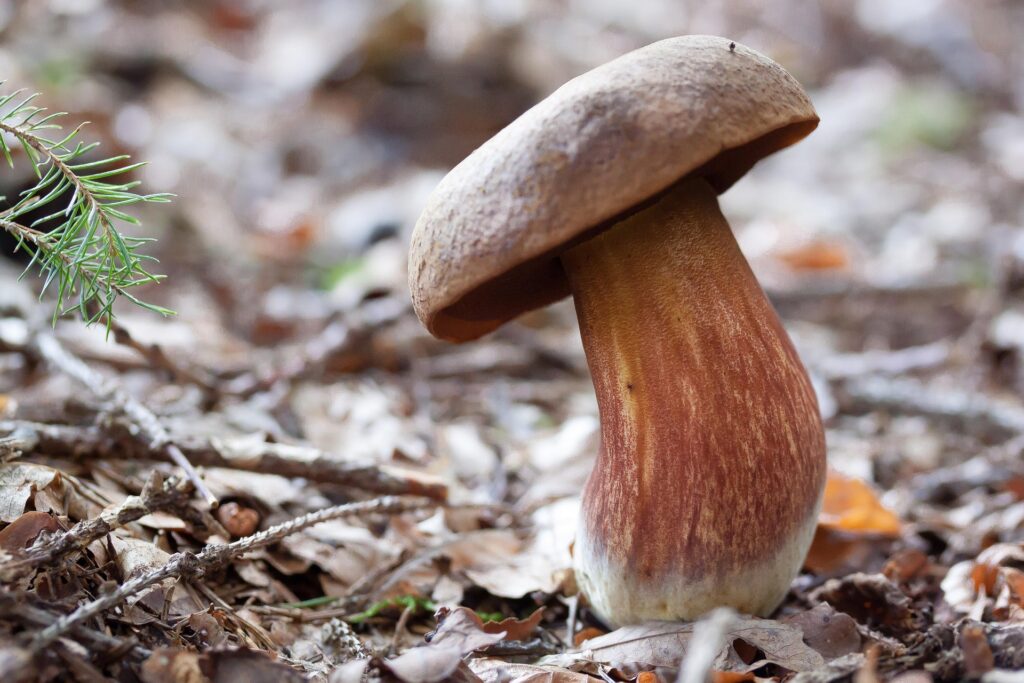
Which mushrooms can you pick and eat? Beginners are well advised to concentrate on boletes first, as there are no deadly poisonous species among them. The only poisonous one, the Satan‘s bolete, is fairly easy to distinguish from the other edible species. Boletes are mushrooms whose fruiting bodies have a stem and a cap. There are no lamellae on the underside of the cap, but a spongy tubular layer. Very popular edible boletes are red caps, porcini and bay boletes.
When raw, the witch’s bolete is inedible. When cooked, however, it is delicious and similar in consistency to porcini mushrooms. The devil‘s bolete, on the other hand, is always slightly poisonous and causes unpleasant diarrhea. It can be distinguished from the witch’s bolete by its light gray to whitish cap.
Model in the Bionicum: Thomas Müller ceramic mushrooms
PiratDino
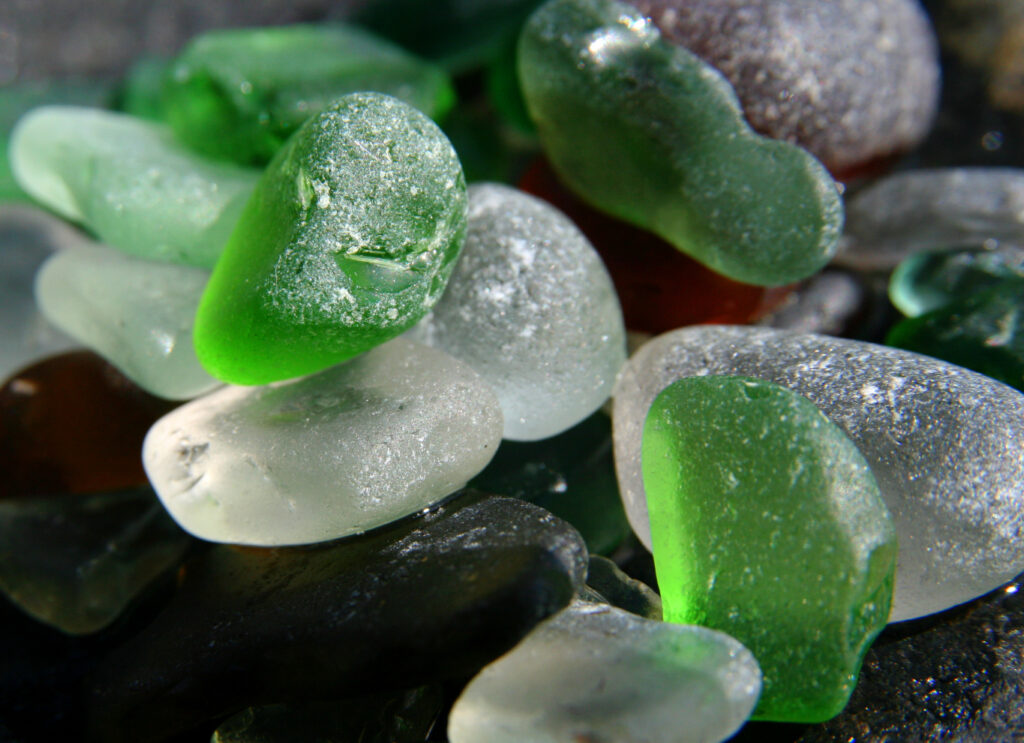
Arr, fins up. Hand over those shiny stones. They’re going in my treasure chest.
Shimmers beautifully and comes in all kinds of colours – sea glass. But, the pretty stones from the sea are not a natural product. What nature washes up at our feet is actually rubbish. Over many years, old glass and fragments are polished and satinised by the sea and sand. The artefacts are highly prized by collectors worldwide. A lot can be read from the shards. They tell the knowledgeable finder „stories in the sand“ about their origin and age. You can see them in the Bionicum.
PrinzessinDino
Mirror, mirror on the wall, who’s the fairest of them all?
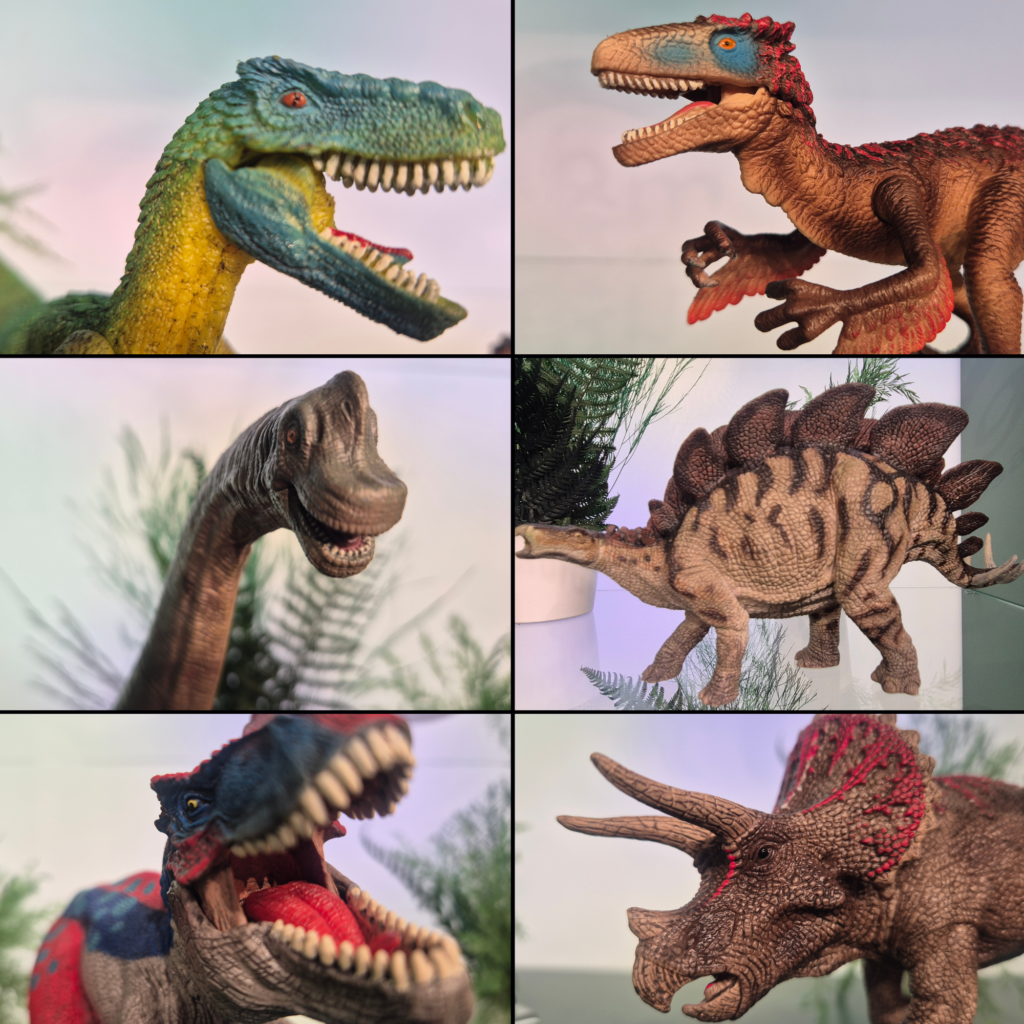
The age of the dinosaurs spanned an impressive 200 million years. During this enormous period of time, countless species populated the earth one after the other and then disappeared again. We have compiled six of them here. But did they ever really meet?
Tyrannosaurus and Triceratops were actually face to face. This is proven by 70 million-year-old fossils from the Upper Cretaceous of North America, with skeletons wedged into each other. Velociraptor also lived in the Upper Cretaceous, but in Asia. It did not come to North America without an airplane or train. Although Utahraptor was North American, it was 60 million years too early for T-rex and Triceratops. 150 million years ago, another 20 million years earlier, Stegosaurus and Brachiosaurus roamed the same landscapes in the Upper Jurassic of North America. However, there is no evidence that they ever met.
A big dino party with everyone together? Unfortunately not – they would probably never have received the invitation to the same epoch! But at least they didn’t have to fight over the crisps… 😉
BatDino
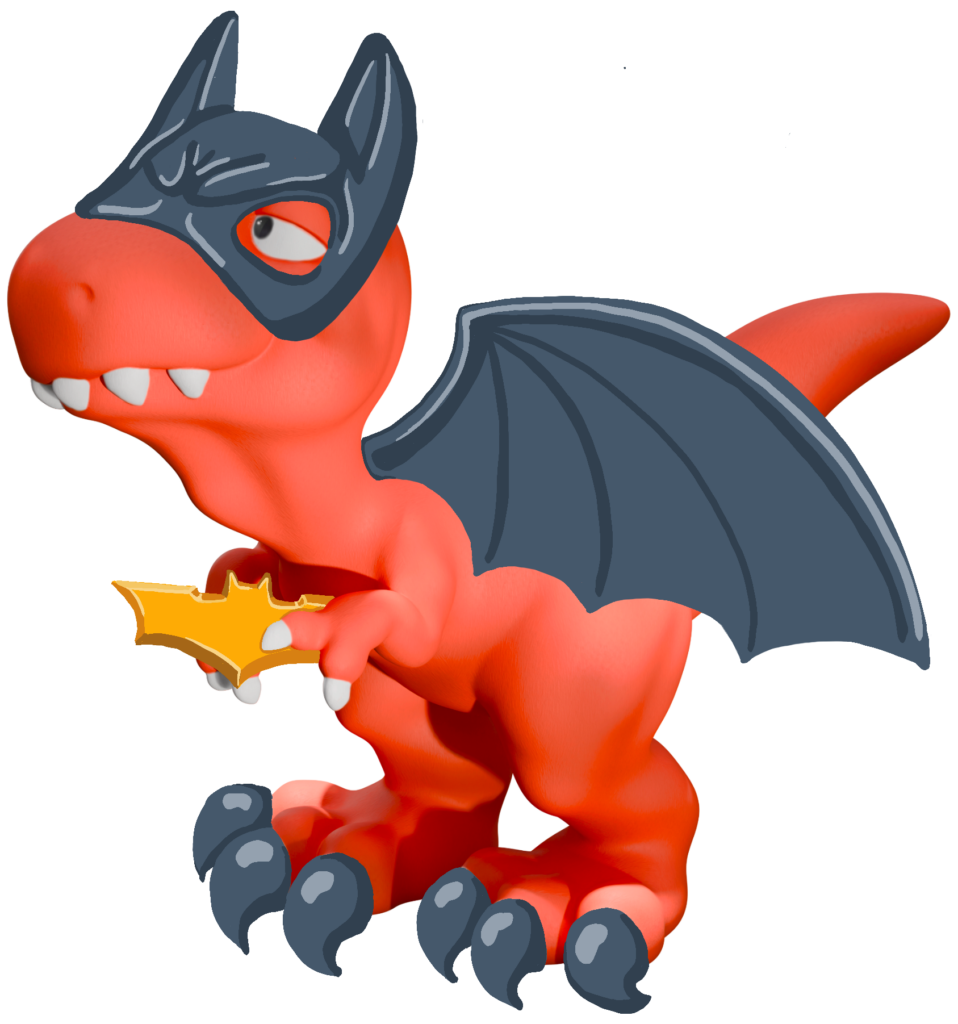
For today, I am a bat. Quite handy, I hear much better. And I can even fly.
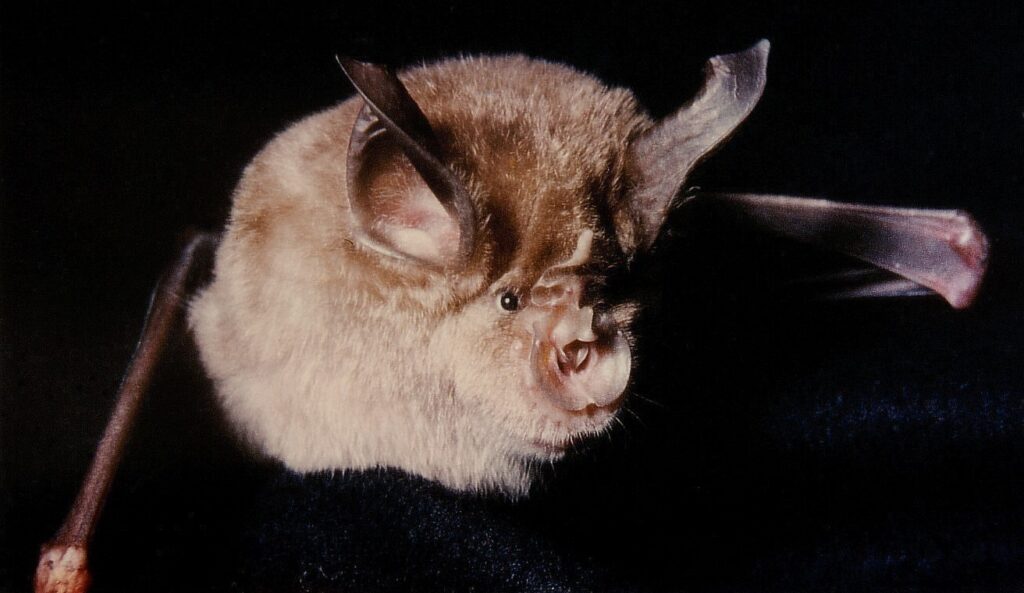
Bats are the only flying mammals and amazing acrobats in the dark. They use echolocation to find their way around at night: By emitting high-frequency sounds, they can detect the echoes of objects, such as insects, and thus precisely locate their prey. This ability makes them excellent insect catchers that devour large numbers of pests. However, there are also species that eat nectar, fruit or even small vertebrates such as fish or birds. Despite their reputation as “scary” animals, bats are extremely valuable from an ecological point of view. Not only do they help control insects, but they also contribute to the pollination of plants and the dispersal of seeds. The horseshoe bat is native to Europe, Asia and Africa and prefers hidden, safe roosts such as caves, crevices or abandoned buildings. It feels particularly at home in warm, well-protected environments where it can sleep peacefully during the day before going hunting at night.
Specimen in the Bionicum: Nuremberg Zoo
Bild Credit: Prof. emeritus Hans Schneider (Geyersberg), CC BY 3.0
Bionicum robot family
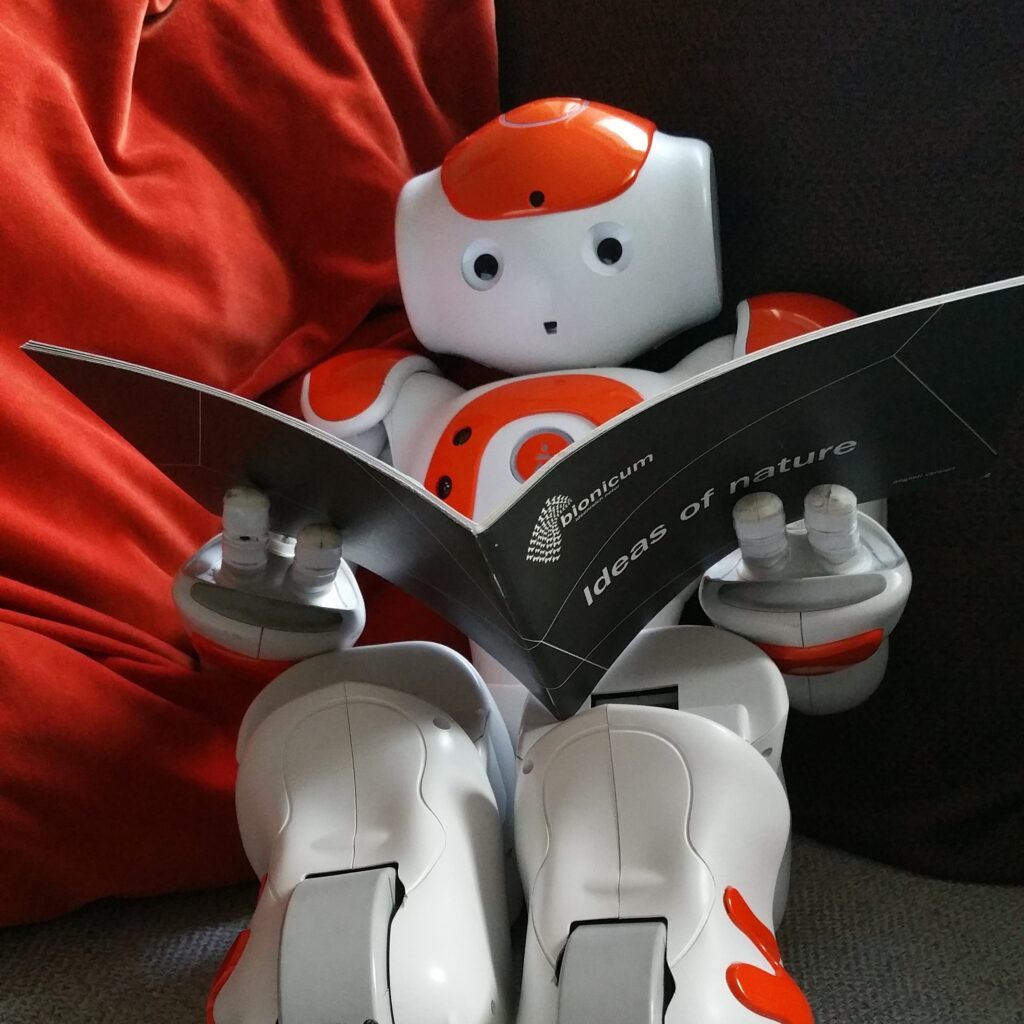
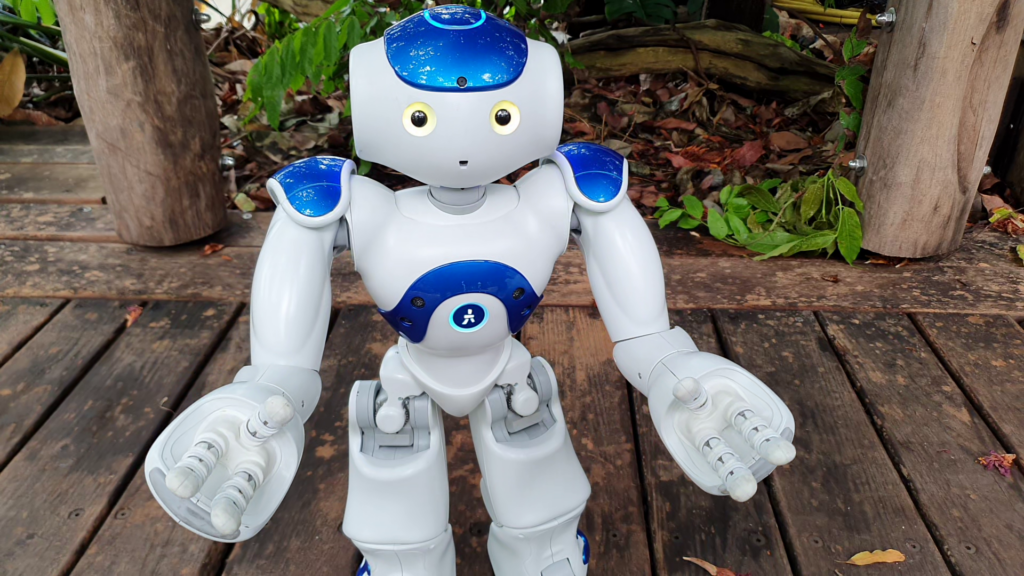
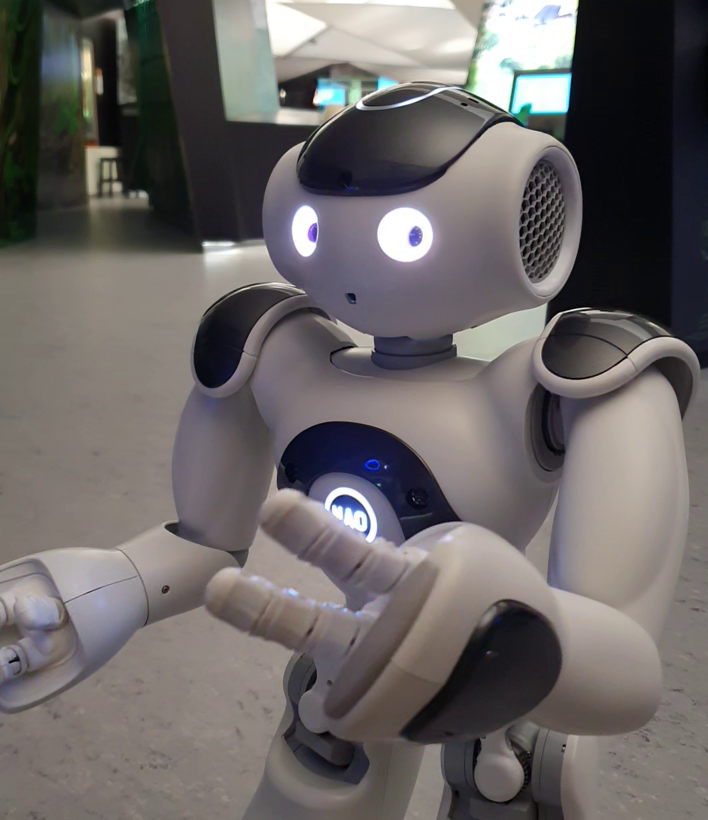
Three humanoid robots live in the Bionicum. The NAOs are from Paris, out of the workshops of the Aldebaran company. They find optimal living conditions in research laboratories and educational institutions. NAOs show us what already can be done with robotics to this day and what needs improvement. Getting up, walking and finding faces – NAOs come with that. The NAOs in the Bionicum have learned a bit more: they crack jokes, get you fit and hit the dancefloor. But watch out and don’t be fooled by their innocent looks. They can and will drive their colleagues crazy. And each robot has its own personality, so browse through.
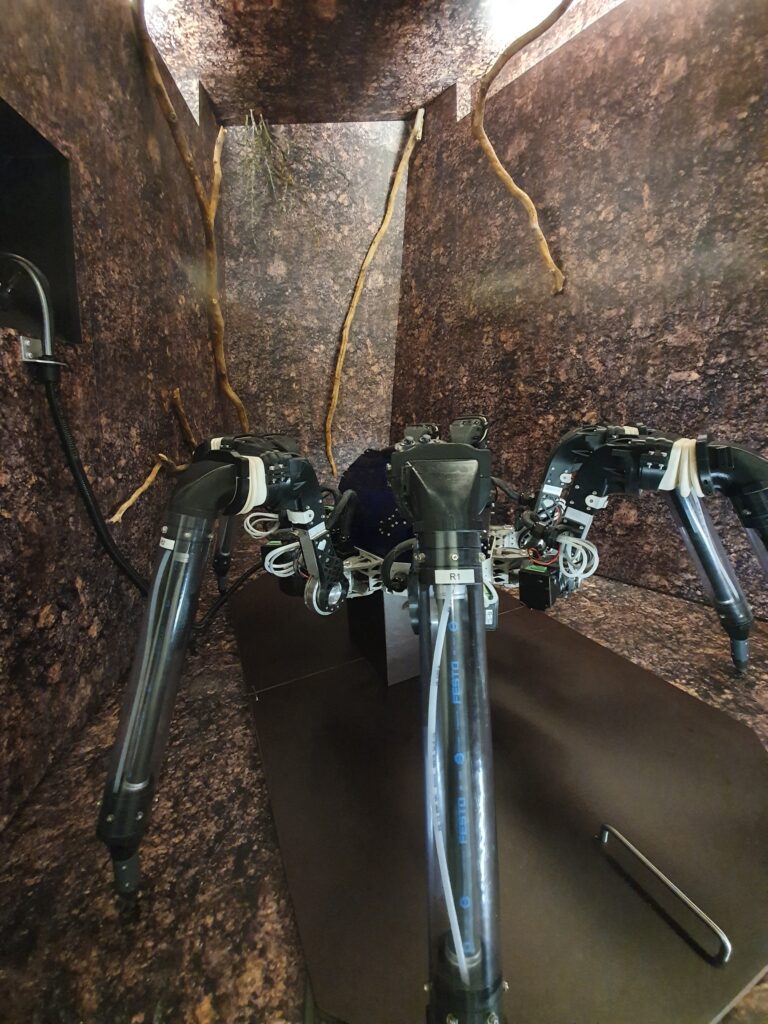
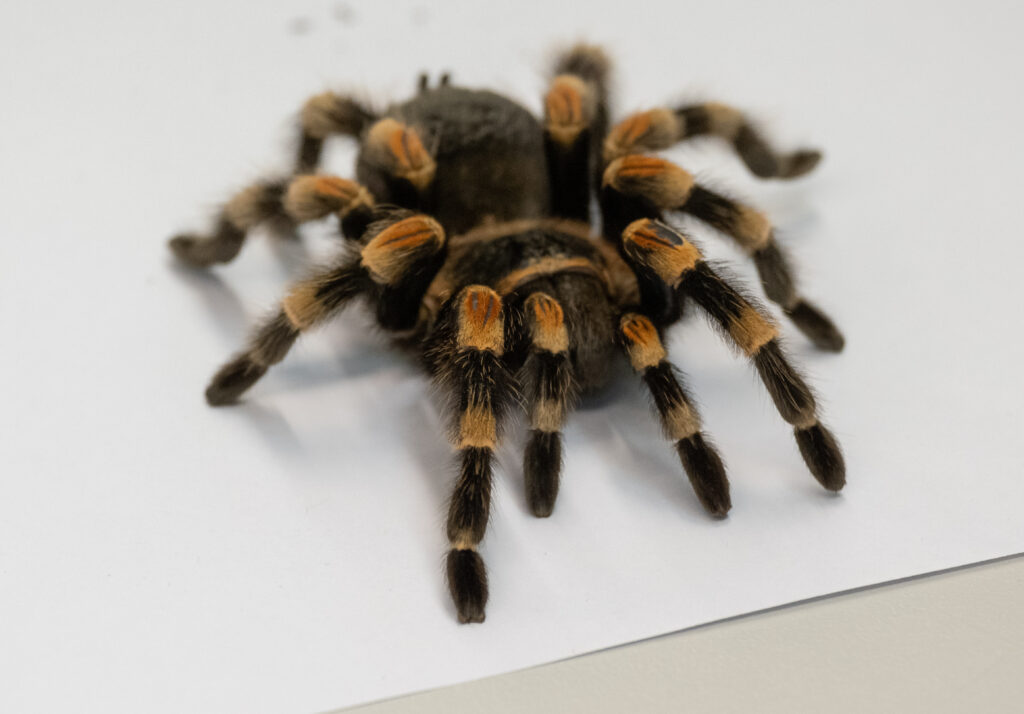
The spider robot Ohm-crawler is at home in a burrow next door. Like its natural role model, the Mexican redknee spider, this robot has significantly more legs than its NAO colleagues. The ease with which the spider moves inspired the Nuremberg Institute of Technology Georg Simon Ohm and the Bionicum to build this innovative rescue robot.
Meet the robot family
Nao
Nao is the grand seigneur of the robot family and has been living in the Bionicum since 2014. He was the first robot in the zoo and is therefore simply called Nao.
For a long time, he worked the shows all by himself. He is highly appreciated by his human colleagues because of his reliable software.
However, the ravages of time are wearing on him. His joints are wearing out and the battery is running out of breath. Nevertheless, he’s got the gall to stick his nose into everything and has a taste for nonsense… especially when Nao is home alone (see auf YouTube).
Emma
Emma is an inquisitive researcher. She moved into the Bionicum in 2018 and was immediately welcomed into the team.
As a successor to Nao, she is sturdier, but sometimes a bit too reckless and tends to be a bit clumsy. Clearly visible scratches on her body bear evidence to that.
She is extremely inquisitive and is even more eager to exlore than Nao. For you, she has made several expeditions to the zoo and asked a lot of questions. Her exciting reports are available on our YouTube Channal.
Momo
Momo is the baby of the family and moved in at the beginning of 2023.
He takes a few liberties because he pays little to no attention to what he is told. This poses quite a challenge for the Bionicum team.
With a lot of patience and perseverance, we have managed to tame the unruly Momo to some extent. Now we can show you what he is capable of – at least when he feels like it. Then Momo is surprisingly adventurous and unstoppable. See for yourself on YouTube.
Ohm-Krabbler
The Ohm crawler lives in the burrow next to and in harmony with the NAO family. Here you can also see the Mexican redknee tarantula.
Both are less hyperactive than the NAOs and quite content where they are.
The Ohm crawler is a prototype and only gets a sniff of fresh air on very special occasions. But if you’re very lucky, you can see the tarantula outside on the hand of a zoo educator … and maybe even touch it yourself.
Schildegard
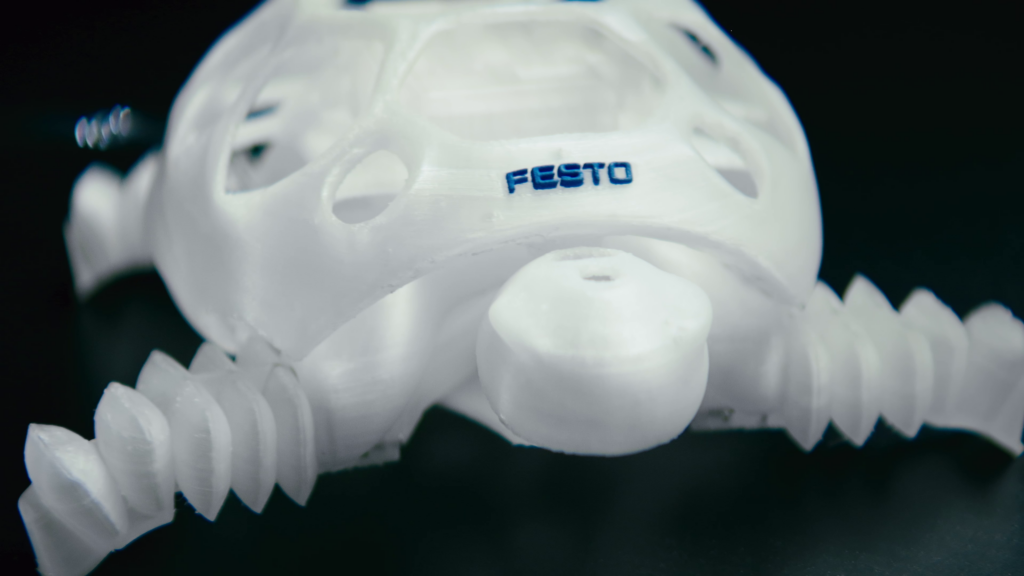
Schildegard, the Turtle Walker from FESTO AG & Co. KG, moved in with the spider robot Ohm crawler. Let’s see if they get along—so far, no trouble. But they also have quite a bit in common, which you probably wouldn’t notice at first glance: Both use air pressure to move around. You can see exactly how that works in the new media station. There, you’ll also learn how to build a gripper arm using dead spiders. Seriously? Yes—thanks to Rice University in Texas for this research with a wink.
Permanent Exhibition
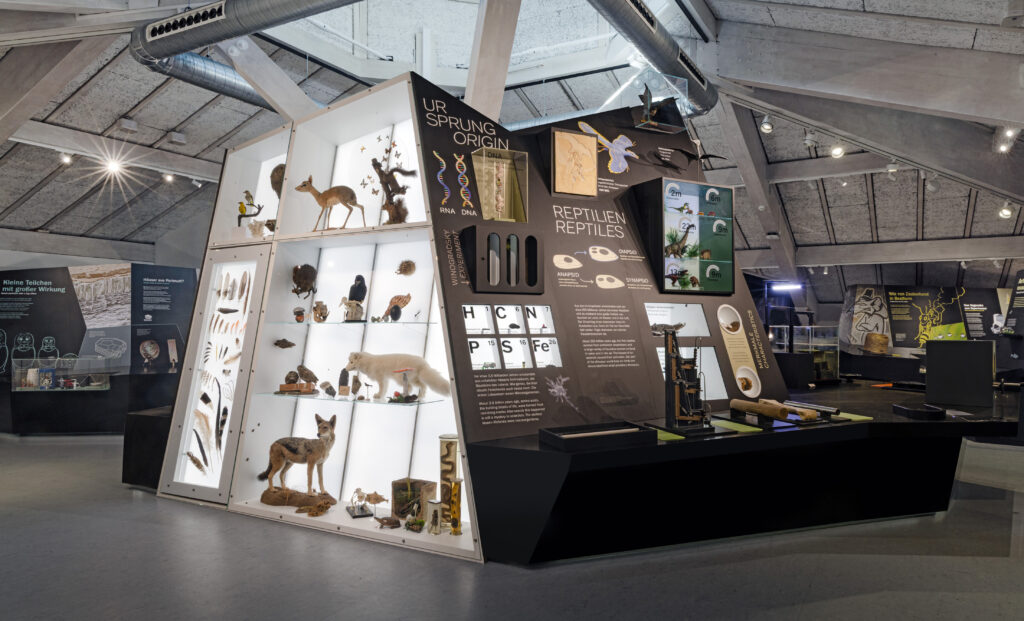
In our interactive exhibition in the Bionicum, everyone can become a researcher. The exhibition looks at different exciting topics from the filed of evolution and bionics. Come and discover the amazing technologies that nature has in store for us humans.
Several robots reside at Bionicum. They are very communicative and enjoy dancing.
The tour guide during the visit is the friendly prehistoric animal DINO. Find him in the exhibition and learn more about the history of the Earth and nature.
Topics of the permanent exhibition
Ideas of nature
Nature is like a giant laboratory that has been in operation since the dawn of time. The first life on Earth emerged 3.8 billion years ago. Since then, millions of animal and plant species have evolved. Each species has adapted to its environment in the best possible way. The best survival strategies have been passed on. We can learn from this wealth of ideas…
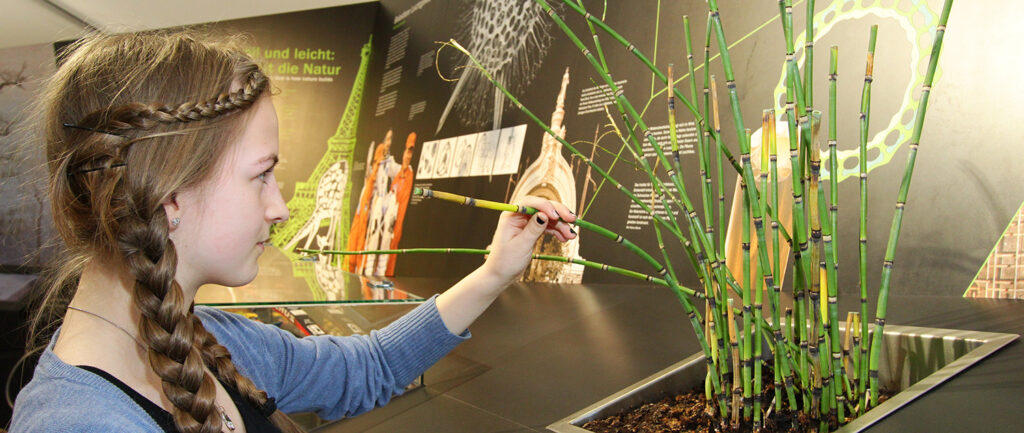
Sturdy and light: that is how nature builds
Shapes of branches or bones do not develop randomly in nature. They are designed to withstand stresses as optimally as possible. As a material, nature uses the composite of fibers and filler.
It’s the skin that does it
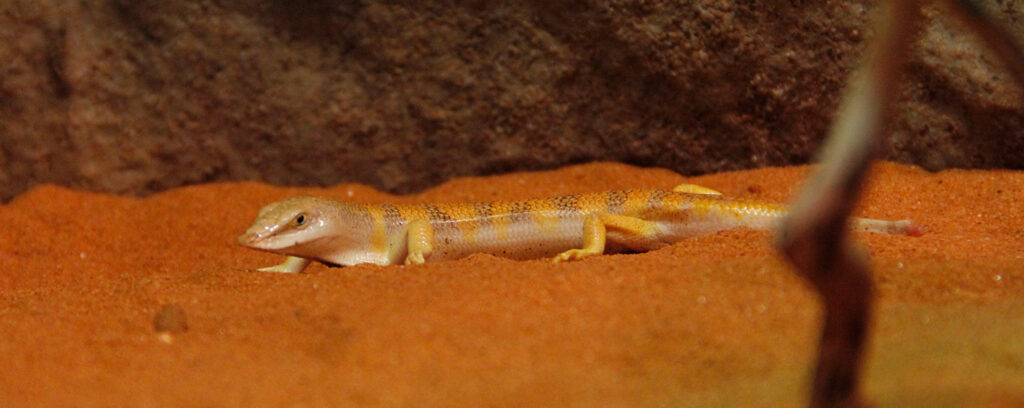
The surfaces of animals and plants have amazing properties. The sandfish has scales that cannot be scratched, while the thorny devil can drink from damp sand without getting hurt.
Many species, many ideas
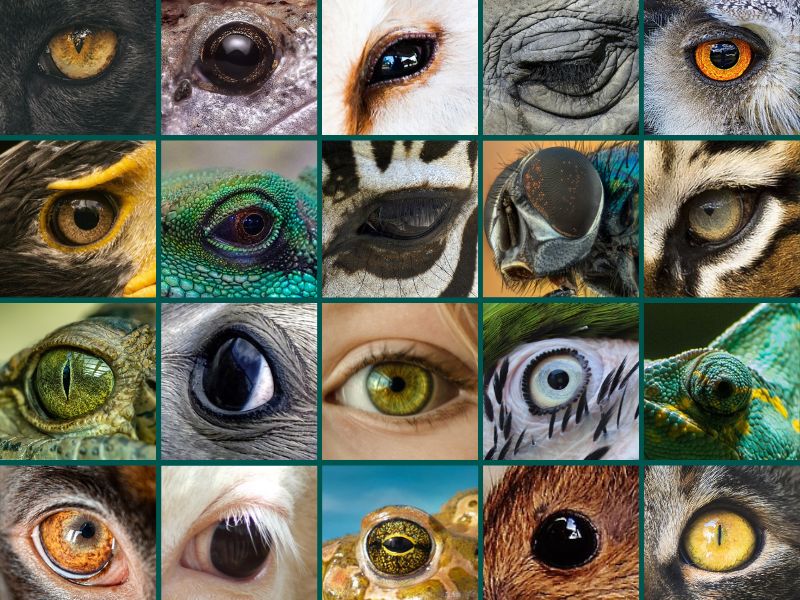
The idea of bionics comes from the fact that there are many different types of animals on our planet – the biodiversity. The example of the eyes shows why there are so many different types in the animal kingdom. This diversity is very useful to humans and inspires many new ideas.
In best form as if by magic
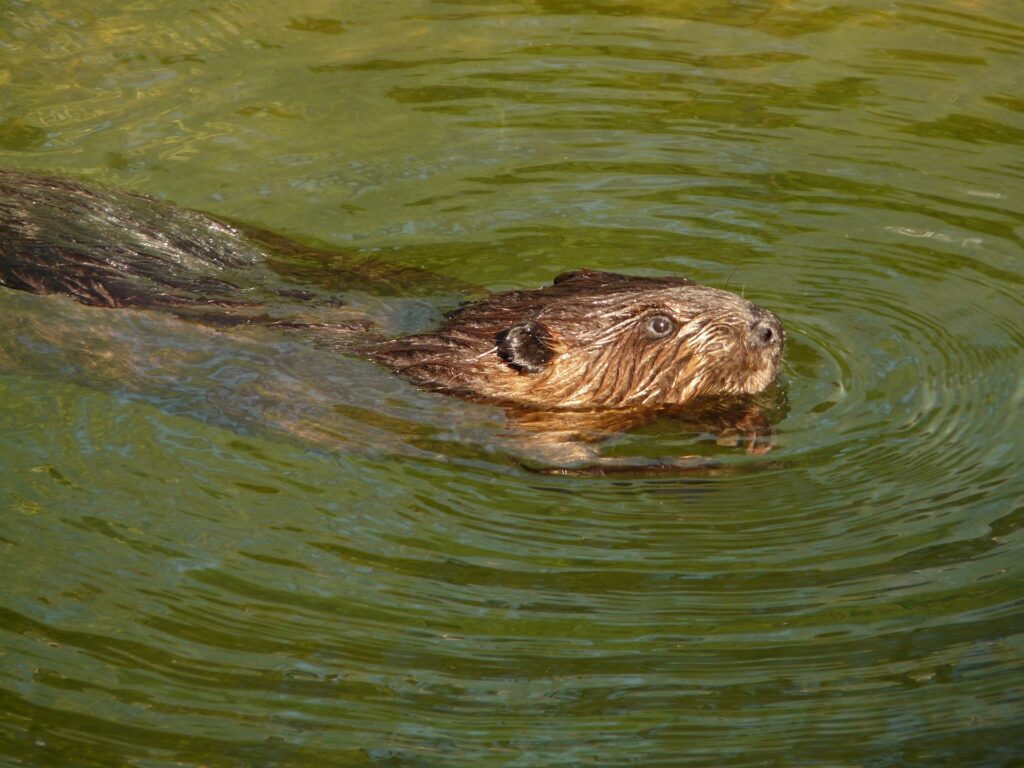
Rodents always have sharp teeth, even if they gnaw on hard things every day. How do they do it? Nature provides materials that sharpen, repair and rebuild themselves.
What do robots learn from people and animals?
Animals are used as models for the way modern robots work. But current technology can’t match the properties of muscles and tendons. A good way to understand this is to compare a spider and a robot.
Small particles, big effect
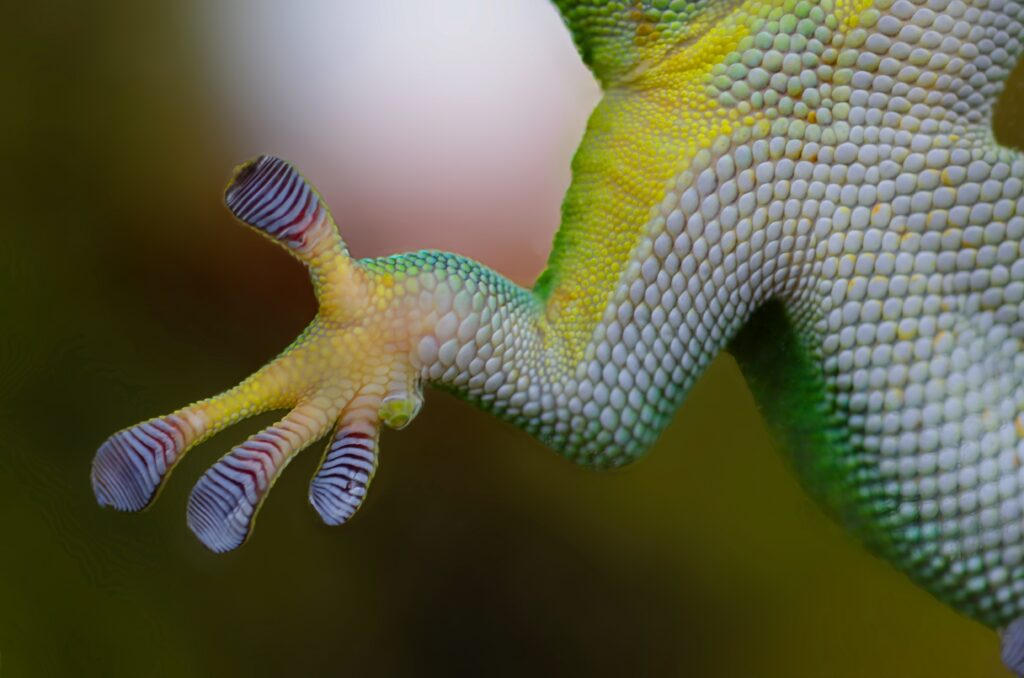
The gecko can stick to the wall by ensuring skin contact between molecules. This knowledge is used in modern bionics and is also making inroads into the field of nanotechnology.
Light provides energy and creates electricity
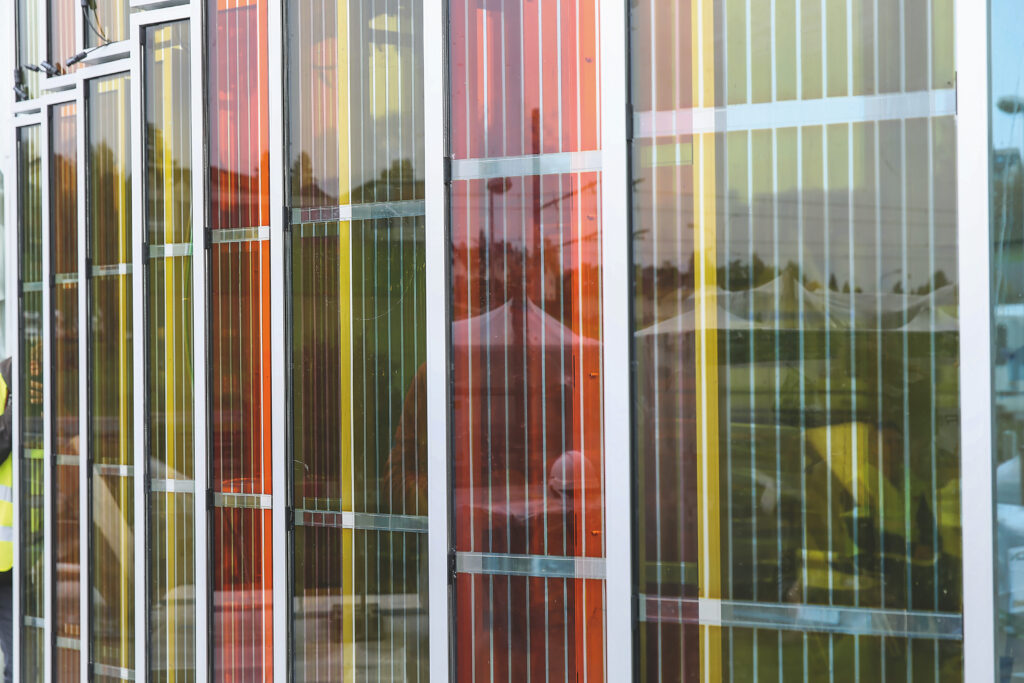
Nature shows us how we can live in the future. It provides energy according to different types of plants, provides shade like the bird of paradise flower and creates ventilation like that seen in prairie dogs and termites.
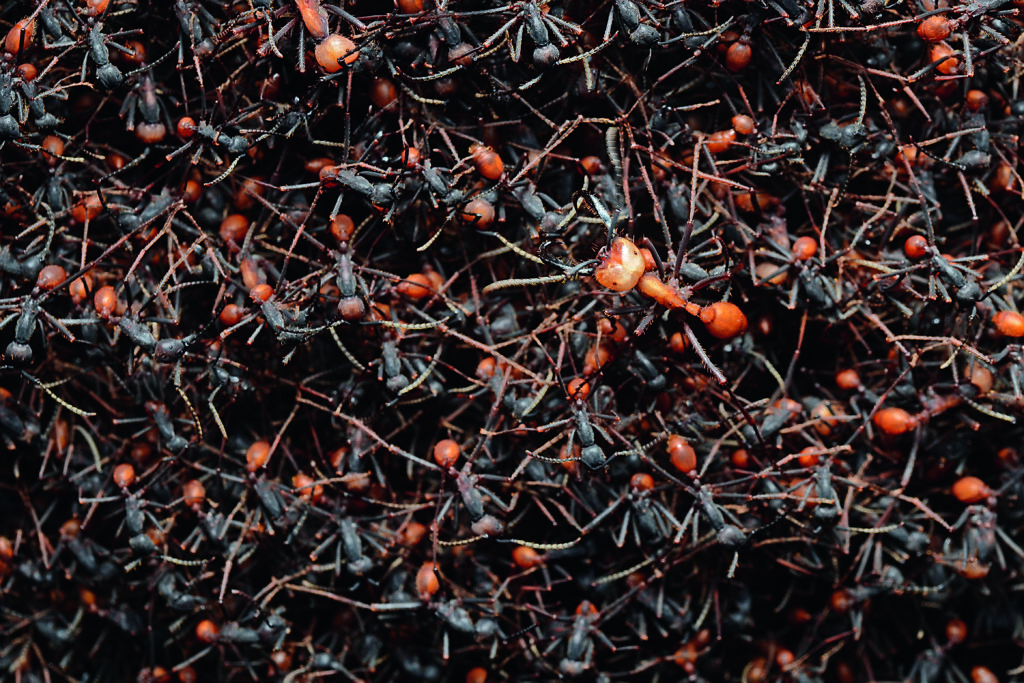
The ants are very clever when it comes to planning their routes. They are so good at this that we can learn a lot from them. This is how modern logistics companies plan their routes.