The Bionicum has started with its own research projects. From 2014 to 2019, animal and plant motion mechanisms were explored and tested for more efficient human technology at the Friedrich Alexander University of Erlangen-Nuremberg and the Institute of Technology Nuremberg. The projects were supported by the Bavarian Ministry for Environment and the Nuremberg Zoo.
You are currently viewing a placeholder content from YouTube. To access the actual content, click the button below. Please note that doing so will share data with third-party providers.
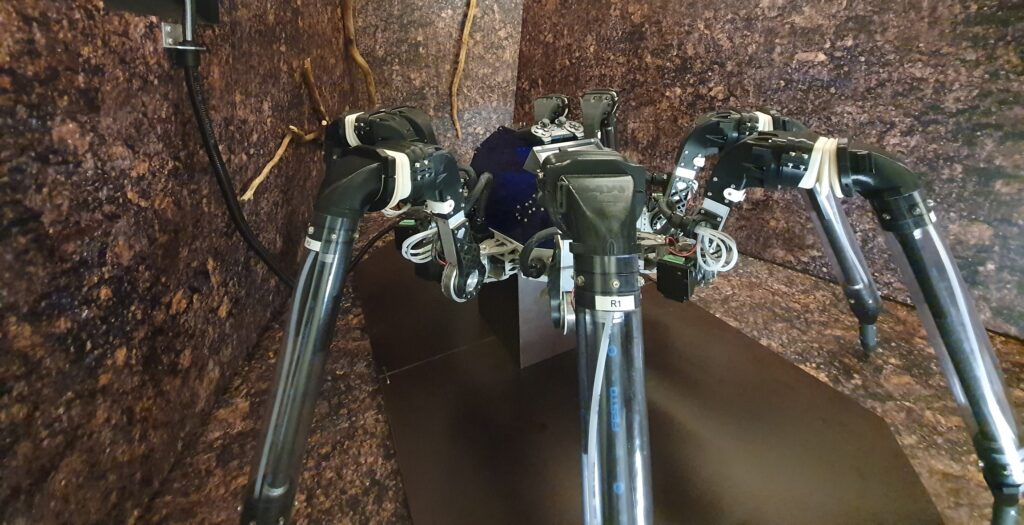
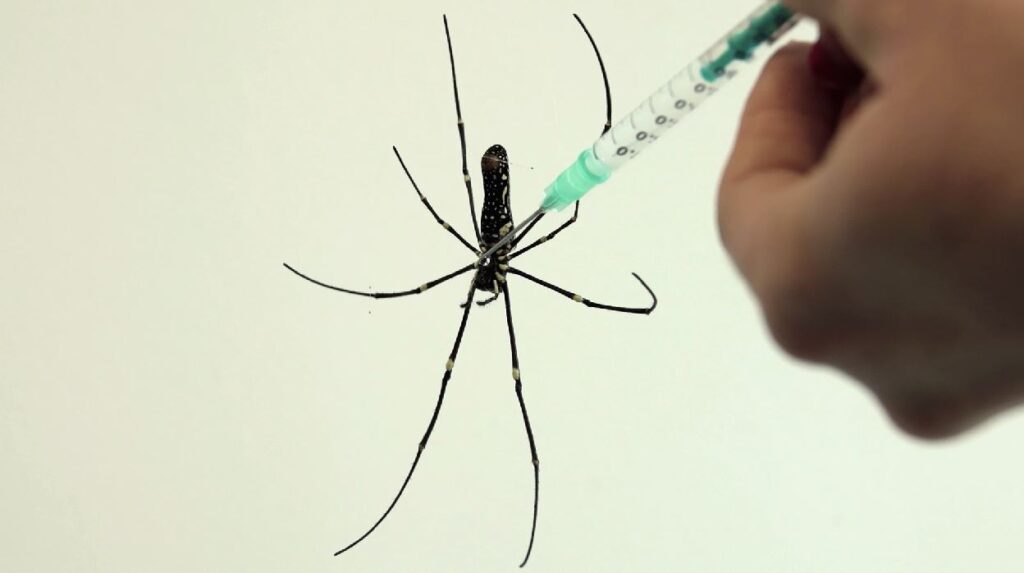
Spiders use both, muscles and hydraulics in their legs, as actuators. That principle combined with an intuitive programming is the model for the OHM-crawler, a walking robot with bionic joints in each of its eight legs. The OHM-crawler uses compressed air as a fluid. For the programming of the step sequences, the scientists had to take care to ensure that they resembled the biological model.
The prototype has now moved into a cave in the Bionicum – right next to its biological role model, the redknee tarantula.
Institute of Technology Georg Simon Ohm Prof. Dr.-Ing. Rüdiger Hornfeck / Stefan Landkammer Prof. Dr.-Ing. Peter Heß / Florian Winter
Muscles made of plastic instead of electric motors
Muscles are a great model to develop novel drives for robots. Robots have to become lighter and safer so that they can be used in direct human environments. Cutting-edge alternatives arise that are significantly more sustainable compared to conventional electric motors.
The project consisted of modeling of the muscles as well as designing and manufacturing.
Friedrich-Alexander-University Erlangen-Nuremberg Prof. Dr. Sigrid Leyendecker / Tristan Schlögel Prof. Dr. Ing. Jörg Franke / Sebastian Reitelshöfer / Max Landgraf
Capturing sunlight with BIOSOL
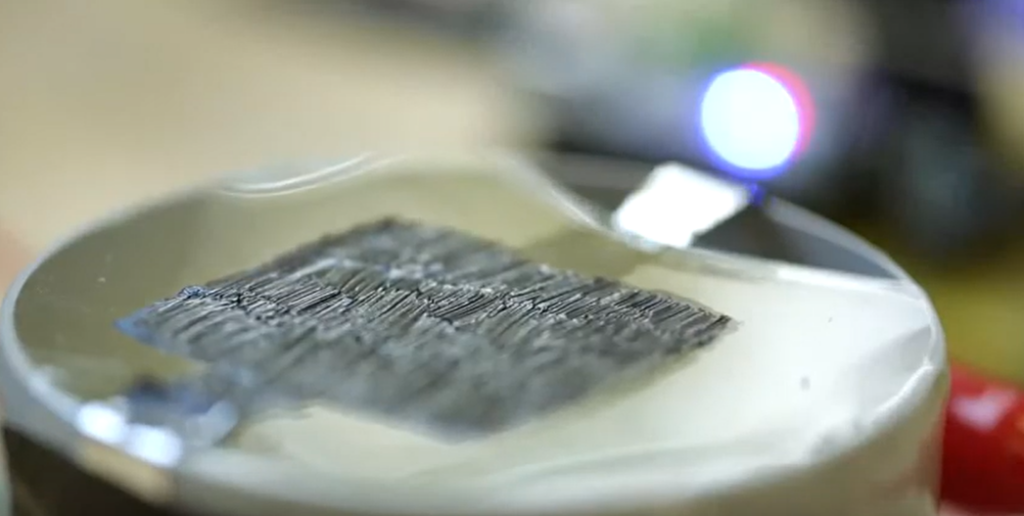
So far, sunlight has only been used technologically to generate electricity and heat. The direct use of light is the aim of the BIOSOL project. For this purpose,a liquid crystal elastomer (LCE) with light-sensitive additives which contract when irradiated was developed and extensively tested.
This bionic solution is not only applicable to the collector, but also opens up new possibilities to build light- or even heat-induced actuators.
Institute of Technology Georg Simon Ohm Prof. Dr. Hans Poisel / Philipp Dengler / Michael Lippenberger
BayBionik Research
As a research discipline, bionics can make a significant positive contribution to society and to solving current challenges. The Bavarian State Ministry for Environment and Consumer Protection therefore funded the project network “BayBionics – From Nature to Technology” from 2019 to 2022 in order to shape future developments in research and industry in a responsible and sustainable manner.
The Bionicum promoted the projects with events and digital programmes – the special exhibition “Bionik to the Future” at the Bionicum and the app “Bionik2Future” being the main outcome of that.
More insights as well as the films Bionik Science Backstage (German and English) can be found below in the project descriptions.
Podcasts for children can be found on our YouTube playlist (German only):
You are currently viewing a placeholder content from YouTube. To access the actual content, click the button below. Please note that doing so will share data with third-party providers.
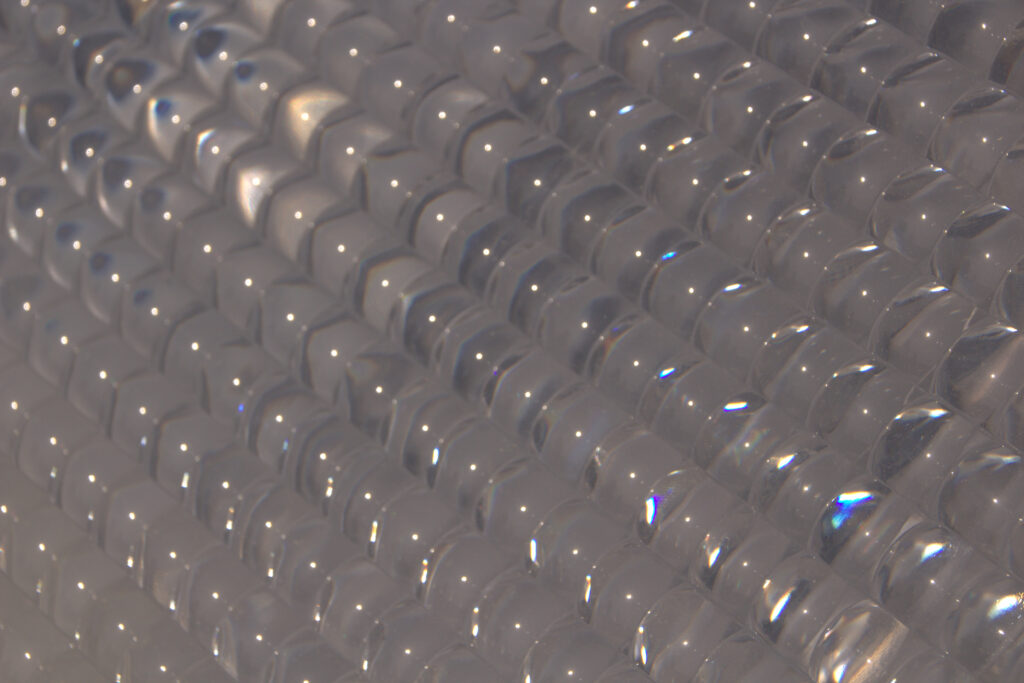
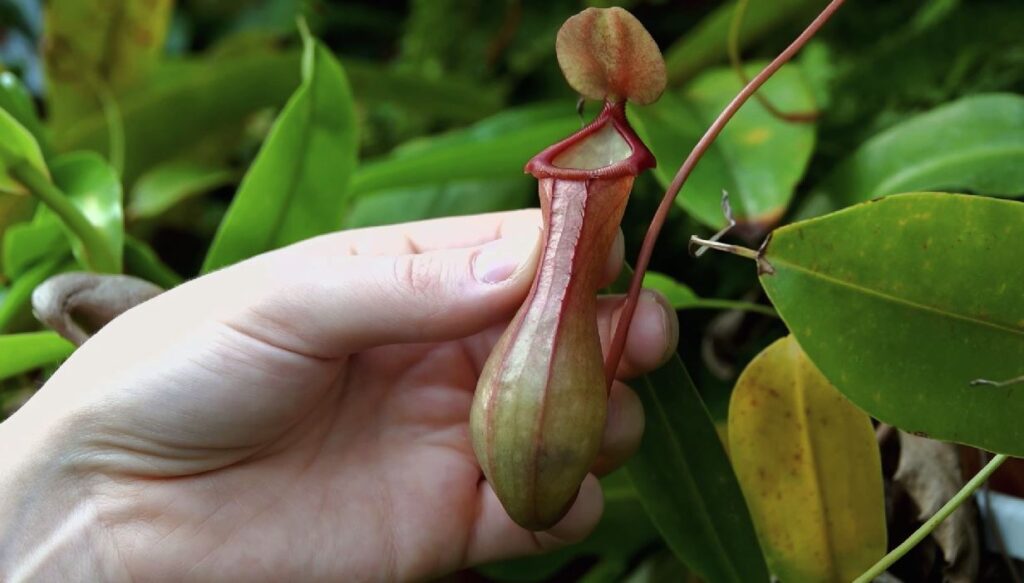
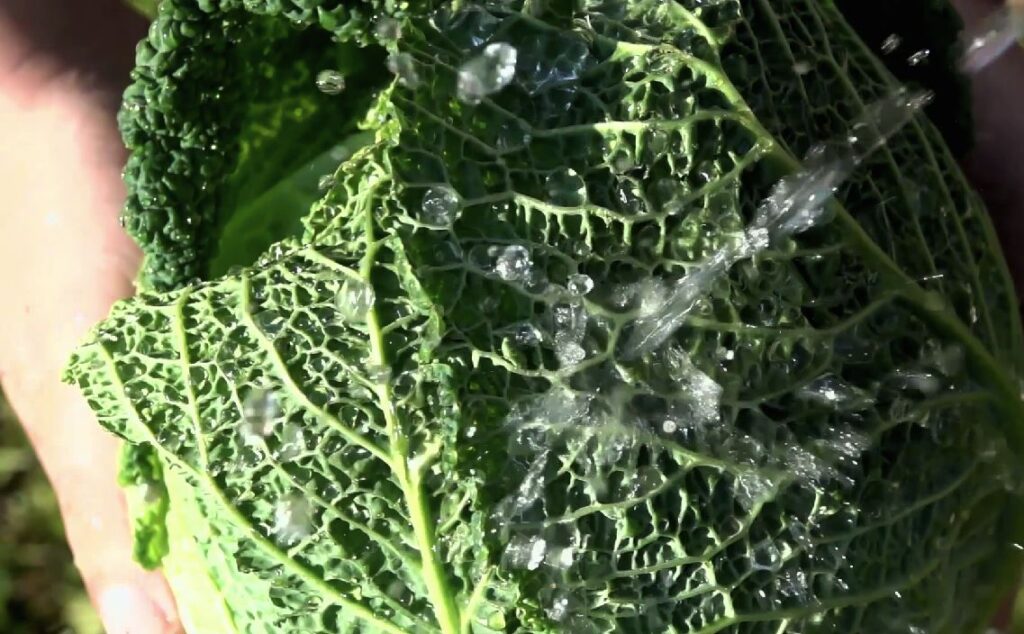
Mussel carpets on ships, snail infestations in agriculture: the aim of the BayBionics project is to develop highly repellent coatings that will prevent such problems in the future. Pitcher plants from the Nepenthes family provide interesting approaches for this. The carnivorous plant forms a slippery surface on its pitcher rim. Insects cannot hold on and slide inexorably into the inside of the pitcher. Non-sticky coatings are produced along these lines, which allow dirt to simply slide off the surface.
Friedrich-Alexander-University Erlangen-Nremberg Prof. Dr. Nicolas Vogel / Teresa Walter
Sustainable self-healing surfaces following nature’s example
Practical self-cleaning surfaces of e.g. commercial vehicles, mobile homes or in furniture are often coated. But the longer these products are in use and the more often they are cleaned, the more the coating is damaged and the function is lost. The aim of the project was therefore to develop surfaces that can renew themselves. Additives were identified that, following nature’s example, are able to migrate independently to the surface of a material. These are mixed into the plastic of the desired article of daily use, where they form an easy-to-clean surface. The layer renews itself and works over a long period of time, without the need for environmentally harmful coatings.
Institute of Technology Deggendorf Prof. Dr. Martin Aust / Matthias Weichselgartner
Structured bioceramics – energy-efficiently produced
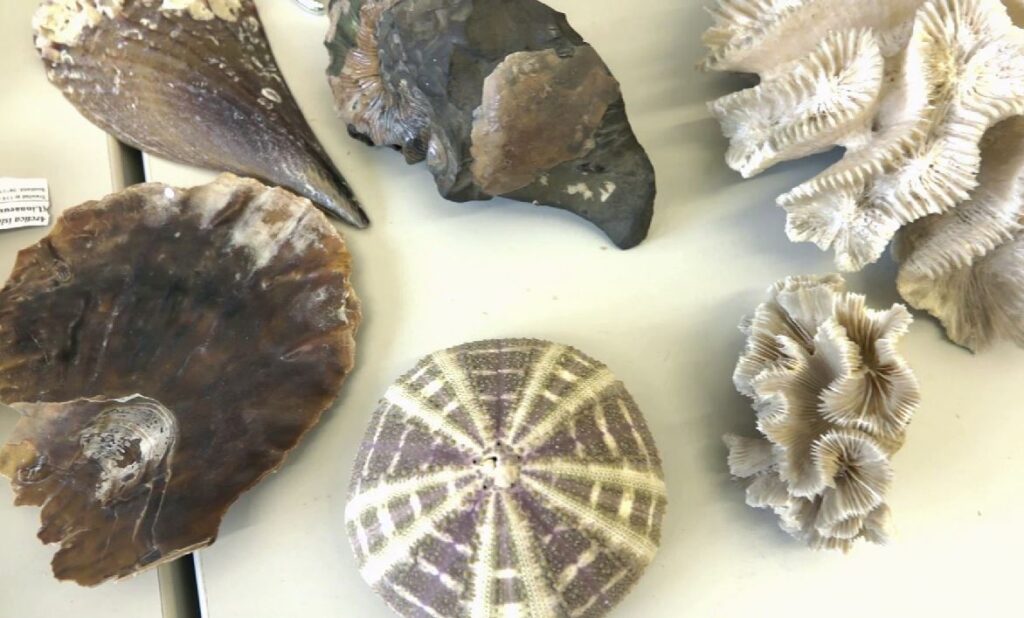
Bones, teeth or shells: Many living organisms build up efficient bioceramics layer by layer. In nacre, for example, layers of calcium alternate with those of proteins. It is the combination of the two that makes nacre so extraordinarily resilient. Bioceramics save material and energy: a mussel needs to build less shell, and a skeleton becomes lighter. The build-up process already works at low temperatures, such as 4°C in the deep sea. Man-made ceramics have to be fired at 800 – 2,500°C to solidify sufficiently. The goal of the BayBionics project was to create bioinspired coatings. Such coatings can be used for bone implants, for example, and in the long term provide a sustainable alternative to the energetically expensive ceramic processes.
Friedrich-Alexander-University Erlangen-Nuremberg Jun.-Prof. Dr. Stephan E. Wolf / Sarah Haase / Simon Leupold
Bionic high-tech materials for optical applications (BionOptik I & II)
The aim of the cooperative project (BionOptics I & II) between the University of Bayreuth and the Technical University of Munich, Straubing was to produce bioinspired “fiber optic cables” consisting of the biological materials cellulose and spider silk. The model is the venus flower basket (Euplectella aspergillum). Its glass needles can conduct light due to their special structure. Cellulose particles act as optical conductors, while the spider silk, thanks to its outstanding mechanical properties, forms the robust and flexible shell of the sponge. properties, spider silk forms the robust and flexible cover of the fiber.
University Bayreuth Prof. Dr. Thomas Scheibel / Kai Mayer Technical University Munich Campus Straubing Prof. Dr. Cordt Zollfrank / Martin Reimer
Designing an owl joint for efficient machines
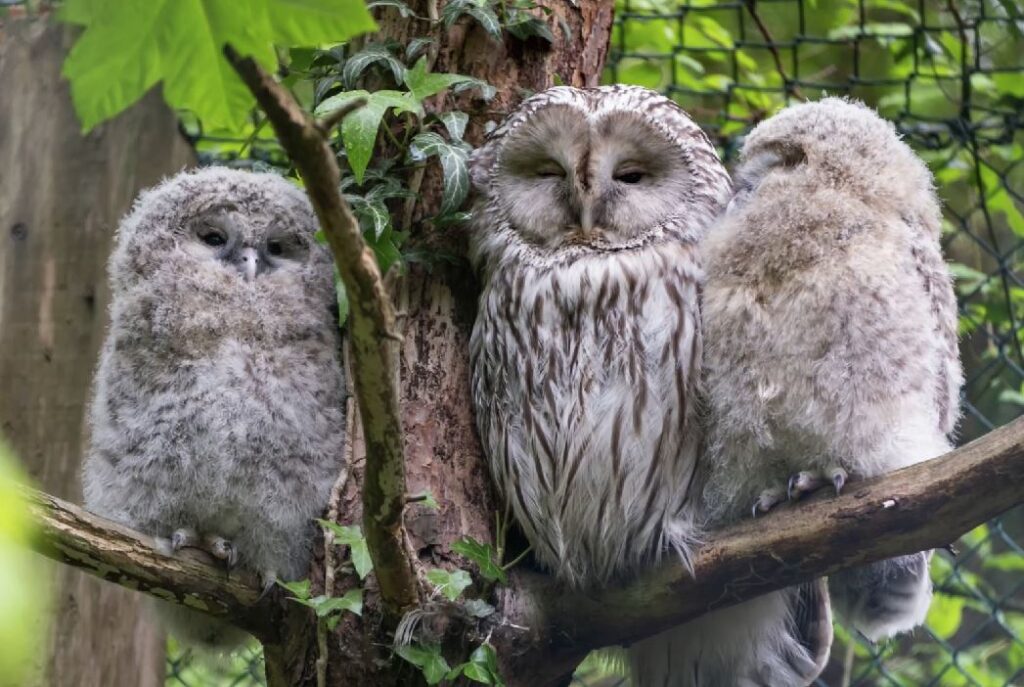
To observe the surrounding owls turn their heads almost completely around their own axis. The focus of this project was to analyze this movement and, above all, the blood supply to the brain during the strong twisting of the neck. After all, joints that can move like that come quite handy in technology. Conventional joint robots are too heavy and require a lot of energy. The research team modeled the interaction of the owl’s neck vertebrae and designed more energy-efficient joints for i.e. construction machinery or handling robots in nursing care.
Institute of Technology Nuremberg Georg Simon Ohm Prof. Dr. Rüdiger Hornfeck / Robin Löffler
Coordinating the projects BayBionik
Many sectors of society are dominated by unsustainable lifestyles and economies. Achieving long-term goals for the protection of the environment and life on earth requires extensive transformations in many areas of society concerning bioeconomy. In this context, technology and innovation are central fields of action that can be addressed. Scientific and technological progress that explicitly takes environmental protection into account enables sustainable economic activity and responsible innovation. Therefore the Bavarian Ministry for the Environment and Consumer Protection is funding the “BayBionics – From Nature to Technology” project network.