Symposium Arts & Life Sciences 2025

The interdisciplinary symposium ArtoPod BioCraze took place in Nuremberg from 19 to 20 May 2025. A unique exchange between art and life sciences.
The symposium brought together inspiring scientific and artistic perspectives and was organised in cooperation with the Academy of Fine Arts Nuremberg (AdBK), the Archaeology Centre at the Chair of Microbiology at the University of Regensburg (UR), the Bionicum, Nuremberg Zoo and the Bavarian State Natural History Collections (SNSB). It was sponsored by the zumikon Cultural Foundation, the FREUNDE der AdBK Nürnberg e.V. and the Akademieverein München e.V..
There was a particular focus on interdisciplinary dialogue between students from the two universities: students from the AdBK offered exciting workshops for students from the UR and vice versa. However, the lectures and workshops were not only open to students, but also to the interested public, inviting them to reflect, experiment and engage creatively with science and art.
Arts & Life Sciences: Dialogue or Contrast?
The boundaries between art and science are becoming blurred – more and more artists are adopting scientific methods, while research is touching on aesthetic and ethical questions. How can both disciplines learn from each other in an interdisciplinary way without losing their self-image?
At the Artopod BioCraze symposium, artists and scientists will come together to explore intersections, contradictions and visions. With lectures, discussions and workshops, we invite you to join us for an inspiring, experimental and forward-looking exchange.
Let’s discuss!
Programm
Monday
19. May
09:00
Arrival
09:20
Greeting
Holger Felten, President of the Nuremberg Academy of Fine Arts
Location: Nuremberg Academy of Fine Arts
09:30
(EN) Art and science: Theoretical perspectives
Hybrid Art Histories: Artistic practices at the interface of (natural) science and technology
Regine Rapp, Art Laboratory Berlin
What does toxic soil sound like? How can the color perception of dragonflies be spatialized? Does fungal mycelium grow faster when exposed to sound?
These are questions posed by artists from the field of Hybrid Art. This is a more recent genre of contemporary art that deals intensively with the interfaces between the natural sciences and technology and encompasses areas such as biology, biotechnology, artificial intelligence as well as robotics, physics or neuroscience. With its focus on organic matter, Hybrid Art is associated with a paradigm shift. Artists deal with biomatter in open, accessible formats without transforming it into traditional art forms such as paintings. The classic understanding of representation is deliberately questioned in favor of an exploratory, material examination. Hybrid art often goes hand in hand with performance formats and collaborative work processes that are developed over longer periods of time (process-oriented).
In my research projects at Art Laboratory Berlin (ALB) I have been dealing with Hybrid Art for more than fifteen years. For the last few years, I have been calling my theoretical field of research Hybrid Art Histories. This new art genre, which is essential for the 21st century, refers to unconventional artistic practices in which artists study current research topics from (natural) science and integrate them into their artistic practices. In doing so, they question the classic laboratory and exhibition spaces by challenging them either performatively or interactively. My lecture explains Hybrid Art Histories discussing selected artistic positions.
Prof. Regine Rapp is an art historian, curator, and co-director of Art Laboratory Berlin. She researches, teaches, curates, and publishes on 21st century art at the interface with science and technology, currently on her newest research project Hybrid Art Histories. As a guest professor for Art & Science she teaches and researches Hybrid Art at the Art Academy Münster. She has organized numerous international conferences, e.g. Nonhuman Agents (2017), Under the Viral Shadow. Networks in the Age of Technoscience and Infection (2021), or Hackers, Makers, Thinkers (2022). She has published numerous articles, essays and books, most recently the book MATTER OF FLUX. Art, Biopolitics and Networks with Care (2024). Selecetd publications: “Ko-Existenzen. Über menschliche und nicht-menschliche Akteur:innen”, Kunstforum International, vol. 281, 2022; “Mehr-als-menschliche Allianzen”, Nichtmenschliche Ästhetik, ed. by J Ullrich, Stuttgart: Metzler 2024, 125 – 138; “Hybrid Art Histories”, Eine Kunstgeschichte ist keine Kunstgeschichte. Kunstwissenschaftliche Perspektivierungen in Text und Bild, ed. by B Kleine-Benne, Berlin: Logos 2024, 241 – 259; „Duelling Epistemologies. How Artists Hack Laboratories and Alter the Futures of Science” (co-author: C de Lutz), Bio-Art. Varieties of the Living in Artworks from the Pre-modern to the Anthropocene, ed. by J Velasco/ K Weber, Bielefeld: transcript 2024, 181 – 203.
Differing Diffraction Patterns: Notes on the relationship between artistic and scientific practice
Susanne Witzgall, AdBK München
The lecture argues for understanding the disparity between art and science as a positive difference, with Deleuze, and for recognising artistic and scientific approaches as different epistemic boundary-making practices, with Barad. Both assumptions, it is argued, are central to a fruitful and critical engagement with each other’s findings and methods. They are also prerequisites for a dialogue between art and science on equal terms.
Susanne Witzgall is a Senior Lecturer for Transdisciplinary Studies at the Academy of Fine Arts and heads the cx centre for interdisciplinary studies, which she founded in 2011/12. She studied art history, theatre studies, psychology and art education at the Ludwig-Maximilians University in Munich and the University of Stuttgart, where she received her doctorate in 2001. From 1995 to 2002, she worked as a curator at the Deutsches Museum Bonn and the Deutsches Museum, Munich. She also taught at the Department of Art History at the Academy of Fine Arts Munich from 2003 to 2011. She is the author and editor of numerous books and essays on contemporary art, the relationship between art and science, and current interdisciplinary discourses. These include Kunst nach der Wissenschaft (2003) and New Mobility Regimes in Art and Social Sciences (ed. with G. Vogl and S. Kesselring, 2013), Power of Material/Politics of Materiality, The Present of the Future (ed. with K. Stakemeier, 2014 and 2017), Real Magic (2018), Hybrid Ecologies (ed. with M. Kesting, M. Muhle and J. Nachtigall, 2020) as well as Politics of Emotions/Power of Affects and Human after Man (ed. with M. Kesting, 2022 and 2023). Since 2019, she has been a member of the International Advisory Board of the Willem de Kooning Academy Research Center Rotterdam and advisory board member of the Institute of Modern Art Nuremberg.
Round table
Moderation: Lars Blunck, AdBK Nürnberg
Lars Blunck has been Professor of Art History at the Academy since 2013. After studying in Braunschweig and Kiel, he completed his doctorate in 2001 with a thesis on performative assemblages of the 1950s and 60s (Between Object & Event. Participatory Art between Myth and Participation. Weimar, 2003). He then worked as a trainee at the Hamburger Bahnhof (Museum für Gegenwart, Berlin) before taking up a position as a research assistant at the Technical University of Berlin. In 2005, Blunck received the Deubner Prize for contemporary art history research, and in 2007 he completed his habilitation at the Technical University of Berlin with a thesis on Marcel Duchamp (Duchamp’s Precision Optics. Munich, 2008) .
This was followed by a five-year visiting professorship at the same institution. In 2011, he was a fellow at the Terra Foundation for American Art. Blunck is co-editor (together with Bénédicte Savoy and Avinoam Shalem) of the series contact zones. Studies in Global Art published by de Gruyter Verlag. His research focuses primarily on the art and visual history of modernism and the contemporary era.
10:30
(EN) Art and biological sciences: Artistic practices
BioArt Revolutions: From Alchemy to Synthetic Biology
Anna Dumitriu, Künstlerin, UK
Anna Dumitriu will discuss how art can explore and communicate our relationship to science and biomedicine at a time when we face rapid and revolutionary changes. She will focus on her recent solo exhibitions including “BioArt Revolution”, “The Mutability of Memories and Fates” and “Fragile Microbiomes”. These breath-taking and beautiful exhibitions weave together alchemy, and the history of science and medicine, with cutting-edge research in biotechnology, including CRISPR DNA modification and stem cell research. The exhibitions included sculptures and installations made using bacteria, DNA, altered vintage objects, 3D printing, textiles and digital technologies.
She will also discuss her latest projects exploring the use of AI systems for infection prevention, how a ‘one health’ approach can improve the environment and how laboratories can become more sustainable.
Anna Dumitriu is an award-winning British artist who works with BioArt, sculpture, installation, and digital media to explore our relationship to infectious diseases, synthetic biology, and robotics. Past exhibitions include ZKM, Ars Electronica, BOZAR, The Picasso Museum, Kunstlerhaus Vienna, MIT Museum, Liljevalchs, Kunsthal Charlottenborg, MOCA Taipei, HeK Basel, LABoral, Art Laboratory Berlin, Taipei Fine Arts Museum, the 6th Guangzhou Triennial, and The History of Science Museum Oxford. Her work is held in several major collections, including ZKM, the Science Museum London and Eden Project.
Her work is featured in many books including BioArt: Altered Realities published by Thames and Hudson in 2016 and many other significant publications across contemporary art and science including Frieze, Artforum International Magazine, Leonardo Journal, The Art Newspaper, Art Quarterly, Nature, and The Lancet.
She holds artist-in-residence roles with the Modernising Medical Microbiology Project at the University of Oxford, and the Biomedical Research Centre and the University of Leeds, as well as visiting research fellowships with Waag and the School of Computer Science at the University of Hertfordshire as part of the BioComputation Research Group.
Anna Dumitriu
A Cabinet of Intangible Curiosities: Exploring Cutting Edge Science Through Digital Media Art
Alex May, Künstler, UK
British digital artist Alex May will discuss “The Cabinet of Intangible Curiosities”, a video sculpture that explores the new science of quantum biology. It utilises the concept of the Cabinet of Curiosities collecting unobservable artefacts from the intangible quantum realm. Each vignette in the cabinet takes on a different concept or theme, from the magnetoreception of robins that they use to navigate the Earth’s magnetic fields, to tandem dimer chromophores where the photon results from a superposition, photosynthesis, spherical cows, and the human fear of the invisible.
Alex collaborated with leading researchers, including D. Youngchan Kim, the world’s only Lecturer in Quantum Biology, and Director of the Quantum Biology Doctoral Training Centre at the University of Surrey and Professor Jim Al-Khalili. Alex will also explore his latest art projects exploring immunology, artificial intelligence and yeast biotechnology.
Alex May is a British contemporary artist questioning how our individual and collective experiences of time, and formation of memories and cultural record, are mediated, expanded, and directed by contemporary technologies. His work forges creative links between art, science, and technology through a wide range of digital new media, including virtual and augmented reality, photogrammetry, algorithmic photography, interactive robotic artworks, video projection mapping, generative works, performance, and video and sound art.
His international exhibition profile includes Ars Electronica (Austria), ZKM (Germany), LABoral (Spain), IMPAKT (Netherlands), FACT (Liverpool), Furtherfield (London), WRO Media Art Biennale (Poland), HeK (Basel), The Francis Crick Institute, Bletchley Park, Eden Project, Science Gallery in Dublin (Ireland) and Bengaluru (India), ZHI Art Museum (China), and the Beall Center for Art + Technology, University of California, Irvine.
He gives talks about many aspects of digital art, art/science collaboration, digital preservation, and public engagement with social robotics through art (UCLA, USC, School of Visual Arts (SVA) New York, University of Boulder, SUNY, TEDx Bucharest, Chelsea College of Art (in conversation with curator Robert Storr), Waag Society in Amsterdam) and runs workshops for artists using his own software (UCLA, for Fluxmedia at Concordia University in Montreal, International Symposium on Electronic Art (ISEA) in Istanbul), and gave the 2012 Christmas lecture for the Computer Arts Society.
Alex May: Digital Artist
Round table
Moderation: Lars Blunck, AdBK Nürnberg
11:30
Introduction to the workshops
11:45
Break
12:45
Workshops Hands-On Discoveries: Practical Encounters with Biological Sciences
Practical Microbiology – Let’s get out of the lab
Robert Reichelt and microbiology students, University of Regensburg
Concept: Robert Reichelt
As a scientist who teaches and researches at a German university, I have the optimal conditions to explore microbiological life in all its facets. Already one educational level lower, in schools, it is much more difficult to implement practical microbiological work and is often only possible in collaboration with universities. It becomes even more difficult when private persons want to experience and study microbiological life. In this workshop we will look at the principles of safe microbiological work and test ways to implement this in the simplest way.
Location: Nuremberg Academy of Fine Arts
A Walk on the Bright Side – Erkunden des Unsichtbaren
Manuel Selg, University of Applied Sciences Upper Austria, Biological and Environmental Engineering, AT
Sonja Bäumel, Gerrit Rietveld Adademie, NL, Artist, AT
Dieser Workshop lädt die Teilnehmer*innen zu einem Spaziergang in der Nachbarschaft und einer Erkundung des Unsichtbaren ein. Jede*r wird die Umwelt durch einfache Interventionen aktivieren, indem man sich auf bestimmte Mikrohabitate konzentriert und eingeladen wird, darüber zu reflektieren, dass der menschliche Körper niemals als singulär zu betrachten ist, sondern kontinuierlich von seiner Umgebung geformt wird und von ihr abhängig ist.
Unser tägliches Leben ist geprägt von subtilen Empfindungen, kleinen Veränderungen in Textur, Temperatur, Farbe, Luftfeuchtigkeit, Licht und Vibration, die beeinflussen, wie wir mit der Welt umgehen. Obwohl diese Mikrosensibilitäten oft unbemerkt bleiben, leiten sie uns auf sinnvolle Weise hin, wie wir mit der Welt interagieren.
Indem wir gehen, uns bewegen und mit unserer Umgebung atmen, verlangsamen wir unsere Schritte und werden auf kleine Veränderungen eingestimmt, öffnen uns und schärfen unsere Sensibilität. Die gewonnenen Erkenntnisse sind nicht abstrakt, sondern beruhen auf bestimmten Materialien, Mikroben, Orten und Momenten, was sie einzigartig und erfahrbar macht. Durch diesen Prozess lernen wir zu „sehen“, was vorher unsichtbar war, und wir setzen uns mit der Umwelt auf eine sinnvolle, verkörperte Weise auseinander.
In einer Zeit sozialer und ökologischer Herausforderungen bieten diese kleinen Interventionen eine Möglichkeit, unsere Gewohnheiten zu überdenken und unsere Beziehung zur Welt zu erden.
Location: Nuremberg Academy of Fine Arts
13:00
BARFLY – Dokumentarische Destillation
Katrin Petroschkat, LMU, Artist
Susanne Schmitt, LMU, Artist
Susanne Schmitt and Kat Petroschkat have been running ‘Barfly’ since 2018 – a bar serving miniature cocktails for insects that can be tasted olfactorily. Depending on the location of the current happy hour, the Barfly menu, consisting of plant distillates, changes and tells overlapping stories of insects, plants and humans in small sips.
However, Barfly is not only a performance and installation, but also an artistic approach that allows places and their human and more-than-human stories to be understood in a new way.
In the workshop ‘BARFLY-Documentary Distillation,’ stories of plants and insects are researched and captured.
Katrin Petroschkat is a post-media artist and cultural scientist who creates, moderates and realises projects at the intersection of art and science. Petroschkat studied fine art at the Munich Academy of Fine Arts, cultural studies at Humboldt University in Berlin and earned her doctorate in applied art and cultural studies at the University of Art and Design Linz. Her works have been presented in international exhibitions and museums, including V2_Lab Rotterdam, the Design Museum Ghent, the ERES Foundation, SKM Copenhagen, Villa Merkel, the House of World Cultures Berlin, Lothringer13 Kunsthalle Munich, Muffathalle and the Kunst & Natur Nantesbuch Foundation.
Susanne Schmitt is an audiovisual anthropologist and sensory ethnographer, interdisciplinary artist and lecturer. Her work includes choreographed audio walks for natural history museums around the world (“How to Not be A Stuffed Animal. Moving Museums of Natural History through Multispecies Choreography, together with Laurie Young, Volkswagen Foundation), research into historical hat objects using imperfect AI, and the transformation of a former nail salon into a test laboratory for appropriate contact between plants and humans in collaboration with the Berlin Botanical Garden. Her teaching and collaborative activities include guest professorships (MCTS Munich, University of Vienna) and transnational residencies (Sense Lab, Montreal).
Location: Bionicum, Nuremberg Zoo
15:00
Coffee break
15:20
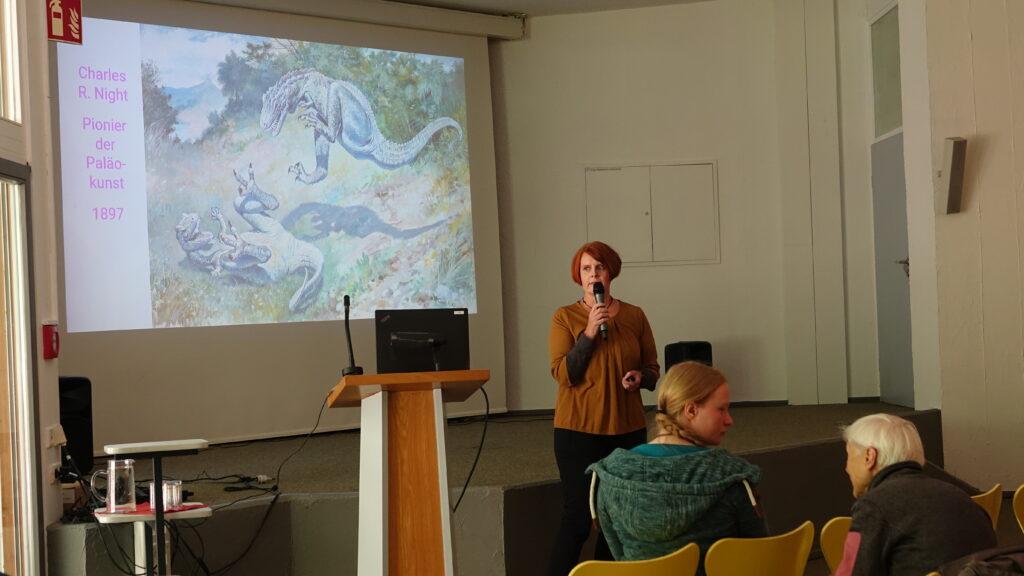
Welcome impulse: Palaeoart – Bringing past life to life
Eva Gebauer, Head of Bionicum, SNSB
Art and science – how do they fit together? Better than it seems at first glance! In earlier centuries in particular, the two disciplines seemed less separate; just think of Leonardo da Vinci, Albrecht Dürer or Ernst Haeckel. Or Maria Sibilla Merian, who was both a naturalist and an artist. The botanist and insect researcher produced numerous detailed drawings of her research subjects, which greatly benefited her during her research trips. For other great scientists such as Charles Darwin and Alexander von Humboldt, it was also essential to look closely and draw collected objects from all perspectives in order to systematically classify them and understand how they worked. These illustrations are still used today for comparison purposes and served as a blueprint for other researchers. And before computer-animated images and AI existed, the visually stunning paintings of Charles R. Night or Zdeněk Burian could transport viewers millions of years into the past.
The 2025 Symposium for Art and Life Sciences will be held at two venues: the Academy of Fine Arts and the Bionicum, together with Nuremberg Zoo. Bionics is about understanding nature and creatively transferring natural principles, structures and processes into technical innovations. This can only be achieved with the help of the diverse creatures that populate and have populated the Earth. The driving force behind all this diversity is evolution, the gradual change in heritable traits from generation to generation. Fossils are the only witnesses to past living worlds and their changes over millions of years. Every single fossil is an enormously important find, and because they are sometimes fragmentary and compressed, you have to look closely. As a palaeontologist, I know how exciting it is to study fossils: the exploration, the discovery, the excavation and recovery, the preparation. Only then can the researcher begin the scientific investigation. Drawing is the basic prerequisite for understanding the organism. In addition, there are photographs, but increasingly also high-resolution digital 3D scans, computer-aided reconstructions and digital modelling. The sum of all parts results in the best possible overall picture of an organism. Artists can ultimately translate this into a living reconstruction – based on scientific evidence, of course.
Eva Gebauer is the director of the Bionicum at Nuremberg Zoo. She studied geology/palaeontology at Julius Maximilian University of Würzburg and Eberhard Karls University of Tübingen, spending time abroad at the University of Texas at Austin in the USA. In Tübingen, she completed her doctorate on non-mammalian therapsids, a little-known group of animals that includes the ancestors of mammals and lived 250 million years ago in the Permian period.
With the opening of the Bionicum in 2014, Eva Gebauer and an interdisciplinary team were given the opportunity to build a museum from scratch and engage in science communication for different age groups. In addition, she oversees the ‘Bionics in Bavaria’ network, is a member of the Bionics Advisory Board of the Association of German Engineers (VDI) and maintains several collaborations with various universities in Bavaria.
Location: Lecture hall at the Naturkundehaus Nuremberg Zoo
15:40
Scientific work, research and collecting
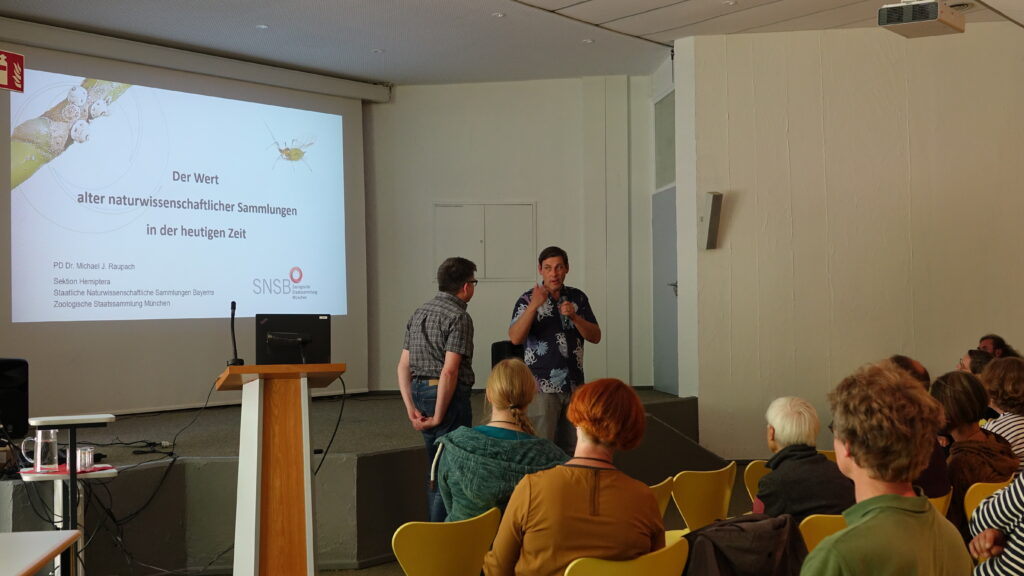
The value of old scientific collections today
Michael Raupach, SNSB, Head of the Hemiptera Section, Bavarian State Collection of Zoology, Munich
Natural history collections grow over very long periods of time. This also applies to the Munich State Zoological Collection (ZSM) of the Bavarian State Natural History Collections (SNSB), where animal specimens have been collected, stored, archived and scientifically processed for over 200 years. A total of over 23 million specimens are now stored in the Munich archives. Just recently, a collection of tube aphids (Hemiptera, Sternorrhyncha, Aphidoidea, Aphididae) and scale insects (Hemiptera, Sternorrhyncha, Coccoidea) by the eminent German forest scientist, plant anatomist and entomologist Theodor Hartig (1805-1880) was ‘rediscovered’ there. Theodor Hartig is the author of numerous articles and books, including the multi-volume ‘Textbook for Foresters and Those Who Want to Become Foresters’ (J.G. Cotta, Stuttgart 1840), which he wrote together with his father Georg Ludwig Hartig (1764-1837). In addition to his botanical interests, Hartig researched insects that damage plants and described numerous new species of leaf and scale insects between 1834 and 1851. However, the original specimens and reference specimens of the insects were considered lost after his death in 1880. As it now transpires, the aphid and scale insect collection apparently found its way into the ZSM’s holdings together with his hymenoptera collection through the entomologist and former ZSM curator Josef Kriechbauer (1819-1902) and remained there unrecognised for a long time. Hartig’s collection was ‘rediscovered’ in the course of a revision of the aphid genus Pineus (family Adelgidae). However, deciphering his historical diary entries posed a major problem. Heinz-Otto Rehage from the LWL Museum of Natural History and Planetarium in Münster was finally able to decipher his handwriting and the special colour and number coding. The extensive work was well worth the effort, as Hartig’s aphid and scale insect collection contains important type material (‘calibration standards’) from 29 species, which are now available to science once again. The future will reveal what other secrets Hartig’s unique collection holds.
Michael Raupach comes from the north-eastern Ruhr area. After training as a chemical laboratory assistant, he studied at the Ruhr University in Bochum and obtained his doctorate. He then worked in Bonn, Wilhelmshaven and Oldenburg before becoming curator at the Zoological State Collection in Munich in 2019. Here, he is responsible for the collection of bugs, cicadas, grasshoppers and stick insects, which comprises around 800,000 objects. His research focuses in particular on aspects of the phylogenetic history of water striders (Gerromorpha) and water bugs (Nepomorpha) as well as the recording of the species diversity of both groups. To this end, he primarily uses modern methods that allow even old collection material to be processed using molecular biology techniques.
SNSB
Expedition Unknown Life
Dina Grohmann, Head of the Chair of Microbiology and Archaeology Centre, University of Regensburg
Discovering unknown life
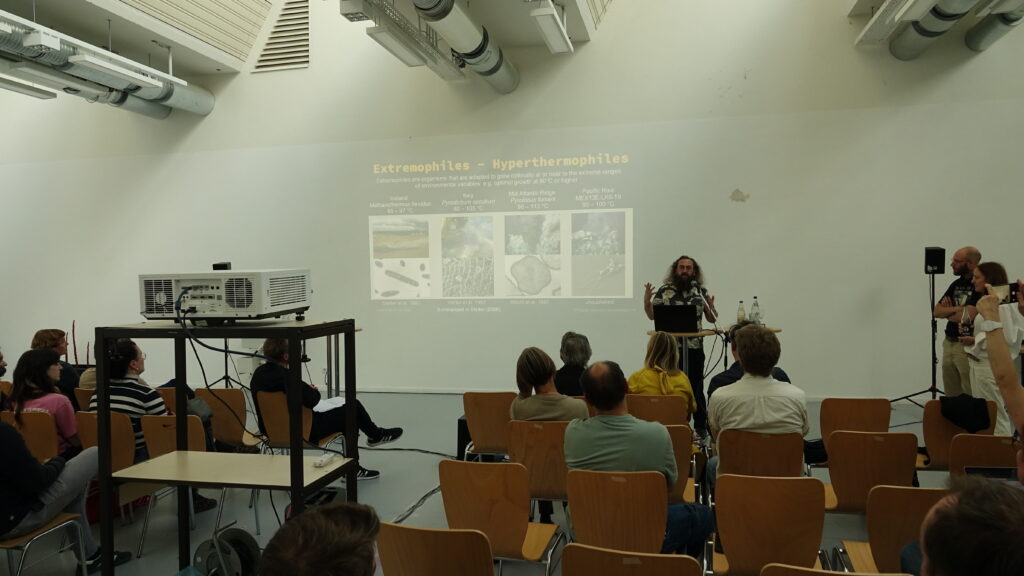
For decades, humans have been exploring space to answer the question if there is life outside our planet. A few years after man set foot on the moon, however, it turned out that previously unknown and unexplored creatures could also be found on our home planet and not just in space. This group of microscopically small and long undiscovered single-celled organisms are called ‘archaea’, which, among other things colonize the most inhospitable places on our planet. Archaea hold many surprises for us and regularly stretch our ideas about how living cells are defined. In this talk I will take the audience on a journey of discovery into the fascinating world of archaea and answer questions such as ‘How small can a living cell be?’, ‘Can life exist above the boiling point of water?’ and ’How does a cell breathe when it lives at the hot underwater volcanoes 3 km below sea level?’. I invite you to join me on this expedition to discover the diversity and secrets of life!
Dina Grohmann heads the Chair of Microbiology and the German Archaean Centre at the University of Regensburg. She studied biology at Heinrich Heine University in Düsseldorf. She completed her doctoral thesis at the Max Planck Institute for Molecular Physiology in Dortmund. For her postdoctoral research, she moved to the renowned University College London in the United Kingdom and also completed a research stay at Rutgers University in the United States. She started her independent junior research group at the Technical University of Braunschweig and accepted a W2 professorship at the University of Regensburg in 2015. In 2019, she was appointed to the W3 professorship for Microbiology at the University of Regensburg.
Dina Grohmann has always been enthusiastic about the comprehensive opportunities offered by interdisciplinary research. In her research, she combines microbiological work with biophysical and biochemical microscopy and analysis techniques, enabling her team to observe molecular machinery such as the transcription apparatus or CRISPR-Cas systems (the immune system of bacteria) at work in real time. She is particularly interested in the fascinating third domain of life, the archaea, which continually push the boundaries of our understanding of life. In 2021, Dina Grohmann also founded the successful start-up company Microbify GmbH at the Chair of Microbiology, which supports the energy transition with microbiological expertise.
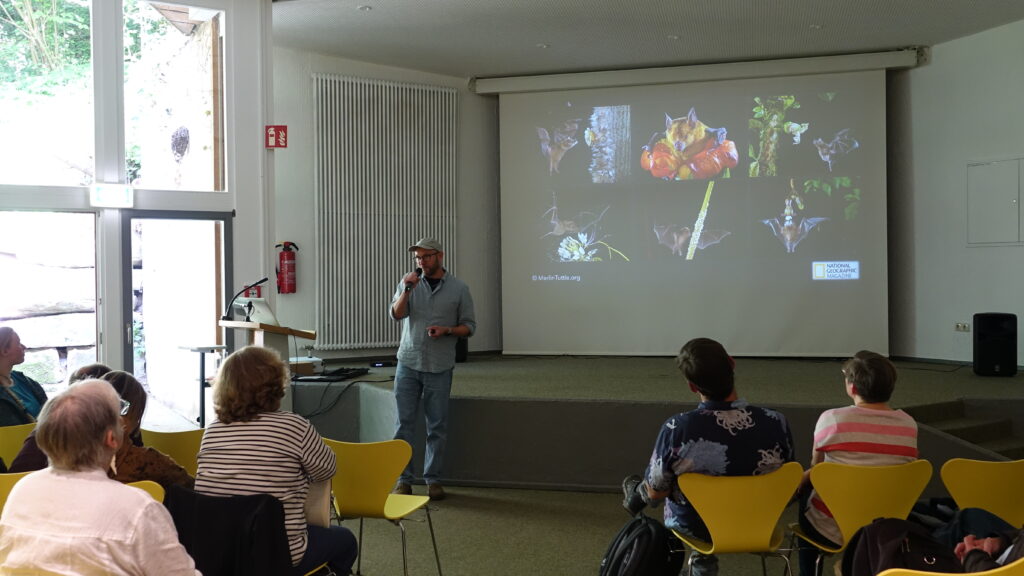
Call of the Bloom: Acoustic communication between bats and plants
Ralph Simon, Research Curator, Nuremberg Zoo; Associate Scientist, Friedrich-Alexander University Erlangen-Nuremberg
In the tropical regions of South and Central America, around 400 plant species have adapted to a rather unusual pollination system: they open their flowers at night and produce nectar to attract flower bats for pollination. Since they cannot use bright colours in the dark, they have found an ingenious solution: they developed floral reflectors that serve as sonar signals and reflect the bats’ ultrasonic calls in a way that makes the flowers acoustically conspicuous. One example is the bat-pollinated liana Marcgravia evenia, whose bowl-shaped flower reflectors reflect strong echoes with a special spectral signature. The signature is produced by a sophisticated interference mechanism. However, there are also other plants that attract bats with passive acoustic signals, including a carnivorous plant from Borneo. This shows that such plant signals have developed independently of each other several times in the course of evolution and that there are probably many more exciting adaptations of this kind waiting to be discovered.
Dr. Ralph Simon is a research curator at Nuremberg Zoo and an associate scientist at the Chair of Machine Learning and Data Analytics at the University of Erlangen-Nuremberg (FAU). He studied biology with a major in zoology at FAU and then obtained his doctorate in 2010 at the University of Ulm at the Chair of Experimental Ecology. As a postdoc, he returned to FAU and then worked for several years at the Department of Animal Ecology at Vrijen Universiteit Amsterdam and Leiden University in the Netherlands. Ralph Simon is interested in the evolutionary, physiological and physical conditions that shape the orientation, communication and sensory perception of animals. He does not work solely at the level of individual stimuli, but aims to take into account the full spectrum of sensory channels and their interactions. Only in this way is it possible to fully understand the sensory world of an animal. His approach to investigating these questions is to replicate and control the sensory world of animals using state-of-the-art technical setups that employ biomimetics and robotics. With this approach, he researches, among other things, the echolocation of bats, with a focus on flower bats and the acoustic adaptations of the plants they pollinate. In addition to basic research in the field of sensory ecology, he also conducts research in more applied areas, such as conservation research and veterinary research.
Round table
Moderation: Thassilo Franke, SNSB, Interface Collections – Bavarian Museum of Natural History
Thassilo Franke: The doctor of biology earned a postgraduate degree in nature film and science communication in 2005. From 2008 to 2014, he worked as a screenwriter, scientific consultant and researcher at Nautilusfilm GmbH. In the following years, he worked as a freelance author and director in the field of nature and science documentaries. From 2016 to 2021, he was a research assistant at BIOTOPIA – Bavarian Natural History Museum. After two years at the Munich Science Communication Lab, he moved to the communications department of the Bavarian State Natural History Collections at the beginning of 2024.
17:00
Mini tours through the Zoo
Bionic tour through the zoo
Alex Lang and Julia Heß, Bionicum
Tour of the zoo
Christian Dienemann, Zoo education Nuremberg Zoo
A changing world – what is there left for Maria Sibylla Merian to draw today?
Simon Pfanzelt, Botanical Garden Munich
Biological diversity is under pressure everywhere. Species are disappearing or becoming increasingly rare. Climate change, land use, invasive species – all these are among the causes of endangerment. Often, however, the loss of individual species cannot be clearly explained. This is due to the diverse interactions between organisms and their environment. The tour reveals parts of this network of relationships and shows – incidentally – that complexity can also be simply beautiful.
Simon Pfanzelt is curator at the Munich-Nymphenburg Botanical Garden and responsible for the scientific management of several greenhouse areas and their plant collections. In addition to the biogeography and evolution of various plant groups, his research interests also include their taxonomy, systematics and ecology. He is currently working on the population genetic characterisation of endangered plant species in the Bavarian Alps. Other areas of focus include research into the systematics and evolution of gentians in the South American Andes, the reconstruction of the history of the Eurasian steppes, and the recording of the botanical diversity of the mountain rainforests of western Cameroon. He is also involved in public relations work for the Botanical Garden.
17:45
Pollination training
Peter Wendl & Students at the AdBK Nuremberg
Übungen zur transfaunalen Vergemeinschaftung
Das Bestäubungstraining ist eine performative Methode zur Ausbildung transfaunaler Verhältnisse. Mittels körperlicher Übung erproben menschliche Organismen den Zustand artenübergreifender Intimität. Das Bestäubungstraining wurde im Jahr 2005 von Künstler*innen und Wissenschaftler*innen der forschungsgruppe_f entwickelt und im Rahmen der Buga München erstmals im Selbstversuch und gemeinsam mit Proband*innen erforscht. Hinweis: Die Teilnehmenden sind körperlicher Nähe zu (Mikro)Organismen sowie pflanzlichen Allergenen ausgesetzt.
Peter Wendl lebt und arbeitet in Nürnberg. Er entwickelt transmediale Räume, Installationen und Performances. Zunächst studierte er der Malerei und Kunstpädagogik bei Michael Munding an Akademie der Bildenden Künste Nürnberg. Daran an schloss sich ein Studium zu „Kunst und öffentlicher Raum“ bei Georg Winter. Nach seinem Abschluss als Meisterschüler studierte er Medienkunst bei Mischa Kuball an der Hochschule für Gestaltung Karlsruhe. Peter Wendl lehrt an der Akademie der Bildenden Künste Nürnberg und leitet dort seit 2016 den Lehrbereich für Transmediale Räume.
Location: Merianin-Wiese Zoo
19:00
Art projects along the Climate Forest Trail
Location: Tiergarten Climate Forest Trail, forest tavern open
HI-FI – PORONKUSEMA – Artistic interventions and sound art
Klasse Sebastian Tröger, AdBK Munich
Led by: Sebastian Tröger (Tröger class)
There have always been concepts and narratives about what animals and plants are. Approaching and engaging with the other – a different species – becomes the starting point for multimedia works on the Climate Forest Trail. The location can be experienced acoustically through a reconstructed soundscape, while an Apple Watch watches over the hikers. A bird escapes its ornamental corset and becomes a wind chime, while we listen to what would otherwise rush by unnoticed. Domesticated plants seem to have strayed onto the supposedly wild forest path, while a teddy bear and personal building blocks awaken memories in us. Finally, three prisoners ask the question in an interview: What do freedom and comfort mean here?
There have always been concepts and narratives about what animals and plants are. Approaching and engaging with the other – a different species – becomes the starting point for multimedia works on the Climate Forest Trail. The location can be experienced acoustically through a reconstructed soundscape, while an Apple Watch watches over the hikers. A bird escapes its ornamental corset and becomes a wind chime, while we listen to what would otherwise rush by unnoticed. Domesticated plants seem to have strayed onto the supposedly wild forest path, while a teddy bear and personal building blocks awaken memories in us. Finally, three prisoners ask the question in an interview: What do freedom and comfort mean here?
The awareness of sounding environments is the linchpin of acoustic ecology. This field of research was initiated by Canadian composer and communication scientist Raymond Murray Schafer in the late 1960s. With his concept of soundscape and the distinction between hi-fi and lo-fi soundscapes, Schafer provides the theoretical framework for the students’ artistic research.
In keeping with the project title, the artistic exploration focuses on the experimental acoustic exploration of the newly opened Climate Forest Trail. The works on display range from temporary and performative approaches to sculptural sound objects, listening stations and compositions that can be accessed via QR codes.
Franziska Adams, Elias Barnreiter, Kilian Bergmann, Laura D’Alessandro, Louis Habermeyer, Martha Kißling, Clara Kloiber, Joscha Meisenzahl, Ava Nasr, Valerija Saplev, Anna Hersey-Swan, Sebastian Tröger, Julia Wolff
Sebastian Tröger Born in Erlangen in 1986, artist Sebastian Tröger lives and works in Nuremberg and Munich. Since 2023, he has been Professor of Intermedia Art and Art Education at the AdBK Munich. Previously, he headed the painting workshop at the AdBK Nuremberg and was a research assistant at the Documentation Centre Nazi Party Rally Grounds. He also taught media art sound at the AdBK Nuremberg and worked as an art teacher at various secondary schools.
His works have been exhibited internationally, including at the Ludwig Museum Budapest, Museum Kunstpalast Düsseldorf, ZKM Karlsruhe, Neues Museum Nuremberg and the Staatsgalerie Stuttgart. He has received numerous awards, including the Bavarian Art Promotion Prize (2019), the Culture Prize of the City of Nuremberg (2016) and the Studio Scholarship of the Free State of Bavaria (2015-2018). His works are represented in renowned collections, including the Bavarian State Painting Collections and the Würth Collection.
Sebastian Tröger’s artistic work is characterised above all by the interplay between practical and conceptual work. Historical-critical reflection gives rise to works that use the means of painting and media translation to pose questions about the present in an ironically fractured way. The titles of the paintings are of particular significance: sometimes banal, sometimes critical, they reveal a subtle humour that can also be found in the artist’s sculptural installations and sound works.
BARFLY – Dokumentarische Destillation
Workshop presentation with Katrin Petroschkat and Susanne Schmitt
A Walk on the Bright Side – Erkunden des Unsichtbaren
Workshop presentation with Sonja Bäumel and Manuel Selg
Tuesday
20. Mai
09:00
Arrival
Visit to Bionicum, Nuremberg Zoo
9:30
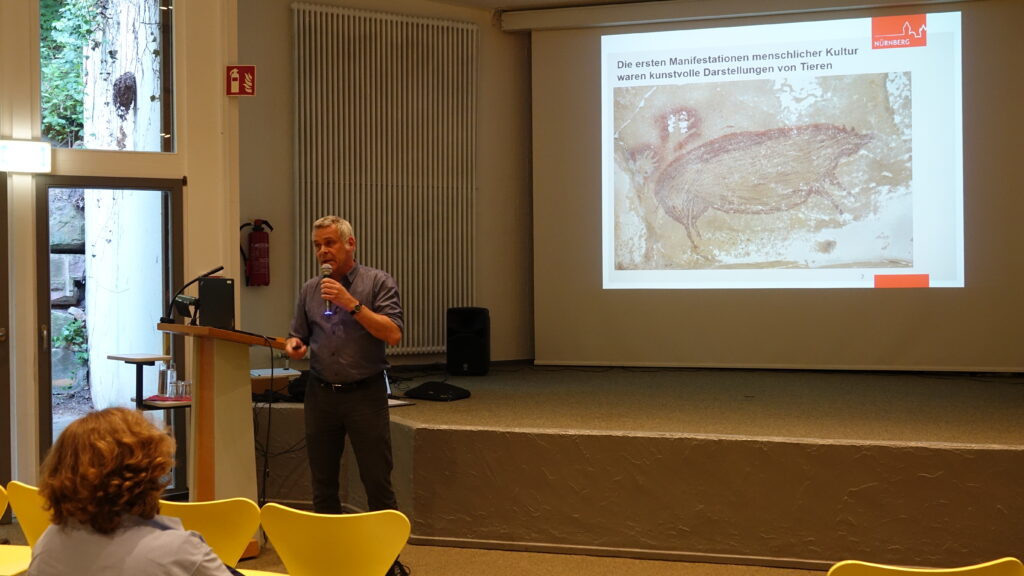
Opening Remarks: Signs of the times: art and science in dialogue
Dag Encke, Dag Encke, Director of Nuremberg Zoornberg
Die ersten Manifestationen menschlicher Kultur waren neben Fruchtbarkeitssymbolen kunstvolle Darstellungen von Tieren. Die Kunst war der erste Schritt zur Verständigung zwischen Menschen über Raum und Zeit hinweg. Diese zeit-und raumbefreite Form der Kommunikation hat in der Entwicklung des Menschen neue Dimensionen für seine Evolution geschaffen. Zum ersten Mal konnte Information unabhängig von der DNA, unabhängig von genetischen Veränderungen, gespeichert, verarbeitet und kommenden Generationen übermittelt werden. Kunst wurde zur Sprache ohne Worte, sie baut Brücken zwischen Kulturen und beschleunigt die Verbreitung von Erkenntnis. Nach der Kunst kam das Buch, nach dem Buch das Radio, heute das Internet. Es ging und geht immer um die Übermittlung, Verbreitung und Entwicklung unserer Erkenntnisse. Diese unterscheiden nicht zwischen Natur- und Sozialwissenschaften, weil die menschliche Zivilisation entlang naturwissenschaftlicher Erkenntnisse und sozialer Vereinbarungen stattgefunden hat. Das Ergebnis kann man dann als Kultur zusammenfassen. Ohne Kultur würde unsere Zivilisation in die Vergangenheit zurücksinken. Deshalb ist es ein Zeichen der Zeit, dass sich in diesem Symposium Kunst und Wissenschaft zusammenfinden. Die Summe ihrer Erkenntnisse begründet unsere Zivilisation.
Dr. Dag Encke studierte Biologie und promovierte an der Universität Marburg über Thermoregulation bei Kleinsäugern. Nach seinem Studium arbeitete er als Kurator im Allwetterzoo Münster. Seit 2005 ist er leitender Direktor des Tiergartens Nürnberg. In Nürnberg hat Encke maßgeblich die neuen Plänen für die Delfinlagune und das Manatihaus entwickelt, das Wüstenhaus geplant sowie landschaftsgärtnerische Maßnahmen eingeleitet, um den Tiergarten attraktiver für Tiere und Besucher zu gestalten. Sein jüngstes Projekt im Tiergarten ist der bis zu 20 Meter hohe Klimawaldpfad, der im Sommer 2024 eröffnet wurde. Seit 2019 ist Encke Vizepräsident des Verbands der Zoologischen Gärten (VdZ), dem mehr als 70 wissenschaftlich geleitete Zoos im deutschsprachigen Raum angehören. Das Studium der Biologie macht ihn zum überzeugten Naturwissenschaftler, dessen geistiges Fundament das logische Denken und Erklären bildet.
Location: Lecture hall at the Naturkundehaus Nuremberg Zoo
9:45
Scientific vision and pictures
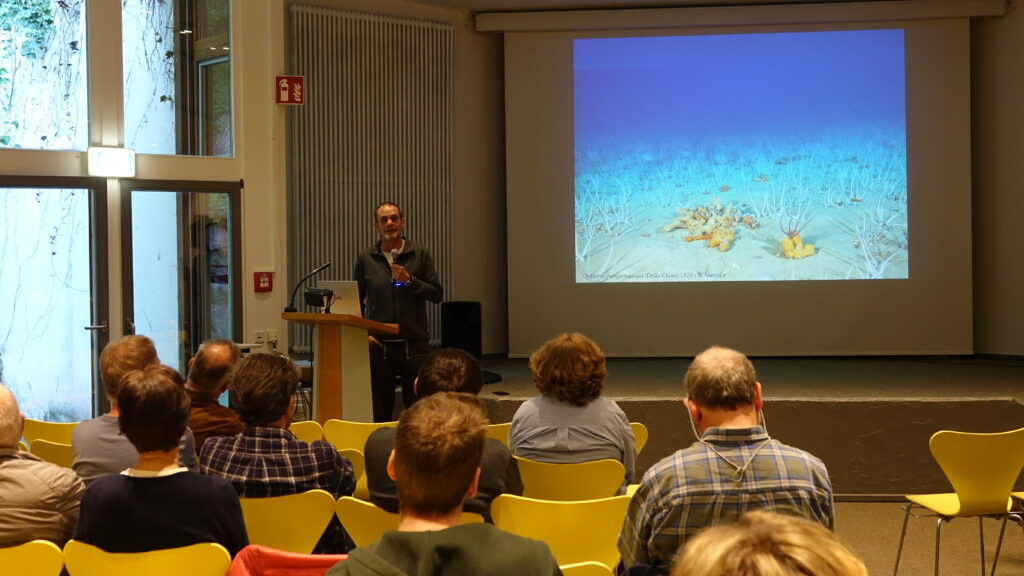
Is image-making in biology art? Marine micro-worlds as a case study
Roland Melzer, SNSB, Munich State Zoological Collection
Photography in biology documents scientific facts. Maximising the amount of information per area is therefore an essential design feature. On the other hand, some nature observers experience a kind of ‘magical nature experience’ when taking pictures. Does nature photography convey artistic content in this way? Does it do so when it applies principles of artistic image design, or does it do so per se? In this lecture, underwater macro photographs from the book Marine Microworlds (Melzer et al., Pfeil-Verlag Munich, 320 pp) will be interpreted from an aesthetic point of view and a search for artistic aspects will be undertaken.
The form and colour of the organisms photographed – mostly with the aid of artificial lighting – display characteristics that are familiar from the cultural heritage of art and therefore radiate a sensual effect: colour patterns and graphic patterns are reminiscent of abstract paintings, the filtering organs of sessile organisms are reminiscent of civil engineering, the use of ultraviolet light reveals underwater psychedelia, the symmetries of snail shells are reminiscent of the principles of proportion in painting, and the organisms found and photographed are themselves works of art, making the photographs object art. Nature photography also attempts to depict strange worlds or make the never-before-seen visible, whether in the tiny or in entire underwater landscapes – these are also familiar themes in art.
What does the theory of photography teach us about the dual nature of ‘facts and magic’ and the connection to art? Like any form of photography, scientific image-making certainly has its weaknesses as an ‘illegitimate art’ (P. Bourdieu), but it also has its strengths: as a representation of reality, it captures facts about space and time. In R. Barthes, this can be found in the concept of ‘studium’ . But photos also have something that appeals to our senses, that unfolds a magic. R. Barthes calls this ‘punctum,’ W. Benjamin ‘aura.’ The dualism of photography is therefore inherent and is also reflected in the images of ‘micro-worlds.’ It is not without reason that W. Benjamin calls photography ‘the servant of science and the arts.’
The decision as to whether a photograph is art is up to the viewer. Images of marine life encounter fantasies, wishful thinking, patterns imprinted in our thoughts and feelings, codes that are culturally shaped. Thus, they sometimes appear bizarre, sometimes strange, beautiful, impressive, caricatural, awe-inspiring, stimulating the senses and thoughts. Perhaps there really is such a thing as ‘bioaesthetics’ or ‘evolutionary aesthetics,’ which arises from the combination of form, colour and function, belongs to human culture and allows us to glimpse the artistic, magical nature of sea creatures.
Roland Melzer is curator for ‘Arthropoda varia’ at the Bavarian State Collection of Zoology in Munich and teaches zoology at LMU. His animal groups are crustaceans, millipedes and arachnids. He studies speciation, sensory organs and functional morphology in these animals. He has a particular interest in the sea. He is working on studies of biodiversity in the Mediterranean and the Southern Ocean. For his research work, he uses various imaging methods ranging from cameras to light and electron microscopes as well as virtual 3D microscopy.
His hobby is underwater macro photography of marine organisms. In his lecture, he will present marine micro-worlds of the northern Adriatic in photographs and explore the question of whether they can be interpreted as ‘art’ in addition to being scientific documents.
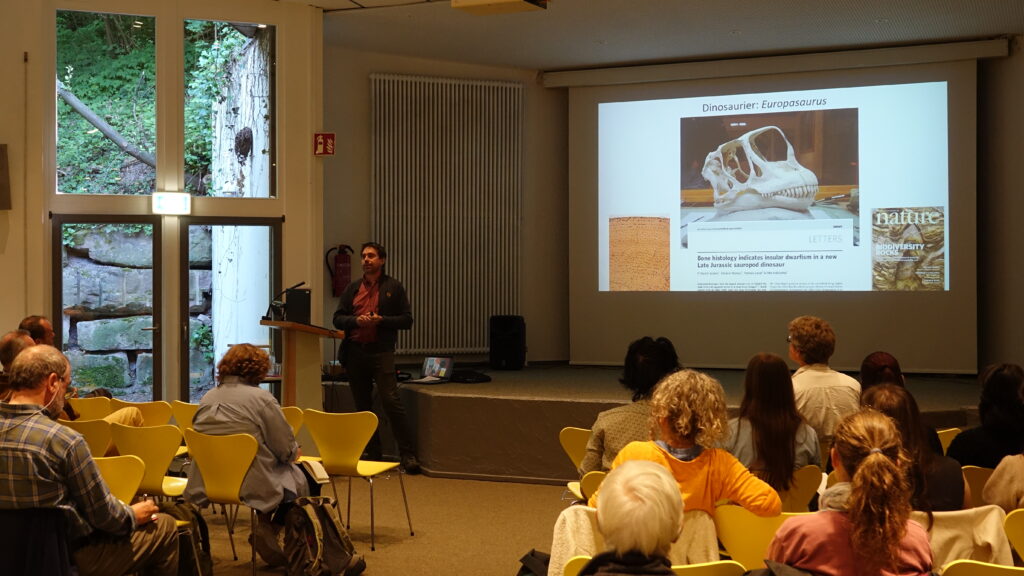
A symbiosis of science and art: The Graphic Novel „Europasaurus – Life on Jurassic Islands“
Oliver Wings, Head of Bamberg Natural History Museum, SNSB
The bilingual graphic novel EUROPASAURUS – Urzeitinseln voller Leben/Life on Jurassic Islands breaks new ground in university and museum knowledge transfer. The book is the result of several years of fruitful collaboration between palaeontologist Oliver Wings, palaeoartist Joschua Knüppe, art director Henning Ahlers and museologist Arila-Maria Perl. This science communication project was made possible by the support of the Volkswagen Foundation, which had already funded previous research on spectacular fossil vertebrate finds, including the small herbivorous ‘giant’ dinosaur Europasaurus holgeri and Germany’s first Jurassic mammals. The resulting non-verbal comic explains the way of life, the environment, but also the collective death of the Europasaurier (and the resulting mass finds of fossil bones) in a scientifically accurate and accessible way using images. The target audience is children aged ten and above, teenagers and young adults. Having outgrown their early childhood enthusiasm for dinosaurs, this group is now being reintroduced to prehistoric life in a visually and intellectually stimulating way. Even though the underlying information will inevitably become outdated as new scientific findings emerge, the artistic aspect of the work will remain permanent thanks to its graphic novel format. The graphic novel was published in November 2020 by the Munich-based scientific publishing house Dr. Friedrich Pfeil and comprises 184 pages. About half of the story in the book has also been published in the form of episodic short films on YouTube. The team is currently working on the next graphic novel about the Geiseltal fossil deposit.
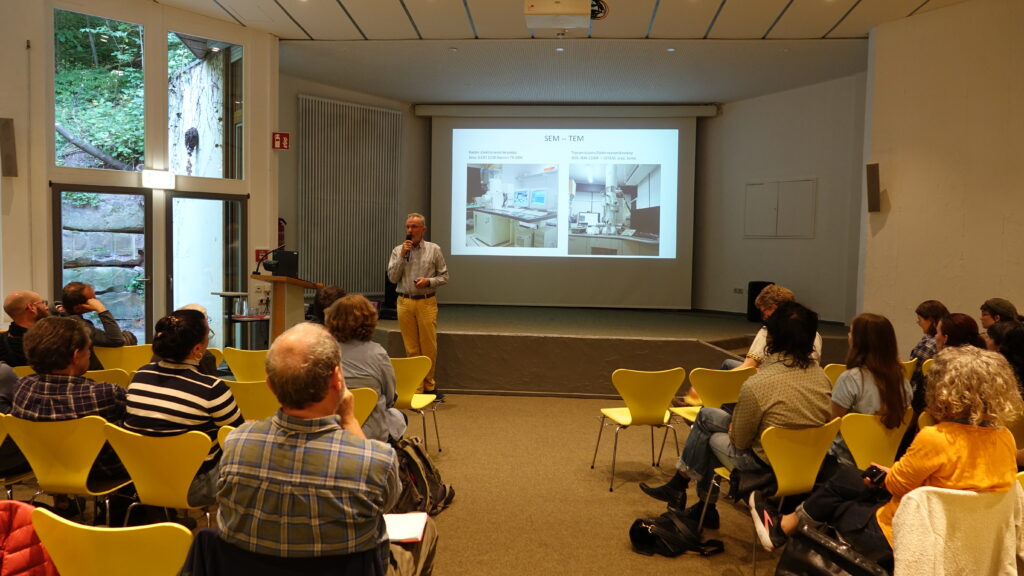
Tiny cells, giant microscopes: what can electron microscopes do in the life sciences? – A selection
Reinhard Rachel, Centre for Electron Microscopy, University of Regensburg
In den vergangenen > 90 Jahren ist die Elektronenmikroskopie zu einem wichtigen Stützpfeiler in allen Zweigen der Naturwissenschaften und der Medizin geworden, um Mikro- und Nanostrukturen der belebten und unbelebten Materie darzustellen und analytisch zu untersuchen. Die heutigen Methoden und Geräte ermöglichen es, Proben in weiten Größenskalen darzustellen, von vielen 100 Mikrometern, bis hinunter zu einem halben Ångström, d.h. ca. 0.05 nm: das sind über 6 Größenordnungen. Entwicklungen in der Elektronenmikroskopie an sich sind und waren von großer Bedeutung und wurden inzwischen dreimal mit Nobelpreisen ausgezeichnet: für die Tomographie, also die räumliche Analyse (1982), für die Entwicklung des Verfahrens und des Geräts an sich (1986), und für die Elektronen-Kryo-Mikroskopie (2017). In den Biowissenschaften gibt es zahlreiche Verfahren, um die delikaten, biologischen und damit stark wasserhaltigen Proben überhaupt untersuchen zu können; diese Präparationsverfahren sind ein Schwerpunkt der Arbeit für die „Biologen“. Die Ergebnisse der Elektronenmikroskopie haben zu einem vertieften Verständnis der Architektur der Zellen – der fundamentalen Organisationseinheit des Lebens auf diesem Planeten – geführt. Heute ist gesichert, dass es auf der Erde mindestens drei Entwicklungslinien des Lebens gibt: die Bakterien, die Archaeen, und die eukaryontischen Zellen, mit ihrer Differenzierung in Pflanzen und Tiere. Darüber hinaus waren Elektronenmikroskope von fundamentaler Bedeutung für die Darstellung der Viren und Bakteriophagen. Dies sind biologische Objekte, die für den Austausch von Erbinformation eine eminent wichtige Rolle spielen; auch können sie nicht allein existieren und sich vervielfältigen, sondern benötigen dafür einen Wirt, eine lebende Zelle. Nicht nur bei Menschen, sondern auch bei Pflanzen können sie außerdem zu Erkrankungen führen (Influenza, HIV, SARS-CoV-2; Tabak Mosaik Virus).
In der Elektronenmikroskopie gibt es drei Geräte-Linien (SEM; TEM; STEM), je nach Verfahren und Fragestellung, mit zahlreichen Ergänzungen und Zusatzgeräten (cryoEM; Tomographie; EDX; Energiefilter / EELS; FIB-SEM), um die Proben gezielt zu analysieren. Anhand von ausgewählten Beispielen werde ich aufzeigen, welche biologischen Objekte wir in der Mikrobiologie und Zellbiologie mit diesen Geräten in den letzten Jahren untersucht haben.
Reinhard Rachel – ich habe Biologie in Düsseldorf und Humanmedizin in Mainz studiert. Von 1983-1988 habe ich meine Doktorarbeit in Biologie in München absolviert. Dabei habe ich bereits damals versucht, ein mikrobielles Oberflächenprotein mit möglichst hoher Auflösung darzustellen. Von 1989-1990 war ich zu einem Auslandsaufenthalt in Cambridge, UK. Seit 1990 arbeite ich an der Universität Regensburg in der Mikrobiologie und vor allem mit extremophilen
Mikroorganismen, außerdem in der Zellbiologie / Histologie und besonders gerne mit Elektronenmikroskopen. Schwerpunkt neben der Forschungstätigkeit ist die Ausbildung von Studenten der Biologie, ob im Diplomstudium, zum Bachelor, Master oder bis zur Doktorarbeit; und nebenher habe ich auch Studierende der Humanmedizin betreut. Ein Thema ist die Abbildung von Mikroorganismen von eher ungewöhnlichen Standorten, mit Methoden, die die natürliche Form der Zellen möglichst gut erhalten und wiedergeben. – Bin seit 2022 im (Un-)Ruhestand, betreue jetzt noch einzelne Studierende, projektbezogen.
Round table
Moderation: Simon Pfanzelt, SNSB, Munich-Nymphenburg Botanical Garden
11:45
Break
12:45
Workshops Artistic perspectives: All those shades of purple
Elizabeth Thallauer and Adapter, AdBK Nuremberg
Concept: Elizabeth Thallauer (ADAPTER)
Under the motto ‘See – Collect – Research’, three workshops were designed by students at the AdBK Nuremberg for students at the other participating universities. The three workshops will be offered on Tuesday during the symposium.
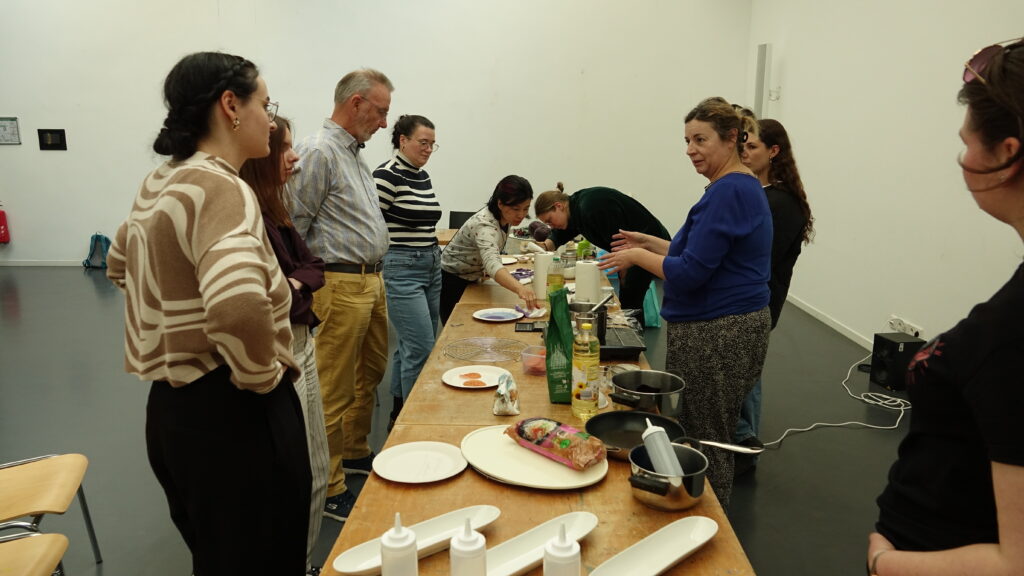
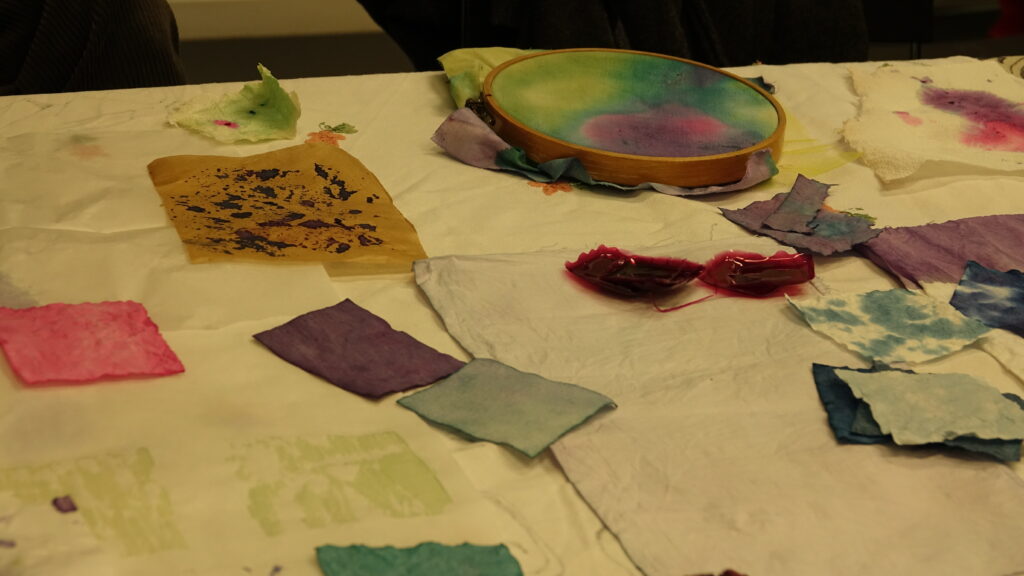
In ‘All Those Shades of Purple – the Haze Between Cyan and Magenta’ we conduct experiments with various flavonoids to alter their chemical structure, observe these changes live, structure chromatograms, and document our findings.
In the introduction, accompanied by a cup of Clitoria ternatea tea, we discuss the subject in history, art, and science, materials, techniques, biopolitics, and ethics.
Elizabeth Thallauer studied sculpture at the AdBK Nuremberg and the Kuvataideakatemia in Helsinki, followed by postgraduate studies in ‘Art in Public Space’ at the AdBK Nuremberg. Her artistic practice is interdisciplinary and multimedia-based, which can be traced back to her earlier studies at the University of Mining and Geology in Sofia, Bulgaria.
Elizabeth Thallauer is co-founder and curator of the art festival ‘LOOK-Ecology and Technology’ (2021), which takes place annually in Sofia, Bulgaria. In 2022, she and Joanna Maxellon founded ADAPTER, a platform for acquiring technical understanding and exploring the possibilities of transhuman trade. ADAPTER functions as a contemporary experimental laboratory that combines analogue and digital resources with new, unconventional research.
Location: Academy of Fine Arts Nuremberg
Workshop 1: The Haze Between Cyan and Magenta
Workshop 2: Unicorn Food
Workshop 3: ZoOm the Water Drop
14:45
Presentation Workshops All Those Shades of Purple
Elizabeth Thallauer and Adapter, AdBK Nuremberg
Location: Academy of Fine Arts Nuremberg
15:15
Coffee Break
15:30
(EN) Art and biological sciences: Collaborations
Location: Academy of Fine Arts Nuremberg
Archaeal Connections: Extremophile Microorganisms from the Lab to the Studio, from the Exhibition to Space
Robert Reichelt, Microbiology and Archaeology Centre, University of Regensburg
Sebastian Gfellner, Exobiology Group, Center for Molecular Biophysics, CNRS – Orléans, FR
Anna Steward, Artist, AdBK Nürnberg
A passion for the third domain of life (archaea) brought together microbiologist Robert Reichelt, astrobiologist Sebastian Gfellner, and artist Anna Steward in their recent collaborations. Anna discovered her fascination with microorganisms while preparing for her diploma exhibition and was thrilled to be invited by the German Archaea Centre in Regensburg as a visiting artist, immersing herself in the world of archaea. Her collaboration with Robert and his students resulted in Performing Beyond the Human, an exploration of possible interactions between biological and artistic systems, where Anna works with microbial cultures across laboratory and studio settings, as well as in exhibitions and performances.
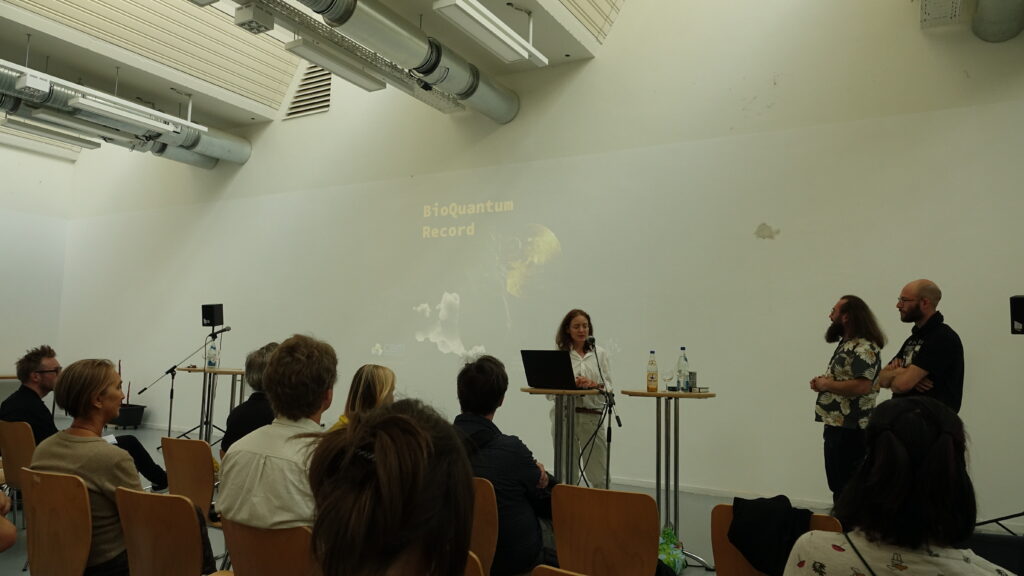
Archaea captivate us because they thrive where life seems almost impossible, clustered near hydrothermal vents, in the seasonal thaw of thick ice crusts, or within methane lakes. Wondering whether extremophiles could exist beyond Earth, Anna joined forces with Sebastian at the Center for Molecular Biophysics (CNRS-CBM) in Orléans, France, to develop BioQuantum Record, a project that imagines how microbial life might connect across different worlds in the universe.
One project led to another, forming archaeal connections across time and space, and linking scientists and artists across disciplines. Arts-science-collaborations are not only about realising artistic work but also about exploring the dynamics of exchange between different fields. Artists, viewed as ‘foreign bodies’ in scientific spaces, can provoke new perspectives. Transdisciplinary work is not about translating one discipline into another, but about forming a new terrain together — an arts-science assemblage held together by archaeal membranes.
Robert Reichelt (*1982) studied biology at the University of Regensburg and successfully completed his studies in 2009 with a thesis at the Chair of Microbiology at the University of Regensburg on the topic: ‘Investigations into the function of the TrmB family in Pyrococccus furiosus using chromatin immunoprecipitation experiments’. He continued this work during his doctoral studies (2009–2014) at the Department of Microbiology at the University of Regensburg with the topic: ‘Analysis of Gene Regulatory Networks of Pyrococcus furiosus by ChIP-seq’. From 2014 to 2022, he continued his research as a postdoctoral scientist at the Department of Microbiology at the University of Regensburg, and since 2022, he has been responsible for managing the biotechnology centre and cultivating extremophilic microorganisms at the Department of Microbiology at the University of Regensburg as an academic advisor. In his research, Robert Martin Reichelt combines classical molecular biology methods with special cultivation methods for growing extremophilic microorganisms in order to obtain a holistic picture of biological processes such as transcription, an important step within the central dogma of molecular biology. He is also committed to the microbiological education of students, both at undergraduate and advanced levels, and during the completion of their theses.
Archaeenzentrum – Uni Regensburg
Sebastian Gfellner My passion for extremophilic microorganisms that can withstand the hardest environmental conditions and the possibility of life elsewhere in the universe began as a geologist at the University of Vienna, Austria, where I investigated carbonate veins in minerals and wondered whether there could be life buried within? After becoming an organic geochemist at the University of Bremen, Germany, I was able to answer this question; now, as a PhD student in astrobiology at the University of Orléans, France, I have shifted this question to other planetary bodies, wondering about the possibility of microbial life in the universe.
Whether we are alone in the cosmos has fascinated humanity since we have looked at the stars. In science, we identified a tool that could potentially answer this question. However, the need to visually comprehend concepts that may otherwise be too abstract is deeply rooted in us. This is where art bridges our imaginations. While astrobiology thrives to understand life in the universe, art may provide visualization and narrative for us to continue on this journey. When collaborating with an artist, a common language must first be established. Of this, something wonderful can thrive by combining the worlds of facts and imagination.
Anna Steward Anna’s artistic practice combines performance, installation, and scientific collaboration, with a focus on microbiology, neurology, and a growing passion for astrobiology.
She trained at Arts Educational Schools London in 2000 and initially worked as an actor before shifting to Live Art in 2007. Her 2014 performance GELD-Pilgerreise inspired the Swiss film Church of Money, which was featured in the German Federal Agency for Civic Education’s media library.
Anna graduated with honours from the Academy of Fine Arts Nuremberg in 2023, where she now lectures. Supported by a scholarship from the Bavarian State Ministry of Science and the Arts, she collaborated with the German Archaea Centre at the University of Regensburg, where she remains a visiting artist.
Her 2024/2025 Arts-Science Residency at CNRS-CBM (Centre Biophysique Moléculaire) and ESAD Orléans (École Supérieure d’Art et de Design), hosted by LE STUDIUM Loire Valley Institute for Advanced Studies, sparked an ongoing partnership with CBM’s Exobiology and Synthetic Protein and Bioorthogonal Chemistry teams. Together, they explore microbes, meteorites, and molecules through a speculative artistic project.
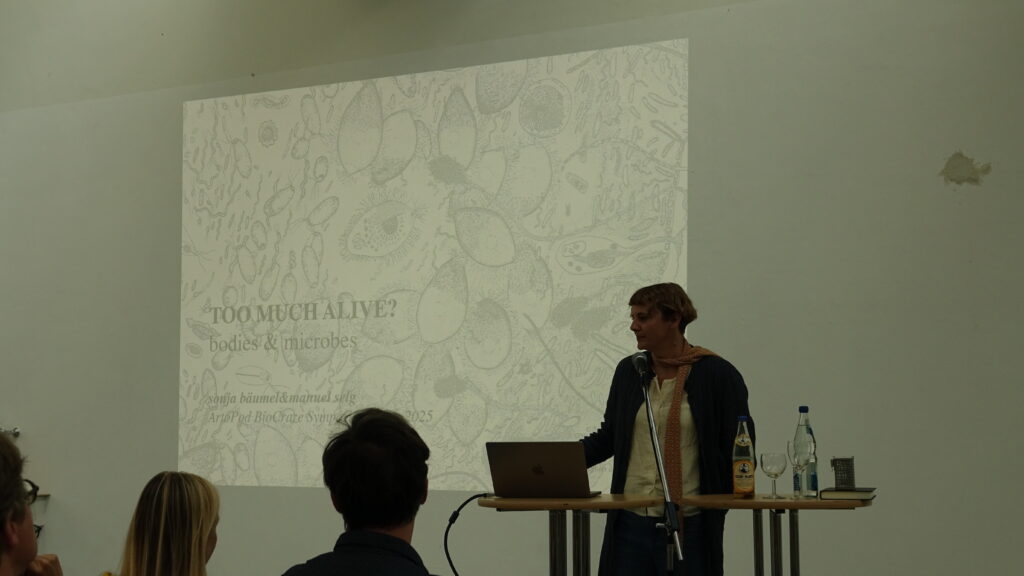
Too Much Alive?
Manuel Selg, Bio- und Umwelttechnik, Fachhochschule Oberösterreich, AT
Sonja Bäumel, Gerrit Rietveld Adademie, NL, Künstlerin, AT
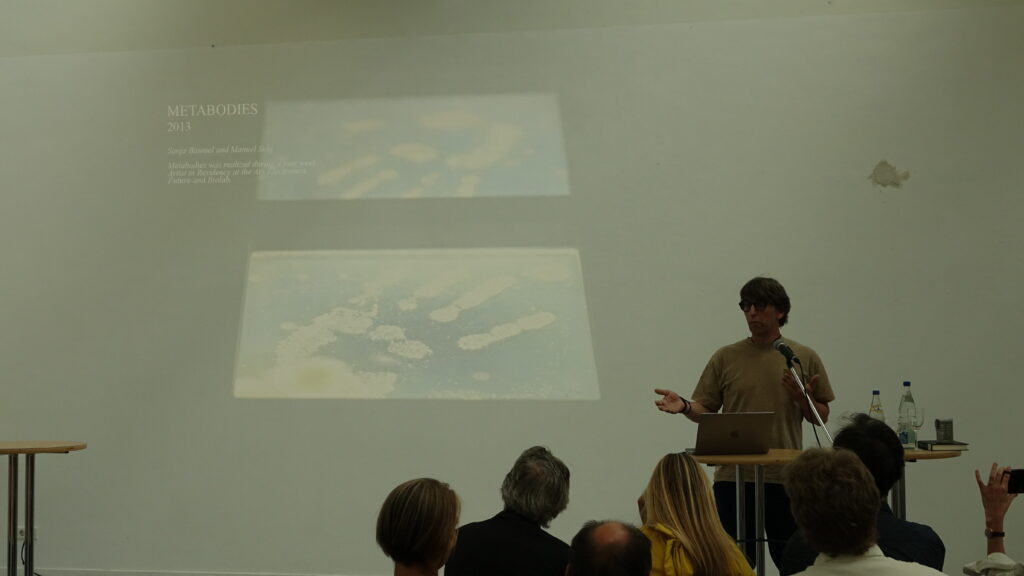
Sonja Bäumel and Manuel Selg will introduce their artistic and scientific practice and perspective on bodies & microbes. Departing from their research on human-microbe relations, their presentation will focus on their projects Metabodies, Mehrwesen, (Un)sichtbare Begegnungen, Microbial Entanglement and their joyful struggle with exhibiting living artworks.
Most of our projects involve long-term collaborations, extensive fieldwork and a process full of wonder. Following a trans-disciplinary, process-driven and imaginary yet tangible approach, they are exploring the social network of microbes on our body, probing rituals for microbes to encourage human bodies to a more-than-human sociality, sensing through embodied practices how a cell body might feel or testing the limits of their nerves with the production of living artworks. Combining field-research, material experimentation and performative activations, our transdisciplinary process intends to reveal the inter-relatedness of microbes, humans, politics and ecology.
Our work explores possible ways of encountering invisible and intangible beings while questioning the perception of skin as the ultimate border for human and more-than-human bodies, embracing risk while directly engaging with living microbial entities, and venturing through landscapes, on a macro- and microscopic level, to seek clarity as to where the environment starts and where it ends.
Manuel Selg is a molecular biologist and chemist. After completing his bachelor’s degree at Western Kentucky University in Bowling Green, Kentucky, he earned his doctorate in molecular biology at Loyola University Chicago. This was followed by several years of basic research in the fields of medicine and developmental biology before he took up the professorship in molecular biology at the University of Applied Sciences Upper Austria, Faculty of Technology and Applied Sciences, on the Wels campus in 2004.
Today, he is the programme director for the bachelor’s and master’s degree programmes in bioengineering and environmental engineering. He is also vice-dean for internationalisation and research and heads a research group focusing on the use of biosensors in medical diagnostics.
Manuel Selg has been involved in bio art for around 15 years. He has worked on a wide range of projects with various artists and curated exhibitions. Through bio art, Manuel Selg aims to highlight relevant issues of human coexistence and thus initiate and promote social dialogue.
Sonja Bäumel is an Austrian artist and professor living in Amsterdam, Netherlands, and Vienna, Austria. She explores “the living” and the evolving perception of what bodies are made of.
Bäumel studied fashion design at the Hetzendorf Fashion School in Vienna and holds a Bachelor of Fine Arts from the University of Art and Design Linz and a Master’s degree in Conceptual Design in Context from the Design Academy in Eindhoven. In 2022, she represented Austria at the 23rd International Triennale Milano with the performative and multisensory installation ENTANGLED RELATIONS-ANIMATED BODIES.
Her work has been exhibited internationally, including at the MAK – Museum of Applied Arts Vienna, the Museum of Contemporary Art in Taipei, the Frankfurter Kunstverein, and the Centre Pompidou in Paris. Bäumel co-founded the collective Dunbar’s Number, was a member of the Vienna-based collective Pavillion35, and a member of the Amsterdam-based collective WNDRLUST.
She currently works as a lecturer and professor in the Jewellery – Linking Bodies department at the Gerrit Rietveld Academie in Amsterdam and gives lectures and workshops at various national and international academies and universities.
Sonja Bäumel
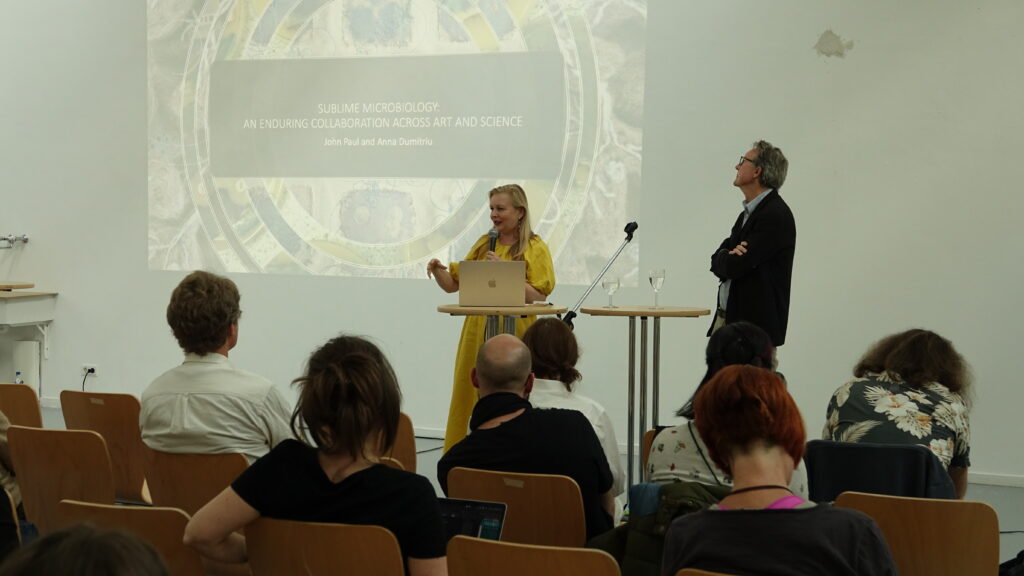
Sublime Microbiology: An Enduring Collaboration Across Art and Science
John Paul, Modernising Medical Microbiology Consortium, UK
Anna Dumitriu, Artist, UK
BioArtist Anna Dumitriu and microbiologist Dr John Paul will discuss their art/science collaboration which has grown in many directions through numerous projects and has lasted over 20 years. They will reflect on how the collaboration started, how it developed and forged many new collaborations, with a focus on the Oxford University led Modernising Medical Microbiology project. They will explore how the philosophical concept of the sublime came to inspire them, especially when working hands-on with plague bacteria in a high security lab, and how they recently ended up reconstructing a pioneering artwork involving maggots and flies by the Late Hamad Butt for the Irish Museum of Modern Art.
Dr John Paul is a medical microbiologist who has been collaborating with Anna Dumitriu for almost twenty years. After attending medical school, JP trained in medical microbiology and then later during the early 1990s he was entrusted with the responsibility of a research laboratory in Nairobi, Kenya which supported studies on bacterial infections in AIDS patients. After returning to the UK, he occupied various posts in clinical and public health microbiology. In 2008 he became a member of Modernising Medical Microbiology, a new research consortium that aimed to utilise whole genome sequencing as a technology to characterise bacteria and to track outbreaks of bacterial infection. He led projects on the transmission of Staphylococcus aureus, a cause of hospital-acquired infection and Neisseria gonorrhoeae, a sexually transmitted bacterium which causes gonorrhoea. He was awarded the title of honorary professor by Brighton and Sussex Medical School. With Anna, he has supplied microbiological expertise for many of her projects, including the Normal Flora, the Bacterial Sublime, the MRSA quilt, and a plethora of artworks related to Modernising Medical Microbiology. JP is an enthusiastic bacteria tourist and has travelled widely in order to admire and investigate bacteria. He is also an avid amateur entomologist.
Round table
Moderation: Peter Wendl, AdBK Nuremberg
17:30
Break
17:45
Art & Science: In between spaces and the importance of not-knowing
Irène Hediger, artists-in-labs program, ZHDK, CH
Lars Blunck, AdBK Nuremberg
Irène Hediger has headed the Artists-in-Labs (AIL) program at the Department of Cultural Analysis and Mediation at the Zurich University of the Arts since 2006. In this role, she initiates, curates, and oversees international residencies in which artists collaborate with researchers from renowned institutes and laboratories worldwide in a process-oriented, exploratory, and open-ended manner. She develops collaborative and curatorial approaches that are situated in the “in-between” and thus promote transdisciplinary exchange on socially relevant issues. Her particular interest lies in the knowledge and production processes at the intersection of art, technology, science, and society. Irène Hediger has curated numerous exhibitions and educational programs on contemporary art, science, and technology, including “Quantum of Disorder” (Zurich), “(in)visible transitions” (Hong Kong), “Displacements – Art, Science and the DNA of the Ibex” (Zurich), “Propositions for a Poetic Ecosystem” (Jeddah), and “Interfacing New Heavens” (Pretoria).
Since 2006, Hediger has led the Artists-in-Labs (AIL) program at the Zurich University of the Arts, where she curates and facilitates international residencies, fostering collaborations between artists and scientists. She develops collaborative and curatorial approaches situated in the “in-between,” promoting transdisciplinary exchange on socially relevant issues. Her work focuses on the intersection of art, technology, science, and society.
Hediger has curated numerous exhibitions, including “Quantum of Disorder” (Zurich), “(in)visible transitions” (Hong Kong), and “Displacements – Art, Science and the DNA of the Ibex” (Zurich ), “Propositions for A Poetic Ecosystem” (Jeddah) and “Interfacing New Heavens” (Pretoria).
Lars Blunck has been Professor of Art History at the Academy since 2013. After studying in Braunschweig and Kiel, he received his doctorate in 2001 with a dissertation on performative assemblages of the 1950s and 60s (Between Object & Event: Participatory Art between Myth and Participation, Weimar, 2003). He then completed a traineeship at the Hamburger Bahnhof (Museum of Contemporary Art, Berlin) before taking up a research assistant position at the Technical University of Berlin. In 2005, Blunck was awarded the Deubner Prize for current art historical research, and in 2007 he completed his habilitation at the TU Berlin with a thesis on Marcel Duchamp (Duchamp’s Precision Optics, Munich, 2008).
This was followed by a five-year visiting professorship at the same university. In 2011, he was a Fellow of the Terra Foundation for American Art. Blunck is co-editor (with Bénédicte Savoy and Avinoam Shalem) of the series *contact zones. Studies in Global Art* published by de Gruyter. His research focuses primarily on the art and visual history of modern and contemporary art.
AdBK Nuremberg
Review & Impressions
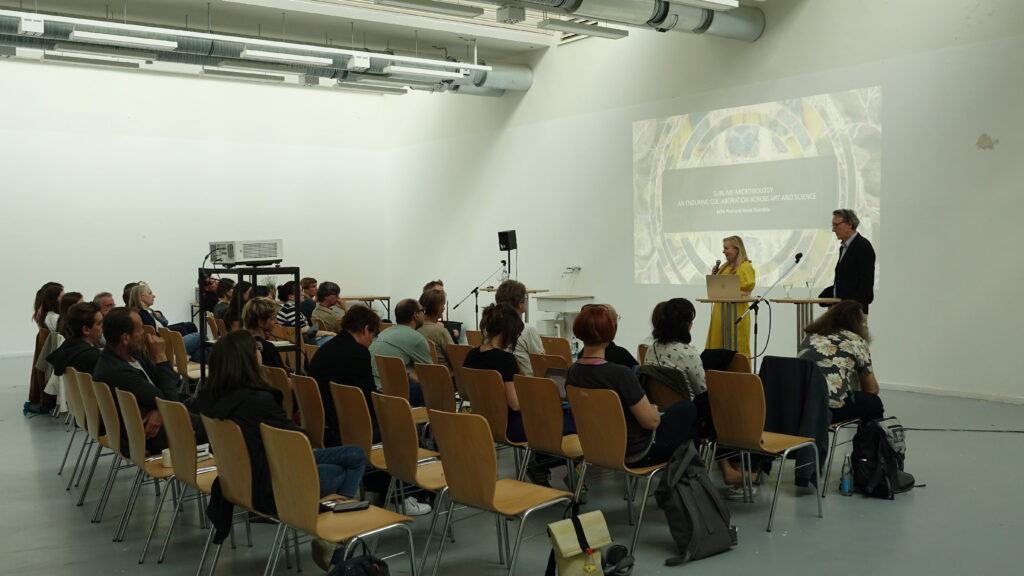
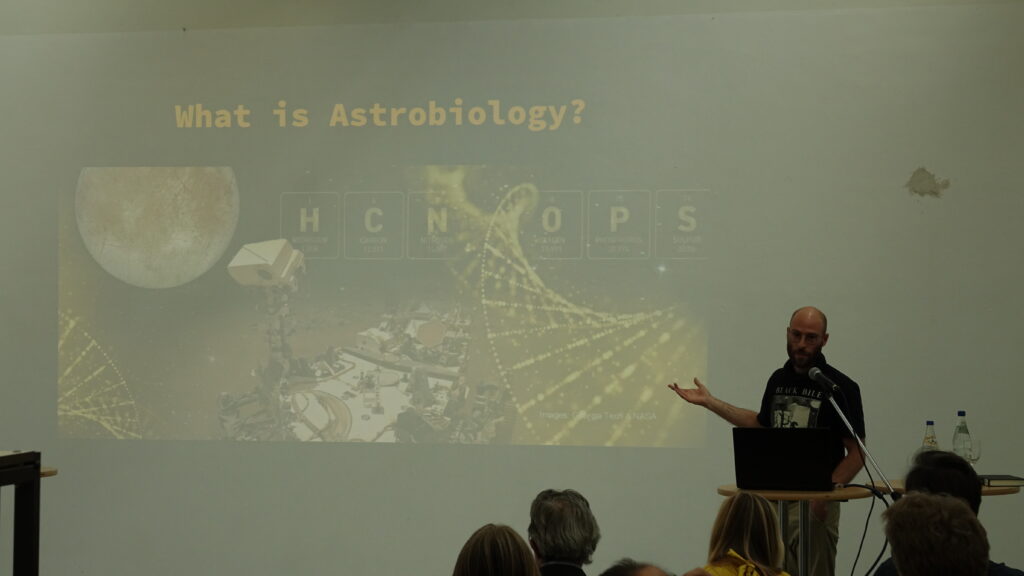
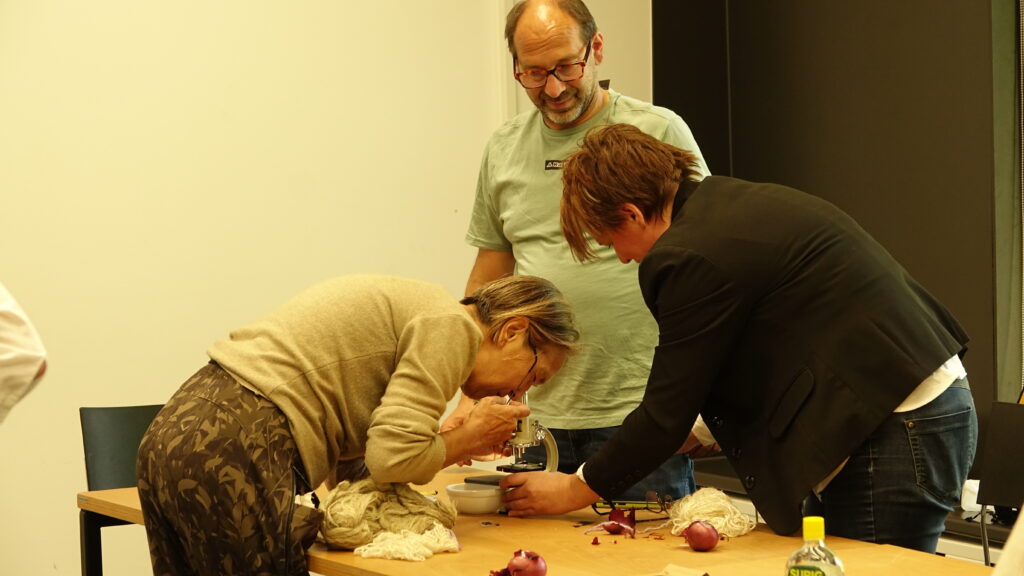
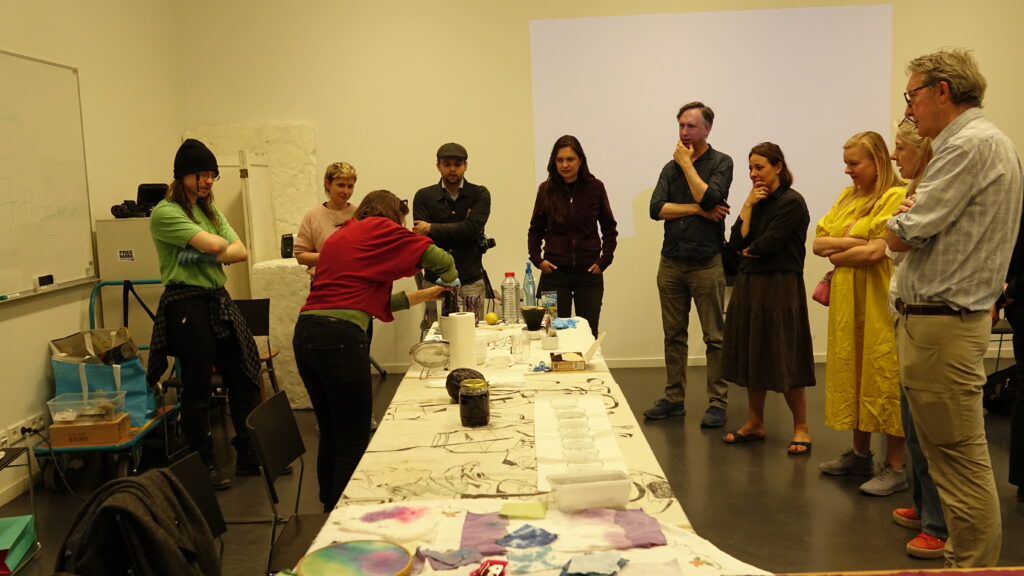
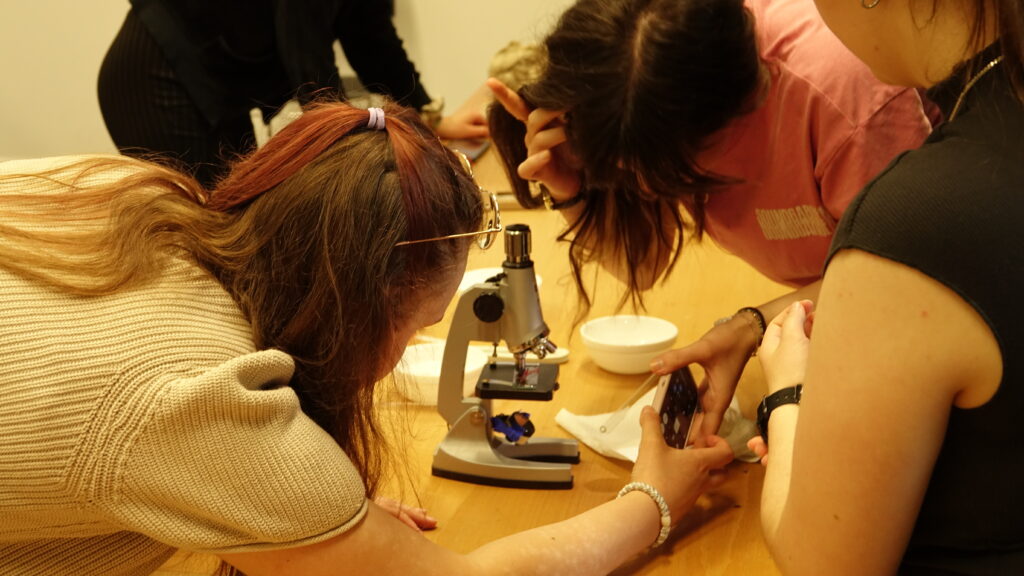
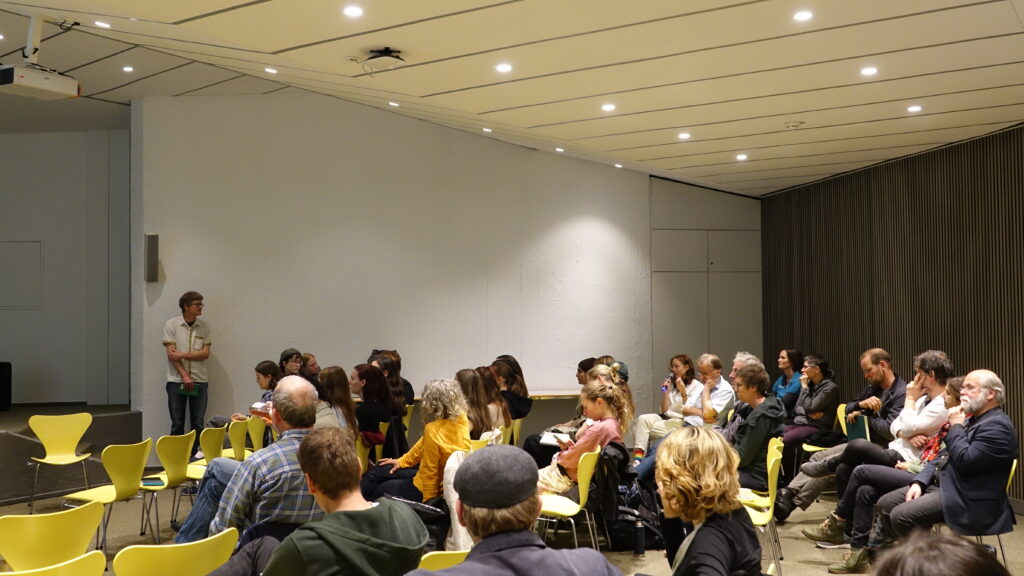
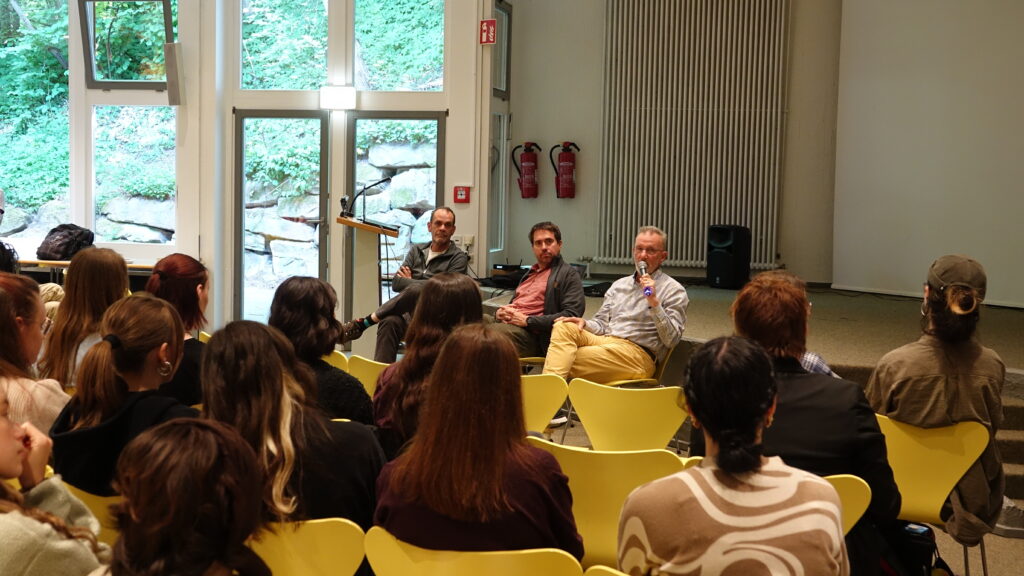
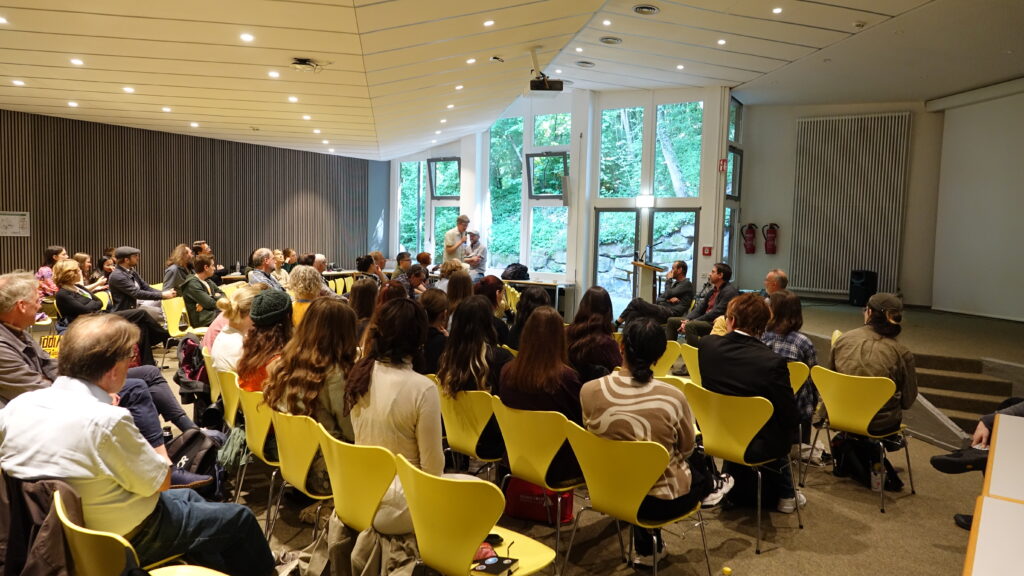
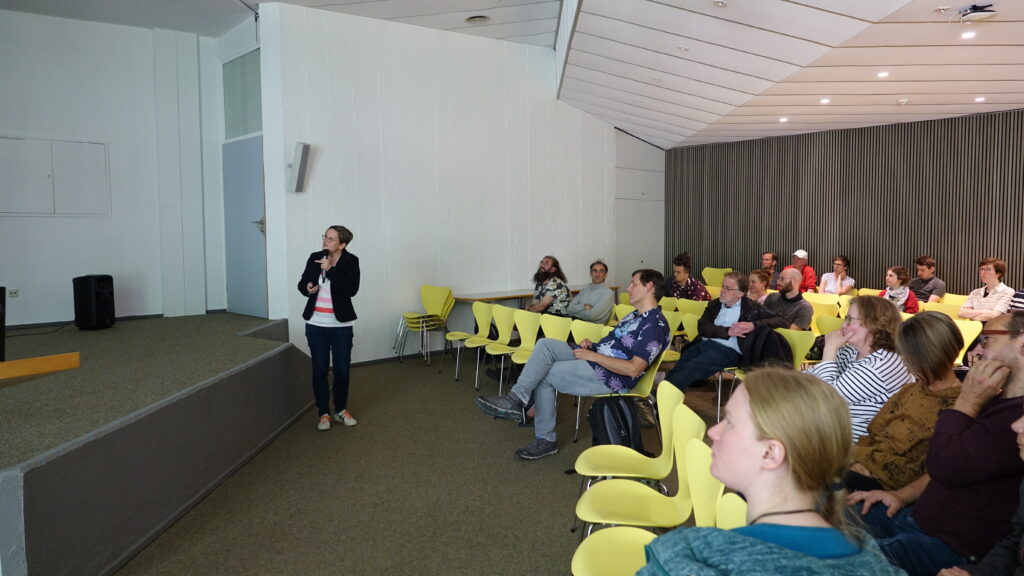
The symposium was characterized by inspired discussions, creative approaches, and new perspectives that playfully yet profoundly explored the boundaries between art and science. The interdisciplinary workshops and lectures offered fascinating insights and provided a platform for innovative ideas and visionary projects.
We thank all participants, speakers and organizers who made the ArtoPod BioCraze an unforgettable experience!
Let’s continue this dialogue, explore new interfaces, and look to the future together!
Impressions from the symposium